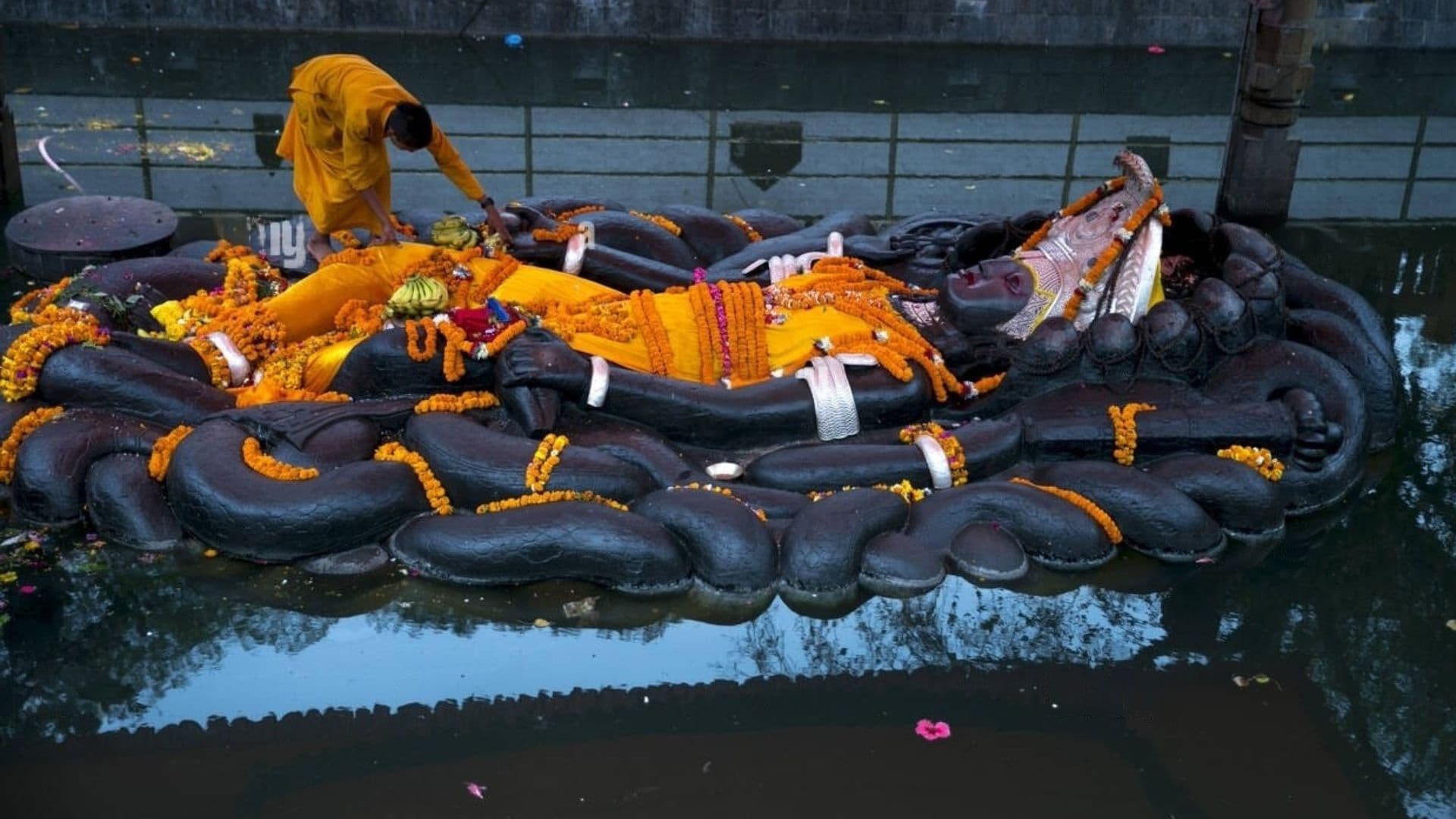
Nepal is often described as having a festival for every day of the year. That is an exaggeration, but not by much — and the festivals are not folklore performed for visitors. They are the working calendar that decides when offices close, when families travel, and when whole towns stop.
Understanding the history makes the festivals legible rather than merely colourful, so this guide starts there.
A short history, and why it still shows
The Kirat are the earliest rulers named in Nepali tradition, and Kirat-descended communities in the east still keep distinct language and ritual. The Licchavi period gave the Kathmandu Valley its stone inscriptions, its water systems and the beginnings of its temple architecture.
The Malla periodis the one you can still see. Kathmandu, Patan and Bhaktapur were rival kingdoms that competed by building, which is why three durbar squares sit within a few kilometres of each other. Most of the Valley's festival pageantry — the chariots, the masked dances, the Kumari — was formalised then.
Meanwhile the west had its own kingdom. The Khas Malla ruled from Sinja in what is now Jumla, and the Nepali language itself traces to the Khas speech of that valley — see Sinja Valley. This is not a footnote: it means Western Nepal is the linguistic origin point of the national language.
Prithvi Narayan Shah unified these kingdoms into modern Nepal in the eighteenth century. The Anglo-Nepalese War that followed fixed the borders and produced the Gurkha regiments. The Rana regime then held real power for a century while the monarchy remained ceremonial, and Nepal became a republic in 2008. The full sequence is in the complete timeline.
The festival calendar
Nepal runs on the Bikram Sambat calendar, which is lunisolar and roughly 56.7 years ahead of the Gregorian year. Most festivals are set by lunar phases, so their Gregorian dates move annually. Plan around the month, then confirm the exact date for your travel year.
| Festival | When | Where | What happens |
|---|---|---|---|
| Losar | Feb–Mar | Himalayan north, Dolpa, Humla | Tibetan new year — monastery dances, family feasts |
| Holi | Mar | Terai and hills, nationwide | Colour festival, celebrated a day apart in hills vs Terai |
| Buddha Jayanti | Apr–May | Lumbini, Swayambhu, Boudha | Buddha's birth, enlightenment and death observed together |
| Asar 15 / Ropain | Jun | Rice-growing hills and Terai | National paddy day — mud, music, rice planting |
| Teej | Aug–Sep | Nationwide, women's festival | Red saris, fasting, dancing at Pashupatinath |
| Indra Jatra | Sep | Kathmandu | Chariot procession, the living goddess Kumari appears |
| Dashain | Sep–Oct | Nationwide | The biggest festival — 15 days, everything closes |
| Tihar | Oct–Nov | Nationwide | Festival of lights; crows, dogs and cows honoured on set days |
| Maghe Sankranti | Jan | Nationwide, river confluences | Winter solstice foods, ritual bathing |
Months are indicative because the dates shift each year. Confirm exact dates for your travel year — the full list is in the festival calendar guide.
Planning a trip around a festival
Dashain is the one that most affects logistics. For roughly two weeks in September or October, government offices and banks close, domestic transport fills with people travelling home, and some businesses shut entirely. If your trip overlaps it, book flights and buses early. If you want to witness it, that inconvenience is the price of seeing the country at its most itself.
Tihar, a fortnight later, is gentler and arguably more photogenic — oil lamps along every doorway, marigold garlands, and days set aside to honour crows, dogs and cows in turn.
Indra Jatra in Kathmandu is the best single day for spectacle if you only have one: chariot processions through the old city and a public appearance by the Kumari, the living goddess.
Living culture in the west
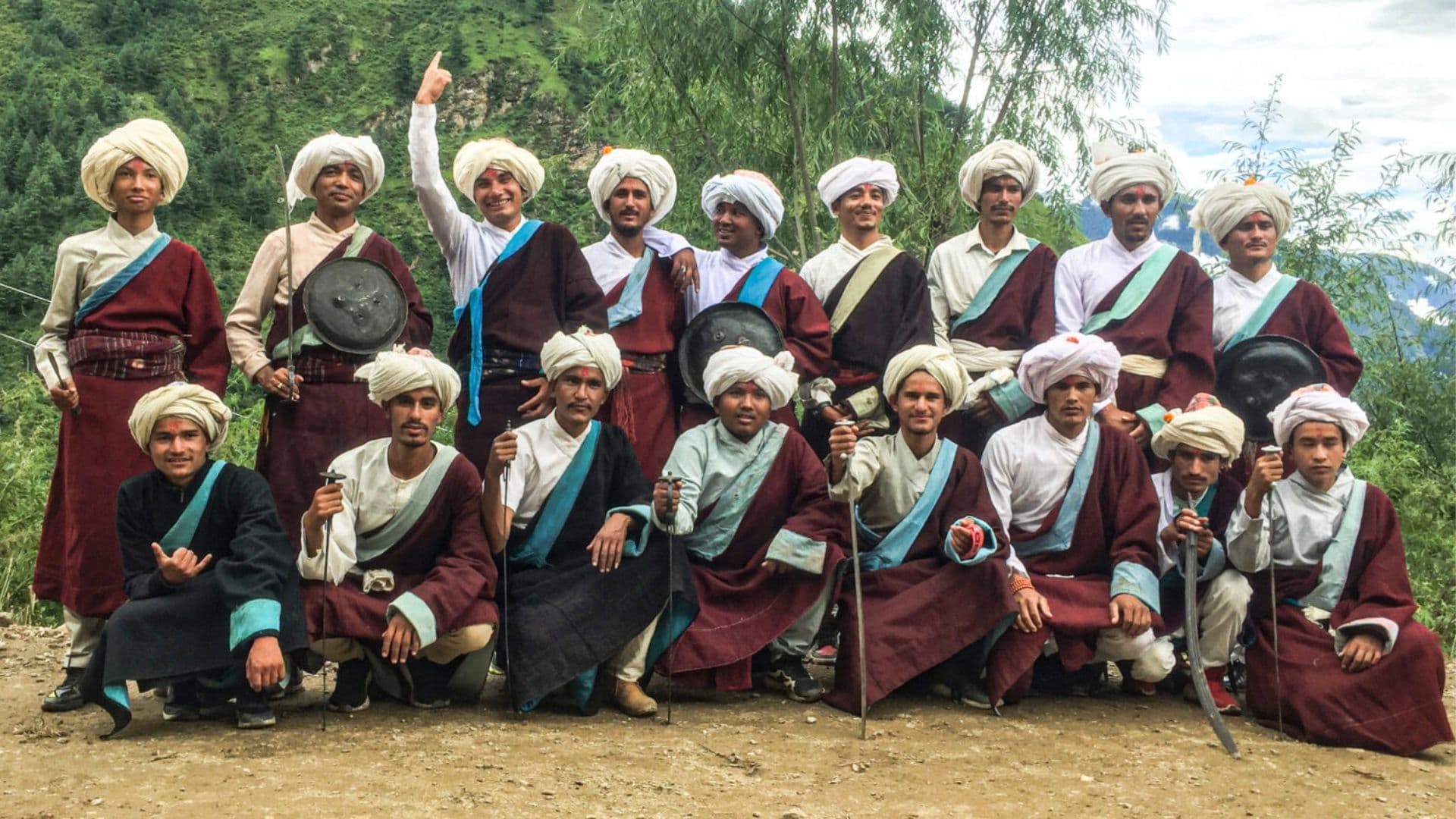
Away from the Valley, the traditions are less documented and more intact. Deuda is a circle song-dance of the far west in which the verses are improvised and traded back and forth — a living oral form, not a preserved one. The rodhighar was the village gathering house where young people met, sang and negotiated courtship, and it still exists in parts of Karnali.
In the Terai, Tharu communities have lived alongside the forests now enclosed by Bardiya and Shuklaphanta for far longer than the parks have existed. In the high north, Sherpa and other Tibetan-descended communities keep monastery calendars that follow Losar rather than Dashain.
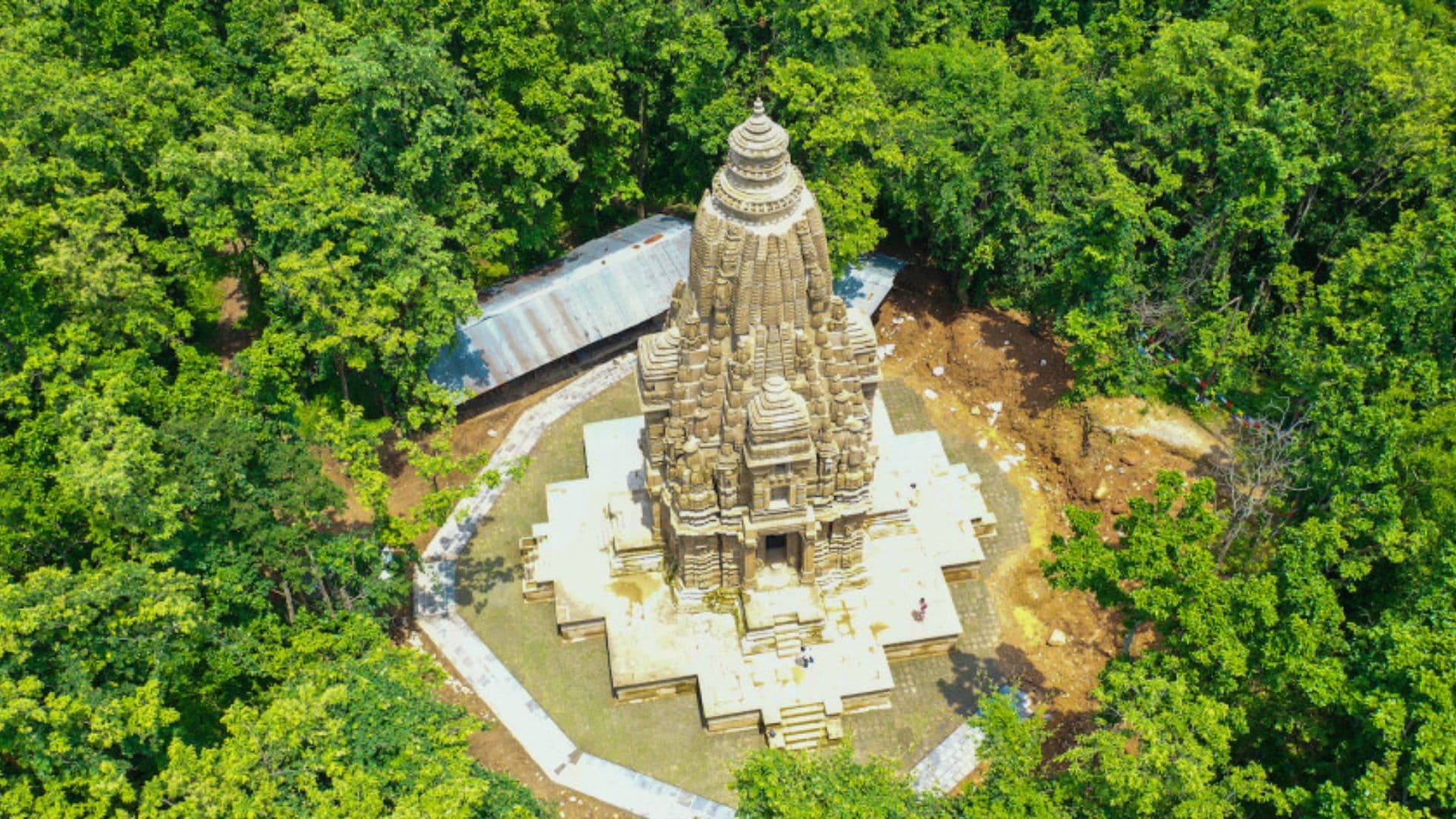
Nepal has ten UNESCO World Heritage sites, seven of them inside the Kathmandu Valley — the background is in the UNESCO guide.
Visiting respectfully
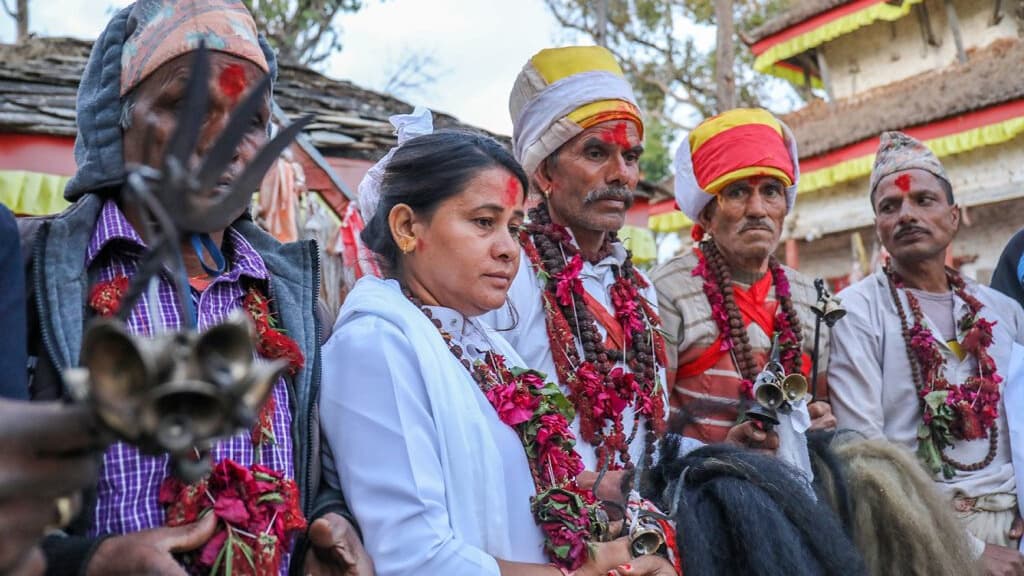
A few things that matter and are easy to get wrong. Remove shoes before entering temple interiors. Many Hindu temple sanctums, including Pashupatinath's, are closed to non-Hindus, and this is enforced rather than nominal. Walk clockwise around stupas and mani walls. Ask before photographing people, especially during rituals and at cremation sites. Leather items are prohibited in some temple precincts. Accept tika when it is offered — refusing is a bigger deal than accepting.