
Tihar is five days long, falls in the Nepali month of Kartik, and is the only major festival anywhere that sets aside a separate day for crows and another for dogs. It follows about two weeks after Dashain, and where Dashain is heavy with hierarchy and sacrifice, Tihar is light, domestic and loud. Oil lamps line every doorway. Marigold garlands appear on animals. Groups of singers work the streets after dark demanding small payments.
The festival is also called Yamapanchak, the five days of Yama, the god of death. Each of the first four days honours a creature associated with him, and the fifth binds the living together. That structure is what makes Tihar coherent rather than a string of unrelated customs.
When is Tihar and how long does it last?
Five days, in the Nepali month of Kartik, which falls in October or November. The dates are lunar and move each year. The third day, Laxmi Puja, sits on the new moon, which is why the lamps matter: it is the darkest night of the month.
Kartik is also the clearest and most settled month of the Nepali year, which means Tihar coincides with the peak of the trekking season. The two facts collide every autumn in booking systems.
The five days of Tihar explained
| Day | Name | Who is honoured | What happens |
|---|---|---|---|
| 1 | Kaag Tihar | Crows | Food is placed on rooftops and thresholds for crows, treated as messengers of Yama |
| 2 | Kukur Tihar | Dogs | Dogs, including street dogs, receive a red tika, a marigold garland and a good meal |
| 3 | Gai Tihar and Laxmi Puja | Cows, then the goddess Laxmi | Cows are garlanded in the morning. After dark, houses are lit with lamps and a painted path is laid to invite Laxmi inside |
| 4 | Goru Puja, Govardhan Puja and Mha Puja | Oxen, and the self in the Newar tradition | Oxen are honoured, cattle dung mounds are worshipped, and Newar families perform Mha Puja on Nepal Sambat new year |
| 5 | Bhai Tika | Brothers and sisters | Sisters give brothers a multicoloured tika, garlands and sweets in exchange for protection and gifts |
The rise from crow to dog to cow to ox to human is deliberate. Read as a sequence, the festival works its way up the chain of creatures that share a household.
Why crows, dogs and cows get their own days
Crows are the first messengers of Yama and their call is traditionally read as a warning of coming news. Feeding them on the first day is a way of receiving the message peacefully rather than refusing it.
Dogs are the gatekeepers of Yama and the day given to them is the one visitors remember. Working police dogs get formal ceremonies. Household dogs get a garland and better food than usual. Street dogs get the same treatment from strangers, which is the detail that tends to convert sceptics.
The cow is Laxmi in animal form and the source of the household economy, so the third morning belongs to her before the evening belongs to the goddess herself. On the fourth day the ox, which pulls the plough, receives the same courtesy.
Laxmi Puja and the lights
The third evening is the visual centre of the festival. Households clean thoroughly, because Laxmi is believed to skip a dirty house. Rows of small oil lamps or candles are set along window ledges, stair edges and rooftops. A path of red mud and rice flour, sometimes with painted footprints, is laid from the street door to the room where valuables are kept.
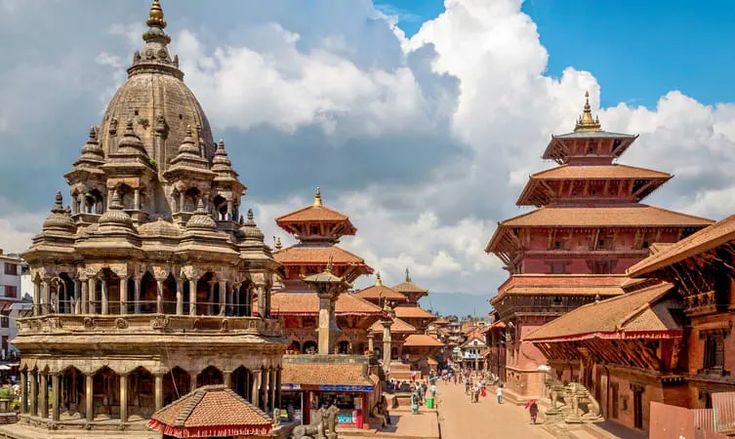
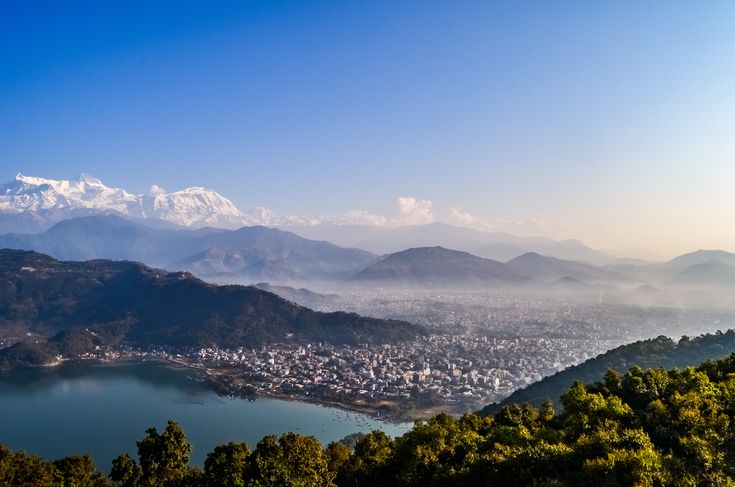
Shops light up more elaborately than homes, since Laxmi is the goddess of wealth and business owners take the night seriously. Newar neighbourhoods around Patan Durbar Square and the old core of Kathmandu are the best places to see the effect at street level. In Pokhara, the lakeside strip and the old bazaar both light up, and the reflection across Phewa is the version most photographed.
Deusi and Bhailo: the singing at your door
From the second or third evening onward, groups of young people move house to house singing. Bhailo is sung by girls, Deusi by boys, both in call and response, and both ending with a request for money, rice or sweets. Refusing outright is rude. Giving a small amount and getting a blessing in return is the expected exchange.
Organised groups now use the same tradition to raise funds for schools, clubs and disaster relief, so the sums can be larger and the singing better rehearsed than it once was. It goes late. If you are staying in a residential neighbourhood, plan to be entertained rather than asleep.
Bhai Tika and Mha Puja
The fifth day is the one families organise their travel around. Sisters seat their brothers on a mat, draw a ring of oil around them, and apply a tika of several colours in a vertical line. Brothers receive a garland of globe amaranth, a flower chosen because it dries without wilting, along with sweets, walnuts and dried fruit. In return they give gifts and a promise of protection. Women without brothers, and men without sisters, are commonly adopted for the day by neighbours.
The fourth day carries a second calendar entirely. Newar families perform Mha Puja, a ritual of worshipping the self, and mark Nepal Sambat, the Newar new year. The observance is quiet and household-based, but the new year itself is a public holiday and processions run in parts of the valley. The hillside stupa at Swayambhunath is one of the better places to watch the valley lights from above during the festival.
How Tihar differs from Diwali
They share the lamps, the timing and the worship of Laxmi. The differences are real. Tihar runs five days with a fixed sequence of animal days that Diwali does not have. Bhai Tika is elaborate and central in a way its Indian counterpart usually is not. Deusi and Bhailo are Nepali traditions with no direct equivalent. And fireworks, while present, are far less dominant than in Indian cities, so the noise level is closer to singing than to explosions.
Travelling in Nepal during Tihar
Tihar is easier than Dashain but not free. Expect two to three days of closed offices and banks, heavy demand on buses and flights around Bhai Tika, and higher accommodation prices in Kathmandu and Pokhara because the trekking season is at its peak at the same moment. Restaurants and hotels stay open. Cities look better than at any other time of year, which is the compensation.
FAQ
How many days is Tihar?
Five, in the Nepali month of Kartik, which falls in October or November. Public holidays usually cover the last three of them.
Is Tihar the same as Diwali?
They overlap but are not identical. Tihar has a five-day structure honouring crows, dogs, cows and oxen before Bhai Tika, plus the Deusi and Bhailo singing tradition, none of which are standard in Diwali.
What is Kukur Tihar?
The second day, given to dogs. Household dogs, working dogs and street dogs alike receive a red tika on the forehead, a marigold garland and a special meal, in recognition of the dog as the guardian of the god of death.
What happens on Bhai Tika?
Sisters apply a multicoloured tika to their brothers, garland them with globe amaranth, and give them sweets and dried fruit. Brothers reciprocate with gifts and a pledge of protection. It is the final and busiest day of the festival.
Is Tihar a good time to visit Nepal?
Yes. It coincides with the clearest weather of the year and the cities are lit every evening. Book transport and accommodation early, because the peak trekking season and the festival travel rush land in the same fortnight.