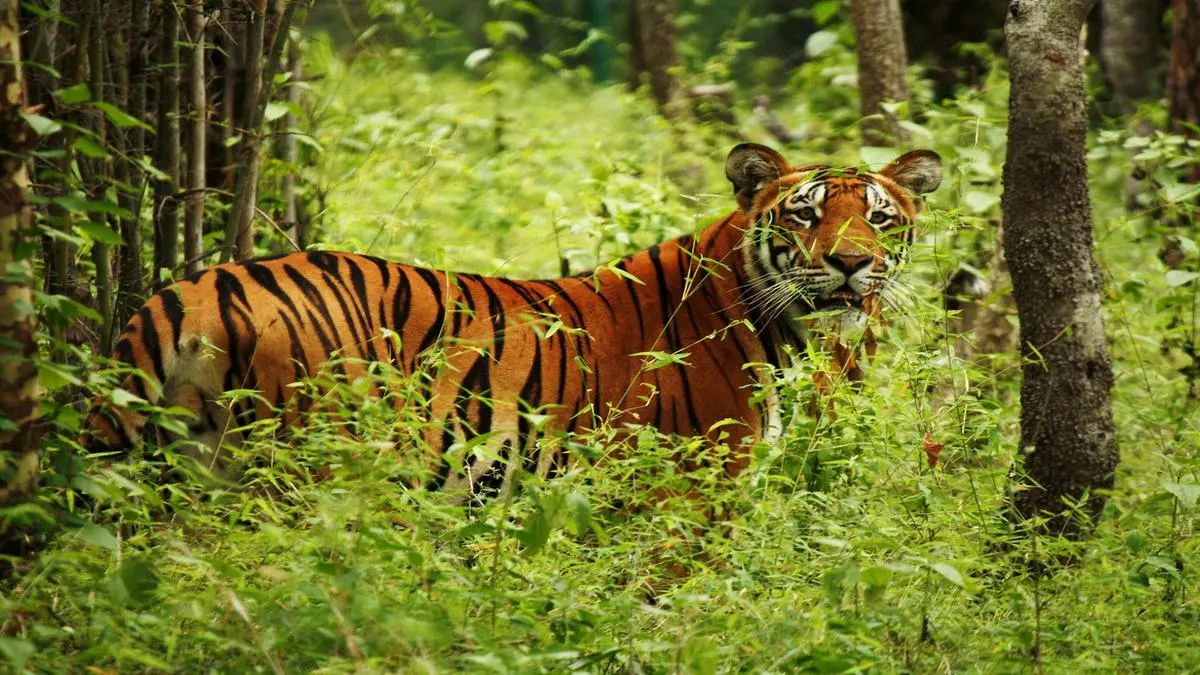
Nepal protects roughly a quarter of its land area, and the wildlife most visitors come for — tiger, greater one-horned rhino, wild elephant, gharial — lives in the Terai lowlands along the southern border. Almost all of that tourism concentrates in Chitwan. Bardiya, Banke and Shuklaphanta hold comparable wildlife with a fraction of the vehicles, and that difference is the entire argument for heading west.
This guide explains where to go for which animal, how the parks compare, when to visit, and what a safari here actually involves.
Where the animals actually are
Tigers
Nepal's tiger population has roughly tripled since the 2010 baseline, one of the more genuine conservation successes in Asia, and Bardiya has been central to it. Bardiya is now widely regarded as the best place in Nepal to actually see a wild tiger rather than merely be in a park that contains them — a combination of healthy density, open riverine grassland and the Karnali's sandbanks, which give long sightlines that dense forest does not.
Sightings are never guaranteed and anyone promising one is lying. Realistically, plan three to four days in the park during the dry season to give yourself a genuine chance. Detail in the Bardiya tiger guide.
Rhino and elephant
Greater one-horned rhino were reintroduced to Bardiya from Chitwan and the population has established itself, though numbers remain far lower than Chitwan's. If seeing rhino is your single priority, Chitwan is the higher-probability choice. Wild elephant move through Bardiya and Shuklaphanta in herds, including some notably large tuskers.
Swamp deer
Shuklaphanta holds one of the world's largest herds of swamp deer, and seeing over a thousand animals move across open phanta grassland at once is a genuinely different spectacle from a jungle safari. This is the single most underrated wildlife sight in Nepal.
Snow leopard and high-altitude wildlife
Above the treeline the cast changes entirely: snow leopard, blue sheep, Himalayan wolf, musk deer. Shey Phoksundois Nepal's largest national park and prime snow leopard habitat, though sightings require a dedicated multi-week expedition in winter rather than a safari. See Himalayan wildlife for what is realistic.
Birds
Nepal records well over 850 bird species in a country the size of Arkansas, a consequence of compressing subtropical Terai to arctic Himalaya into about 200 kilometres. The Terai parks and the Ramsar wetlands are the richest sites — start with the complete birdwatching guide and Ghodaghodi Lake.
Compare the parks
| Park | Province | Area | Main draw | Best months | Crowds |
|---|---|---|---|---|---|
| Bardiya | Lumbini | ~968 km² | Tigers, rhino, wild elephant | Feb–Apr, Oct–Dec | Low |
| Shuklaphanta | Sudurpashchim | ~305 km² | Swamp deer herds, tigers | Feb–Apr, Oct–Dec | Very low |
| Banke | Lumbini | ~550 km² | Tiger corridor, wilderness | Feb–Apr | Very low |
| Chitwan | Bagmati | ~950 km² | Rhino, tigers, infrastructure | Oct–Mar | High |
| Koshi Tappu | Koshi | ~175 km² | Water birds, wild buffalo | Nov–Feb | Low |
| Rara | Karnali | ~106 km² | Lake ecology, red panda | Apr–Jun, Sep–Nov | Low |
| Shey Phoksundo | Karnali | ~3,555 km² | Snow leopard, blue sheep | May–Oct | Very low |
Areas are indicative — several official park areas have been revised over time and some circulate at two different widely-cited figures. Entry fees differ for Nepali citizens, SAARC nationals and other foreign visitors, and are revised periodically. Confirm current rates before budgeting.
When to come
February to April is the best window for tigers. The grass has been cut or burned, water is scarce, and animals concentrate around the remaining pools and river channels. Visibility is at its annual peak. It is also hot.
October to December gives comfortable temperatures, clear air and good general wildlife viewing, but the elephant grass is at its tallest after the monsoon and can stand well above head height, which cuts sightlines considerably.
June to September is monsoon. Parts of the parks flood, some tracks close, leeches arrive, and wildlife disperses because water is everywhere. Birding can still be good. Most people should avoid it. Birding seasons are timed differently from mammal safaris — worth checking if birds are your priority.
What a safari here actually involves
Three formats, and they suit different people. Jeep safari covers the most ground and is the standard choice. Walking safari with two licensed guides is the specialty of Bardiya and by far the most intense way to experience the jungle — you are on foot, at ground level, following alarm calls. It carries real risk and the briefing is not a formality. Canoe trips on the Karnali are the way to see gharial, mugger and, with luck, Gangetic river dolphin.
Elephant-back safaris have been phased out by most responsible operators on welfare grounds and we do not offer them.
Most visitors stay in lodges just outside the park boundary near Thakurdwara and enter each morning. The buffer-zone communities are largely Tharu, whose relationship with these forests long predates the parks, and a village visit is worth building into the itinerary rather than treating as filler.
How to choose
Want the highest chance of a tiger, and willing to travel further? Bardiya. Want rhino, easy access from Kathmandu, and do not mind other jeeps? Chitwan. Want something almost nobody has seen? Shuklaphanta or Banke. Want birds above everything? Koshi Tappu or the Terai wetlands. The full side-by-side is in Nepal's national parks compared, and the legal framework behind the categories is explained in the protected area system.