
Bardiya National Park held 125 Bengal tigers in the 2022 national tiger survey, second only to Chitwan among Nepali protected areas and up from just 18 animals recorded in 2009. The park covers about 968 square kilometres of sal forest, riverine grassland and floodplain in Bardiya district, making it the largest national park in the Nepali Terai. That sevenfold increase in thirteen years is the clearest single measure of tiger recovery anywhere in the country.
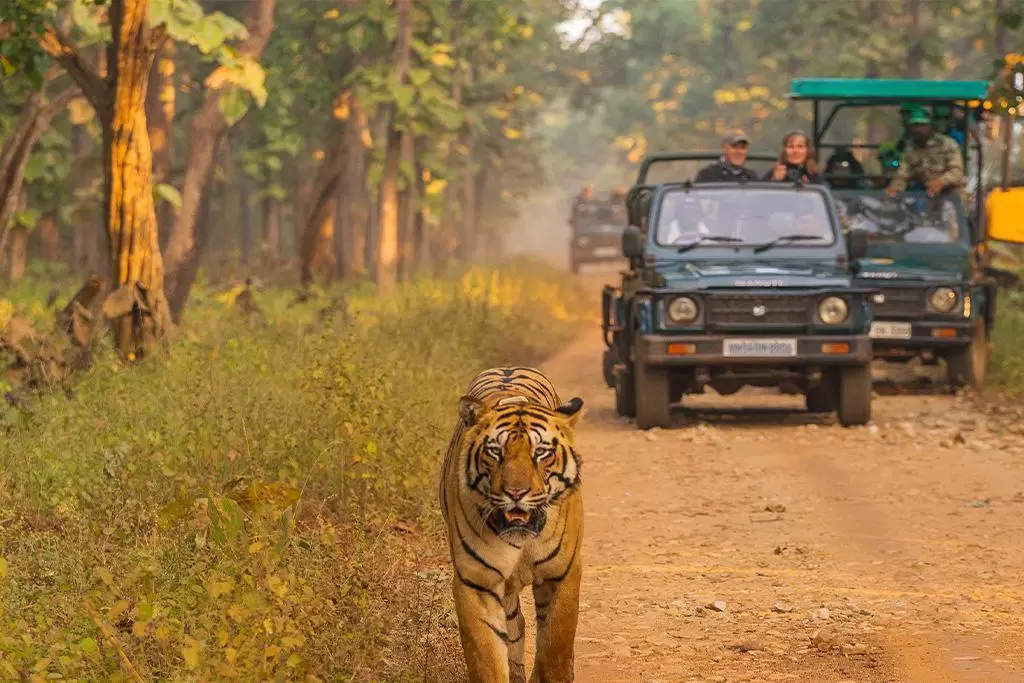
How many tigers are there in Bardiya National Park?
Nepal runs a national tiger survey roughly every four years using camera traps and occupancy sampling, and reports results by protected area. Bardiya has climbed through every round of it. The national total reached 355 tigers in 2022, close to triple the 2009 baseline of 121, and Bardiya accounted for well over a third of that increase on its own.
| Survey year | Tigers in Bardiya | Tigers in Nepal | Context |
|---|---|---|---|
| 2009 | 18 | 121 | Post-conflict low point after years of reduced patrolling |
| 2013 | 50 | 198 | Anti-poaching rebuilt, Babai valley habitat maturing |
| 2018 | 87 | 235 | Bardiya growth outpacing every other Nepali park |
| 2022 | 125 | 355 | Second highest count nationally, behind Chitwan on 128 |
Numbers on that trajectory create their own problems. A park that fills up begins exporting young males into buffer-zone forest and farmland, which is precisely where conflict occurs. Bardiya management now spends as much effort on the boundary as on the core.
Why does Bardiya hold so many tigers?
Three factors compound. The first is prey. Bardiya carries high densities of chital, sambar, hog deer, swamp deer and wild boar on the alluvial grasslands, and prey biomass is the single strongest predictor of tiger density anywhere in Asia. The second is water. The Karnali and Babai rivers braid across the park and keep grassland productive through the dry season, so prey does not disperse when the monsoon ends.
The third is space and connectivity. At 968 square kilometres with a buffer zone declared in 1996, Bardiya is large enough to hold many overlapping territories, and it sits in a continuous forest belt with Banke National Park to the east and Katarniaghat across the Indian border to the south. Tigers move. A park connected to neighbouring habitat recovers faster and is more resilient to local losses than an island of the same size.
How did the Babai valley become prime tiger habitat?
The Babai valley is the reason Bardiya works. The park was created in 1976 as the Royal Karnali Wildlife Reserve, then extended and gazetted as a national park in 1988, with the extension bringing the Babai valley inside the boundary. Villages farming that valley floor were resettled in the following years, and the abandoned fields were left to succession rather than replanted.
What grew back was tall alluvial grassland on deep, fertile floodplain soil, the most productive ungulate habitat in the subcontinent. Deer numbers rose, tigers followed, and within two decades a valley that had been farmland became the demographic engine of the park. It is a rare, well-documented example of habitat restoration by removal of pressure rather than by active planting.
What does tiger protection actually involve on the ground?
Very little of it looks like wildlife photography. The core work is patrolling: army posts inside the park, community-based anti-poaching units in the buffer zone, and foot and elephant patrols on fixed and randomised routes. Nepal built its reputation on this, recording multiple full calendar years with zero poaching of rhino, and the same enforcement network protects tigers.
The second pillar is intelligence. Most successful cases against wildlife crime start with informant networks and trade monitoring rather than with a patrol catching someone in the forest. The third is monitoring: camera-trap grids that identify individual tigers by stripe pattern, which is how a count of 125 can be stated at all rather than estimated from tracks.
The fourth, and the hardest, is conflict management. As numbers rise, attacks on livestock and, occasionally, on people rise too. Responses include electric and mesh fencing on the boundary, predator-proof livestock sheds, rapid response teams, relief payments for verified losses, and removal of individual problem animals into captivity. Conservation gains do not survive long if the surrounding communities carry the entire cost.
What else does tiger protection protect in Bardiya?
Tigers are an umbrella species, and Bardiya demonstrates it clearly. Greater one-horned rhino were reintroduced here from Chitwan, and the population has been rebuilt after heavy poaching losses during the conflict years. Wild Asian elephant use the park and the transboundary corridor into India, including some of the largest bull elephants recorded in Nepal.
The Karnali river system supports gharial and mugger crocodile, and the Ganges river dolphin still occurs in the deeper channels, one of very few places in Nepal where it does. Swamp deer, four-horned antelope, sloth bear, striped hyena and more than four hundred recorded bird species share the same protection. Anyone rafting the upper reaches of the Karnali river is passing through the catchment that keeps all of it functioning.
What are your chances of seeing a tiger in Bardiya?
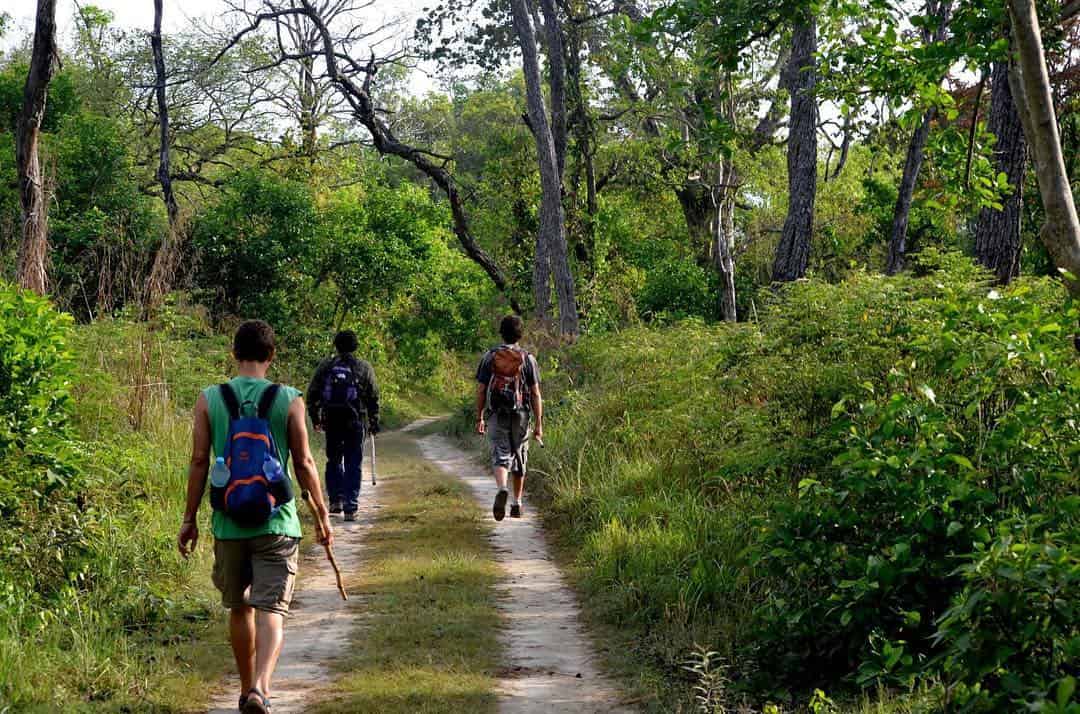
Better than anywhere else in Nepal, and still not guaranteed. Bardiya rewards patience over movement. The most productive method is sitting quietly at a river bank or machan overlooking a channel of the Karnali or Babai during the hot pre-monsoon months of March, April and May, when the grass has been burned back, water is scarce and tigers come to drink and cool off.
A few practical points. Go with a licensed guide and follow instructions exactly. Wear muted colours, stay silent, and accept that most of a good day is spent waiting. Learn alarm calls, because chital, langur and peafowl announce a moving tiger long before you see one. Give up on the idea of a single lucky morning and plan three or four full days. Visitors who compare Bardiya with Chitwan National Park usually report similar tiger numbers but fewer vehicles and better sightlines in Bardiya.
FAQ
Does Bardiya have more tigers than Chitwan?
Not quite. The 2022 national survey recorded 125 tigers in Bardiya and 128 in Chitwan. The two parks are close in both count and area, so density is broadly comparable, but Bardiya receives far fewer visitors and its open riverbanks give better sightlines, which is why it is often recommended for sightings.
When is the best time to look for tigers in Bardiya?
March to early June. Grass has been cut and burned, visibility across the floodplain is at its best, and shrinking water sources concentrate animals on the river channels. Temperatures are high, which is the trade-off. October and November are comfortable and good for general wildlife, but the tall grass makes tigers much harder to see.
How big is Bardiya National Park?
About 968 square kilometres, making it the largest national park in the Nepali Terai. It was established in 1976 as the Royal Karnali Wildlife Reserve, extended to include the Babai valley, and gazetted as a national park in 1988. A buffer zone was declared in 1996.
Are tigers dangerous to visitors in Bardiya?
Attacks on tourists inside the park are very rare, and the rules exist for a reason. Never walk in the park without a licensed guide, never approach an animal on foot, keep to designated areas, and stay silent at viewing points. Most serious incidents in the wider landscape involve people collecting fodder or firewood in the buffer zone rather than visitors.
What is the Bardiya and Banke complex?
Banke National Park was gazetted in 2010 immediately east of Bardiya, and together with the intervening forest and buffer zones the two form a single contiguous tiger conservation unit of several thousand square kilometres. Connectivity lets tigers disperse, which reduces inbreeding risk and allows the population to keep growing beyond one park boundary.