Nepal protects land under five legal categories created by the National Parks and Wildlife Conservation Act of 1973: national parks, wildlife reserves, hunting reserves, conservation areas and buffer zones. Twenty protected areas, administered by the Department of National Parks and Wildlife Conservation, now cover close to a quarter of the land area of the country. The label attached to a place is not decoration — it decides who may live inside the boundary, whose livestock may graze there, and what a visitor is permitted to do.
What law created the protected area system in Nepal?
The National Parks and Wildlife Conservation Act was passed in 1973, the year 2029 in the Nepali calendar, and it is still the backbone of conservation law in the country. Before it, wildlife protection amounted to royal hunting reserves and a single armed patrol, the gaida gasti, raised in 1959 to stop rhino poaching in the Rapti valley. The Act changed the logic completely. It gave the state power to gazette land as a protected area, to prohibit hunting and settlement inside it, to appoint a warden with judicial authority over wildlife offences, and to station the army inside the boundary. Nepal is one of very few countries where soldiers are permanently deployed inside national parks, and that arrangement traces directly to this law.
Chitwan was gazetted in the same year and became the first national park in the country. The system then grew fast. Sagarmatha, Langtang and Rara were all added in 1976. Shey Phoksundo and Khaptad followed in 1984. Bardiya began as the Royal Karnali Wildlife Reserve in 1976 and was upgraded to national park status in 1988. Makalu Barun came in 1992, Shivapuri in 2002, Banke in 2010. Parsa and Shuklaphanta, both originally wildlife reserves, were upgraded to national parks in 2017. The word Royal was dropped from every name after the monarchy ended.
What is the difference between a national park, a wildlife reserve and a conservation area?
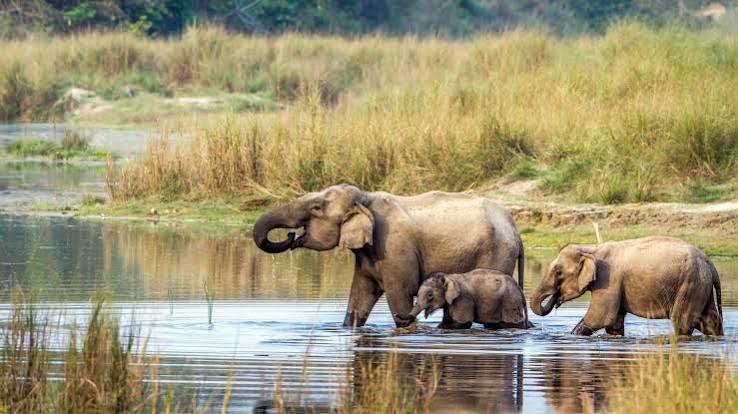
The short answer is people. A national park is managed protection-first: the core area is closed to settlement, farming, logging, grazing and hunting, and the warden enforces that. A wildlife reserve carries almost the same restrictions but is gazetted for a specific species or habitat rather than for scenic and natural value as a whole. A conservation area inverts the model. It is designed around communities that already live inside the boundary, and real management authority sits with local conservation area management committees rather than with a park office. Villagers inside a conservation area keep their fields, their firewood rights and their grazing, and in return they run the permit revenue, the anti-poaching patrols and the tourism rules themselves.
| Category | Number in Nepal | Legal character | Example |
|---|---|---|---|
| National park | 12 | Strict protection of the core area; settlement, cultivation and resource extraction prohibited inside | Chitwan National Park, gazetted 1973 |
| Wildlife reserve | 1 | Gazetted to protect a named species and its habitat; protection-first management, no settlement | Koshi Tappu Wildlife Reserve |
| Hunting reserve | 1 | The only category in which regulated, licensed trophy hunting is legal | Dhorpatan Hunting Reserve |
| Conservation area | 6 | Managed for nature and for resident communities together; local committees hold budget and rule-making power | Annapurna Conservation Area, the largest protected area in Nepal |
| Buffer zone | Declared around most parks and reserves | Shared-use belt outside the core; a fixed share of park revenue is returned to resident user groups | The buffer zone ringing Chitwan |
That table explains a lot of apparent contradictions. It is why you can walk through working barley fields and stay in a village guesthouse deep inside the Annapurna Conservation Area, but you cannot sleep inside the core of Chitwan National Park anywhere except a designated facility. It is also why Koshi Tappu Wildlife Reserve is a reserve rather than a park: it was gazetted in 1976 specifically to save the last wild water buffalo in Nepal, and its management has always been organised around that single population.
Why does Nepal keep one hunting reserve?
Dhorpatan, spread over roughly 1,325 square kilometres across Baglung, Myagdi and Rukum, is the only protected area in the country where hunting is legal, and it has held that status since it was gazetted as a hunting reserve in 1987. The reasoning is management rather than sport. The reserve holds large populations of blue sheep and Himalayan tahr on open alpine pasture, and the department issues a limited number of licences for named blocks in fixed seasons under supervision. Revenue is shared with the surrounding communities. Everything outside the licensed blocks and seasons is poaching, and the reserve carries the same snow leopard, musk deer and Himalayan black bear protections as any national park.
How do buffer zones work in Nepal?
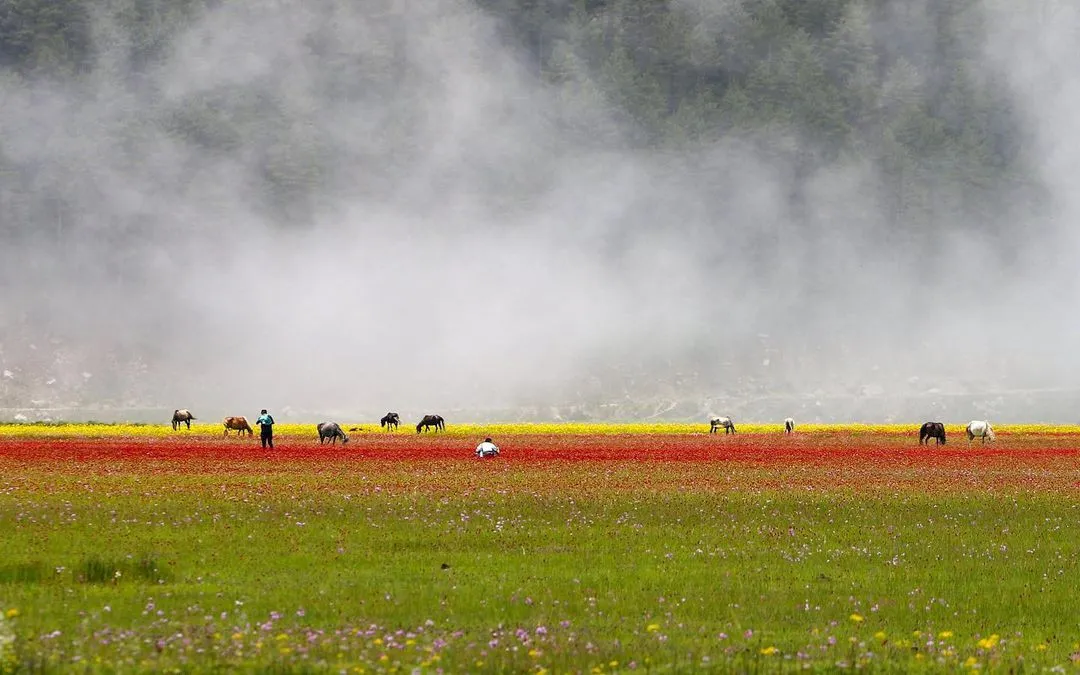
The buffer zone is the most important idea in Nepali conservation and the least understood by visitors. It was added to the Act by amendment in 1993 and given operating rules by the Buffer Zone Management Regulation of 1996, after two decades in which parks had produced rising wildlife numbers and rising local anger in equal measure. Villagers next to a park lost crops to rhino and elephant, lost livestock to tiger and leopard, lost their old grazing and firewood rights, and saw none of the tourism money.
A buffer zone is a belt of land declared immediately outside the park core where resource use is allowed but regulated. Households are organised into user groups and user committees, and a large share of the revenue the park earns is returned by law to those committees to spend on community forestry, drinking water, schools, biogas, electric fencing and predator-proof livestock sheds. The share is commonly cited as between 30 and 50 percent of park income. The result is a working buffer of community forest that also happens to be excellent habitat: tiger and rhino now breed in buffer-zone forest around Chitwan and Bardiya that was degraded scrub thirty years ago.
How much of Nepal is inside a protected area?
Roughly 23 percent of the national territory sits inside a protected area of one kind or another, a proportion higher than most countries of comparable size and far higher than the global average. Coverage is not evenly distributed. The high Himalaya and the Terai are both well represented; the mid-hills, where most of the population lives and where farming pressure is heaviest, are the thinnest. That gap is the reason two landscape-scale programmes exist alongside the parks themselves: the Terai Arc Landscape, which works on forest corridors linking the lowland parks to each other and to reserves across the Indian border, and the Sacred Himalayan Landscape in the east. Ten wetlands in Nepal also carry Ramsar listing as wetlands of international importance, a separate designation that overlaps the park system rather than replacing it.
Who actually manages the conservation areas?
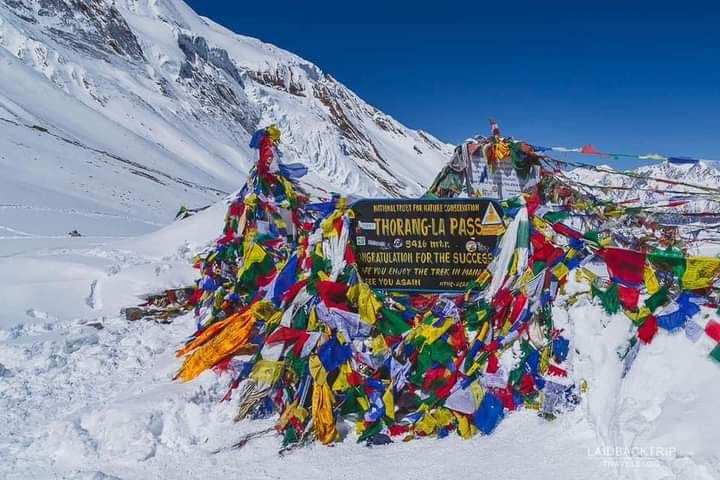
Not always the government. The Annapurna Conservation Area, declared in stages from 1986 and the largest protected area in the country at about 7,629 square kilometres, is run by the National Trust for Nature Conservation rather than by the department directly. The same trust has handled Manaslu and Gaurishankar. Kanchenjunga went further and was handed to a community management council, making it one of the first conservation areas in Asia managed by the people who live in it. Api Nampa in the far west, declared in 2010, sits under the department. This patchwork is deliberate: the conservation area category was invented precisely so that management could be delegated to whoever is best placed to do it in a given valley. When you buy a permit for the Annapurna Circuit, the money goes to a trust and to local committees rather than into a national park account.
What does the category mean for your permit and your itinerary?
In practice you will meet the system at a checkpost. National parks and wildlife reserves charge a per-person entry permit, usually collected at a gate on the way in, with a separate rate for Nepali citizens, citizens of other countries in the region, and everyone else. Conservation areas issue their own permit, bought in Kathmandu or Pokhara or at the entry post. Several areas along the northern border are additionally restricted, which means a permit issued only through a registered agency, a minimum party size and a licensed guide travelling with you. Inside a national park you cannot camp wherever you like, collect firewood, fly a drone without written permission, or walk in the core area after dark. Inside a conservation area you can stay in a family lodge in a working village and buy your dinner from the field behind it. Read the category before you plan, because it sets the shape of the trip.
FAQ
How many protected areas does Nepal have?
Twenty in total: 12 national parks, 1 wildlife reserve, 1 hunting reserve and 6 conservation areas, plus the buffer zones declared around most of the parks and reserves. Together they cover roughly 23 percent of the land area of the country.
Which was the first national park in Nepal?
Chitwan, gazetted in 1973 under the National Parks and Wildlife Conservation Act of the same year. It was inscribed as a UNESCO World Heritage Site in 1984. Sagarmatha, Langtang and Rara followed in 1976.
Can people live inside a national park in Nepal?
Not inside the core area of a national park, where settlement and cultivation are prohibited. People do live inside conservation areas by design, and they live in the buffer zones that ring most parks, where regulated resource use is permitted.
Is hunting legal anywhere in Nepal?
Only in Dhorpatan Hunting Reserve, and only under a licence issued for a specified block and season by the Department of National Parks and Wildlife Conservation. Hunting anywhere else in the protected area network, or outside the licensed blocks and seasons in Dhorpatan, is a criminal offence.
What is the largest protected area in Nepal?
The Annapurna Conservation Area, at roughly 7,629 square kilometres. It is a conservation area rather than a national park, which is why more than a hundred thousand people live and farm inside its boundary.