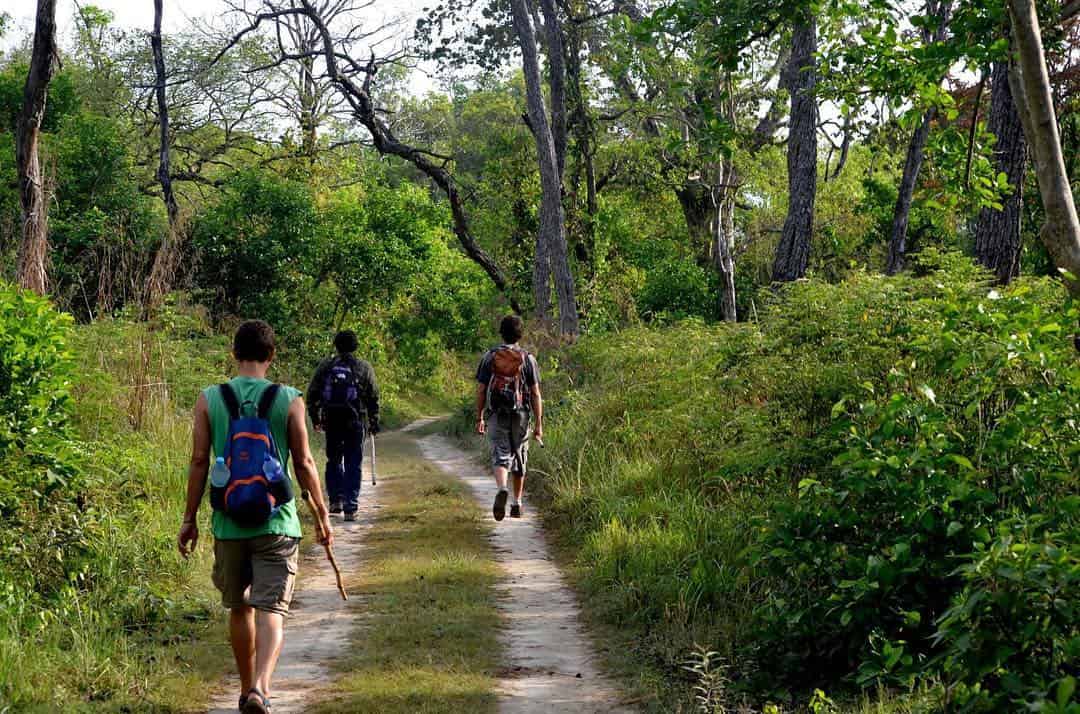
Banke National Park protects 550 sq km of sal forest and dry Churia hillside in Banke, Salyan and Dang districts of Lumbini Province, western Nepal. Gazetted in 2010, it shares a boundary with Bardia to the west, and the two are managed in practice as a single tiger landscape rather than as separate parks.
Why Banke was created at all
Banke exists because of what sits next door. Bardia had recovered a healthy tiger population by the late 2000s, and the limiting factor on further growth was space rather than protection. The forest block east of the Babai valley was already there; declaring it a national park in 2010 roughly doubled the contiguous protected forest available to those animals and connected Nepal's western Terai to the Indian side of the corridor.
That makes Banke a corridor park before it is a destination park, and the distinction matters when you decide whether to go. It was declared a Gift to the Earth under WWF's conservation programme, which is a designation about landscape connectivity rather than about visitor experience. The protected area system explained covers how these corridor designations work alongside the parks themselves.
The terrain is harsher than Bardia's. Banke is dominated by Churia hills and dry deciduous forest, rising from around 150 m in the Terai to over 1,200 m on the ridge. Water is the constraint. The Rapti river forms part of the boundary, but most internal streams are seasonal, and dry-season wildlife distribution follows the few reliable sources.
What lives there
Nepal's 2022 national tiger survey put Banke at around 25 tigers, up from a handful when the park was declared. In a park this young that is a meaningful trajectory, and it is the main conservation story here. Leopard, sloth bear, striped hyena, four-horned antelope, wild boar and several deer species are all recorded, and wild elephant move through on the Bardia corridor.
Do not come expecting rhino. Nepal's rhino translocation programme has moved animals to Bardia and Shuklaphanta, and while dispersal along the Babai corridor is possible, Banke is not a rhino park in the sense that Chitwan and Bardia are. Anyone whose priority is rhino should go west to Bardia or east to Chitwan.
Bird diversity is respectable rather than exceptional by Terai standards, with a few hundred species recorded. The interest here is forest and hill species rather than the wetland concentrations that make eastern Nepal's reserves famous. For the wider western picture, our Bardia tigers guide and the Banke park guide cover the two together.
The highway problem
The East-West Highway runs straight through the southern part of the park. This is unusual among Nepal's national parks and it is the defining management challenge. Vehicles kill wildlife on that stretch regularly, night traffic disturbs movement across the corridor, and roadside settlement pressure is constant.
Underpasses and speed restrictions have been proposed and partially implemented, with mixed results. If you drive the highway between Kohalpur and Lamahi you are passing through the park whether you stop or not, and the roadside forest you see from the bus window is the park. It explains why Banke feels less sealed off than Bardia does.
Visiting: what exists and what does not
Be clear about this before you commit. Banke has almost no visitor infrastructure. There are no established safari lodges inside or on the boundary in the way Bardia has at Thakurdwara. There is no network of jungle towers, no canoe operation, no cluster of guide offices. Community homestays exist in buffer zone villages and are basic.
The workable approach is to base at Thakurdwara for Bardia, spend most of your time there, and arrange a day into Banke through a Bardia operator who knows the entrances. Nepalgunj is the gateway, with domestic flights from Kathmandu taking about an hour, and Kohalpur is the highway junction from which everything in the far west branches. Our guide to reaching west Nepal by flight and road covers the connections in detail.
Go between October and March. April and May are extremely hot in the western Terai, over forty degrees in the afternoon, and the monsoon closes tracks between June and September. February and March give the best combination of thinned undergrowth and concentrated wildlife.
| Detail | Banke National Park |
|---|---|
| Established | 2010 |
| Area | 550 sq km |
| Buffer zone | 343 sq km |
| Districts | Banke, Salyan, Dang |
| Province | Lumbini |
| Elevation range | About 150 m to 1,250 m |
| Tigers, 2022 national survey | Around 25 |
| Adjoining park | Bardia, immediately west |
| Nearest airport | Nepalgunj |
| Accommodation | Buffer zone homestays only; base at Bardia |
| Best season | October to March |
Who should actually go
Banke rewards a particular kind of traveller: someone who has already done a Terai safari, who is spending a week or more in the far west, and who is more interested in landscape and conservation than in a checklist of sightings. If you have three days in Nepal and want to see wildlife, this is the wrong park. If you are building a longer western itinerary, adding a day here alongside Bardia costs little and shows you a piece of the Terai Arc that almost no foreign visitor sees.
Pair it with the Tharu villages of the buffer zone, where the cultural interest is at least as strong as the wildlife. Our guide to Tharu culture around Bardia covers that side, and the Bardia destination page covers the base you will be working from. For how Banke measures against the rest, see Nepal's national parks compared.
Frequently Asked Questions
Can you visit Banke National Park independently?
With difficulty. There is no visitor infrastructure at the entrances, no vehicle hire and very little signage. Nearly everyone visits through a Bardia-based operator running a day trip, which is the practical arrangement.
Where do you stay for Banke?
At Thakurdwara on the Bardia side, which has the lodges, the guides and the vehicles. Community homestays exist in Banke's buffer zone villages and are worth considering if you want the local experience and can manage basic facilities.
How many tigers are in Banke?
Nepal's 2022 national survey recorded around 25, a significant increase since the park was declared in 2010. The population is functionally part of the larger Bardia-Banke complex rather than an isolated group.
Are there rhinos in Banke?
Not as a resident population. Nepal's rhino translocations went to Bardia and Shuklaphanta. For reliable rhino viewing in the west, go to Bardia; in the centre, Chitwan.
How do I get to Banke from Kathmandu?
Fly to Nepalgunj, roughly an hour, then drive north to Kohalpur and west along the East-West Highway. Overland from Kathmandu is a very long day, so most visitors fly and pick up transport at the airport.
When should I avoid going?
April and May, when western Terai afternoons regularly exceed forty degrees, and the monsoon from June to September, when tracks are impassable and most activity stops.