Nepal protects roughly a quarter of its land area, an unusually high share for a country this size, and it does so across twelve national parks plus a set of wildlife reserves, conservation areas and one hunting reserve. The parks are not interchangeable. A visitor who books Chitwan expecting a tiger, or Rara expecting a jeep safari, has picked the wrong one.
The country splits neatly into two kinds of park. The lowland Terai parks protect subtropical grassland and sal forest, and they are where the large mammals live: rhino, tiger, elephant, gaur, swamp deer. The mountain parks protect alpine meadow, glacier and juniper scrub, and they are visited on foot for landscape and for high-altitude species that most people never see. Everything below sorts along that line.
How many national parks does Nepal have?
Nepal has twelve national parks. Alongside them sit Koshi Tappu Wildlife Reserve, Dhorpatan Hunting Reserve, six conservation areas including Annapurna and Manaslu, and a set of buffer zones that extend protection into the surrounding farmland. Shuklaphanta and Parsa were both upgraded from wildlife reserve status to national park status in 2017, which is why older guidebooks still list them under their previous names.
| Park | Region | Landscape | Flagship wildlife | Best months | Visitor pressure |
|---|---|---|---|---|---|
| Chitwan | Central Terai | Sal forest, riverine grassland | One-horned rhino, gharial, sloth bear | October to March | Highest in Nepal |
| Bardiya | Western Terai | Sal forest, Karnali floodplain | Tiger, wild elephant, river dolphin | February to April, October to December | Moderate |
| Banke | Western Terai | Dry deciduous forest | Tiger corridor species, four-horned antelope | October to April | Very low |
| Shuklaphanta | Far western Terai | Open phanta grassland | Swamp deer herds, tiger, grassland birds | January to April | Very low |
| Parsa | Central Terai | Sal and hill sal forest | Sloth bear, wild dog, elephant | November to March | Low |
| Koshi Tappu (reserve) | Eastern Terai | Wetland and river islands | Wild water buffalo, migratory waterbirds | November to February | Low, birders only |
| Shivapuri Nagarjun | Kathmandu Valley rim | Mid-hill forest | Leopard, forest birds | All year | Day trippers from Kathmandu |
| Shey Phoksundo | Dolpa, Karnali | Trans-Himalayan high desert | Snow leopard, blue sheep | May to October | Very low, permit controlled |
| Rara | Mugu, Karnali | Lake basin, conifer forest | Red panda, Himalayan black bear | April to June, September to November | Low but rising |
| Khaptad | Sudurpashchim | Rolling high plateau, meadow | Musk deer, wild boar, meadow flora | April to June, September to November | Very low |
| Sagarmatha | Solukhumbu | Glacier and high Himalaya | Himalayan tahr, musk deer, lammergeier | March to May, October to November | High on the main trail |
| Langtang | Rasuwa | Forested valley to alpine pasture | Red panda, Himalayan tahr | March to May, October to November | Moderate |
The Terai parks: where the big animals are
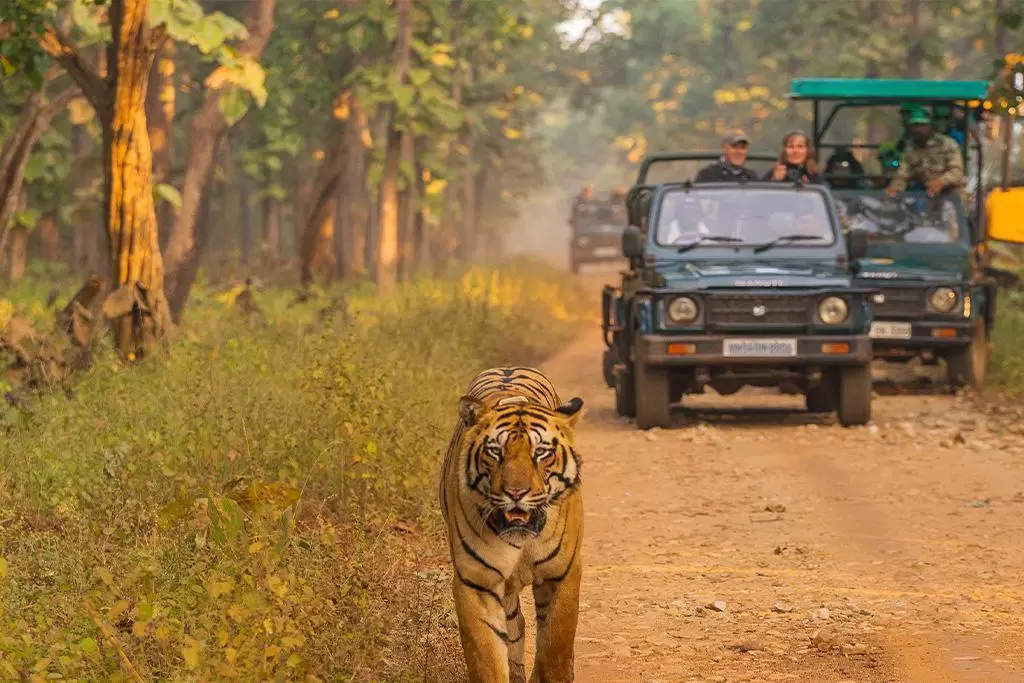
Chitwan is the default and the reason is genuine. It was Nepal’s first national park, it holds the country’s largest population of greater one-horned rhinoceros, and its infrastructure is decades ahead of everywhere else. Sauraha on the park edge has lodges at every price level, licensed guides, canoe trips on the Rapti and a reliable elephant breeding centre. The trade-off is company. On a good winter morning you will share the forest with a great many other jeeps.
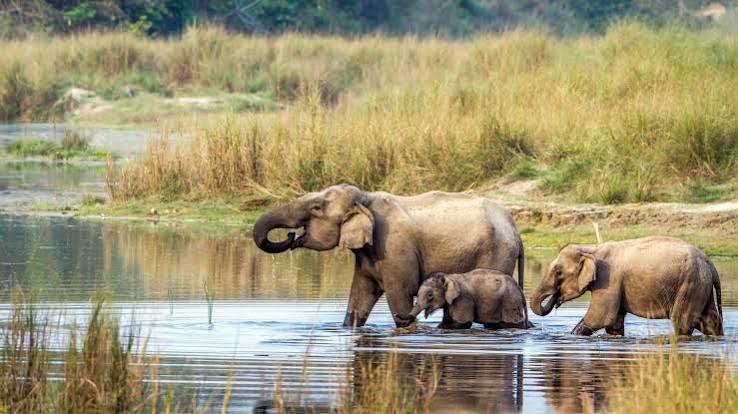
Bardiya National Park is the better choice for anyone whose priority is a tiger. It is larger and far less visited than Chitwan, the Karnali and Geruwa rivers run through it, and sightings from the riverbank hides in the dry months of February to April are among the most consistent in South Asia. Bardiya also holds wild elephant, gharial and Gangetic river dolphin, and the surrounding villages are Tharu, with a distinct language, architecture and cuisine that most Chitwan itineraries never touch.
The three quiet Terai parks are Banke, Parsa and Shuklaphanta. Banke was declared in 2010 largely to secure a tiger corridor linking Bardiya with protected forest across the Indian border, and it has minimal visitor infrastructure. Parsa adjoins Chitwan and shares its wildlife with a fraction of the traffic. Shuklaphanta in the far west protects the open grasslands the Tharu call phanta and is best known for large congregations of swamp deer, which is a spectacle you cannot see anywhere else in the country.
The mountain parks: landscape rather than game drives
The high parks are entered on foot and measured in days, not drives. Sagarmatha protects the Everest massif and the Sherpa settlements within it. Langtang, the closest high park to Kathmandu, runs from oak and rhododendron forest up to yak pasture below the Langtang Lirung icefall. Both are trekking destinations first and wildlife destinations second, though red panda and Himalayan tahr are present in both.
Further west, Shey Phoksundo is Nepal’s largest national park by area and the one that looks least like the rest of the country. Behind the lake the land turns trans-Himalayan: bare, ochre, Tibetan in architecture and in Buddhist practice. Snow leopard and blue sheep live here in numbers, though seeing the former still takes luck and patience. Upper Dolpo requires a restricted area permit and organised logistics.
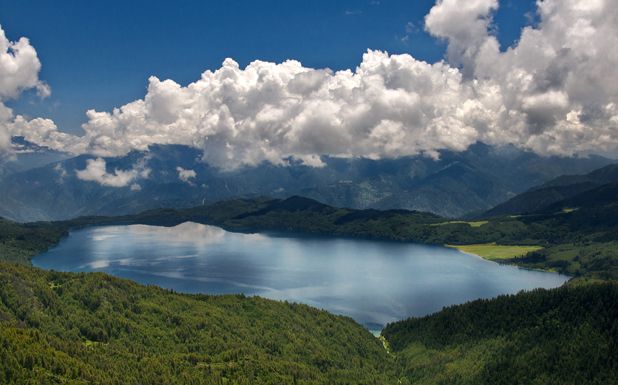
Rara National Park is the smallest national park in Nepal and is built around a single feature, Rara Lake, the largest lake in the country, sitting in a basin ringed by blue pine and spruce at around three thousand metres. It is now reachable by road as well as by air into Talcha, and it works as a short, low-effort trip by Karnali standards.
Khaptad National Park in Sudurpashchim is the strangest of them all: not a peak and not a jungle, but a rolling grassland plateau at around three thousand metres, cut by streams and grazed in summer. It carries a strong religious identity through the ashram of Khaptad Baba and the Tribeni confluence, and it sees very few foreign visitors in any given season.
Which park should you actually choose?
If you have three days and want to see a rhino, go to Chitwan. If you have five days and want a tiger, go to Bardiya in the dry pre-monsoon window. If you are a birder, Koshi Tappu in winter beats everything else in the country. If you want grassland and solitude, Shuklaphanta. If you want mountains without the Everest queue, Langtang, Rara or Khaptad depending on how far off the grid you are willing to go.
Two practical notes apply everywhere. Entry permits for national parks are issued by the Department of National Parks and Wildlife Conservation, usually through park headquarters or the Nepal Tourism Board office, and the fee structure differs for foreign nationals, SAARC nationals and Nepali citizens. Rates change, so confirm them at the time of travel rather than relying on a figure in a guidebook. Second, all jungle activity in the Terai parks must be done with a licensed guide, and walking safaris carry real risk from rhino and sloth bear. Follow the briefing.
FAQ
How many national parks are there in Nepal?
Twelve, alongside Koshi Tappu Wildlife Reserve, Dhorpatan Hunting Reserve and six conservation areas. Shuklaphanta and Parsa were upgraded from wildlife reserves to national parks in 2017.
Which national park in Nepal is best for tigers?
Bardiya in the western Terai. It is less visited than Chitwan, the riverbank viewpoints along the Karnali and Geruwa give long sightlines, and the dry months of February to April concentrate animals near water.
What is the best time to visit Nepal national parks?
For the Terai parks, October to April, with the driest and most productive wildlife viewing from February to April. For the mountain parks, spring and autumn, since winter closes high passes and the monsoon brings leeches and cloud.
Do you need a guide to enter a national park in Nepal?
In the Terai parks, yes. Jungle walks, jeep drives and canoe trips all require a licensed guide, and entry on foot without one is not permitted. Mountain park entry rules vary, and some restricted areas require an organised group and a special permit.
Which is the largest national park in Nepal?
Shey Phoksundo in Dolpa, which stretches across trans-Himalayan terrain in the west of the country. Rara National Park in Mugu is the smallest.