Shey Phoksundo sits at about 3,610 m at the head of a side valley in Dolpa District, Karnali Province, three to four days on foot north of the Juphal airstrip. It lies inside Shey Phoksundo National Park, the largest national park in Nepal, and there is no road, no short cut and no way in that avoids a restricted-area permit arranged through a registered agency.
How you actually get there
Almost everyone flies Kathmandu to Nepalgunj, sleeps there, and takes an early morning flight on to Juphal, the strip that serves Dolpa. The Juphal leg is short, well under an hour, and it is also the part of the trip that goes wrong most often. Cloud shuts the strip regularly, and a lost day at either end of the trek is common enough that you should build two spare days into the plan rather than treat a delay as bad luck.
From Juphal the trail drops in two to three hours to Dunai, the district headquarters on the Thuli Bheri. Dunai is the last place with proper shops, a bank and dependable mobile signal. Beyond it the route follows the Suli Gad north through Ankhe and Chhepka into the park, then makes one long, unrelenting climb out of the gorge to Ringmo, the village at the lake outflow. Reckon on three days from Juphal at a sensible pace, four if you want that climb split.
Phoksundo at a glance
| District and province | Dolpa, Karnali |
| Lake elevation | About 3,610 m |
| Protected area | Shey Phoksundo National Park, the largest in Nepal |
| Nearest airstrip | Juphal, flights from Nepalgunj |
| Juphal to the lake | 3 to 4 days on foot each way |
| Round trip from Nepalgunj | 10 to 14 days including weather margin |
| Best season | May to October |
| Permits | Lower Dolpo restricted-area permit plus national park entry |
| Beds | Simple lodges and homestays at Ringmo, camping beyond |
What the lake looks like when you reach it
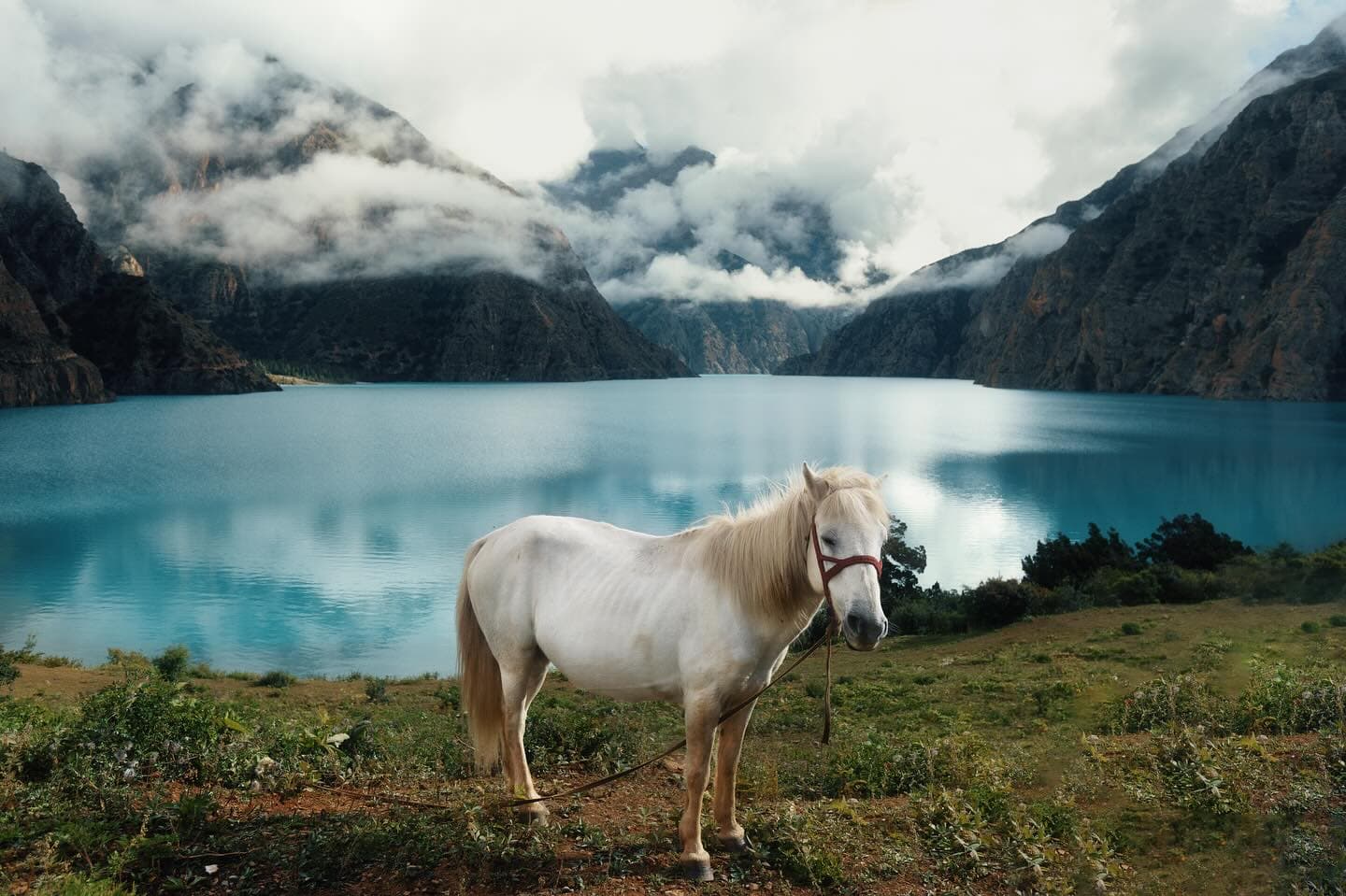
The colour is what people come for, and it shifts hour by hour. Flat morning light gives a deep ink blue; by late morning, with sun on the water, it turns the turquoise that shows up in every photograph. The lake is roughly five kilometres long and hemmed in by cliffs on its western side, which is why the trail towards Upper Dolpo runs along a narrow ledge cut into the rock above the water rather than around the shore.
You will read that Phoksundo is the deepest lake in Nepal. Be careful with this. The figure usually quoted for Phoksundo is about 145 m and the figure usually quoted for Rara is about 167 m, but different surveys and different sources put the two in different orders, so anyone who tells you flatly which is deeper has chosen a source rather than reported a settled fact. What is not in dispute is that both are exceptionally deep for their size, which makes them an obvious pairing on a long Karnali trip that also takes in Rara Lake.
The best view is not from the shore. A short, steep climb on the ridge above Ringmo puts the whole lake, the waterfall below the village and the peaks at the far end into one frame. Give it an hour in the late afternoon.
Ringmo and the monastery above it
Ringmo is a compact village of flat-roofed stone houses stacked above the outflow, juniper drying on the roofs and a row of chortens on the approach. It is Bon rather than Buddhist, and that shows in small ways: the kora at Tshowa Gompa on the shoulder above the lake is walked anticlockwise, and the prayer wheels turn the opposite way from the ones you will have seen in Kathmandu. The gompa is among the older active religious sites in the country and the walk up takes about thirty minutes.
Facilities are limited and seasonal. There are simple lodges, but menus are short, everything is carried in, and prices reflect that. Bring cash in small notes from Nepalgunj or Dunai, because there is nowhere to draw money once you leave the road. For the history of the Bon tradition here, and how the lake came to stand in for Tibet on film, our longer article on Shey Phoksundo Lake covers the ground this page does not.
Permits, guides and the rules that come with them
Phoksundo is inside the Lower Dolpo restricted area. That means a restricted-area permit issued through a registered trekking agency, a licensed guide, and in practice a minimum party size, on top of a separate national park entry fee. The restricted permit is charged per person per week. Upper Dolpo beyond the lake is charged at a far higher rate again, so an itinerary crossing the Kang La towards Shey Gompa costs several times what a trip to the lake and back does. Which permit applies to which valley is set out in our guide to restricted-area permits for Dolpa, Humla and Mugu.
You cannot obtain the restricted permit yourself as an independent trekker, so this is not a route where you land in Kathmandu and improvise. Arrange it before you fly.
When to go
May to October is the working window, and Dolpa breaks the usual Nepali rule about the monsoon. The high country north of the lake sits in the rain shadow of the Dhaulagiri massif, so June to August is genuinely walkable up there while the rest of the country is under water. The catch is that the approach from Juphal is on the wet side of the divide, so you take the mud and the leeches on the way in and get the dry country as the reward. Late September and October give the cleanest flying weather and the best chance of the plane leaving on schedule. Winter closes the passes and empties the village.
How hard it is, honestly
The distances are not extreme but the ground is. The climb from Chhepka to Ringmo gains the best part of a thousand metres in a day, much of it on loose trail, and the ledge path above the lake is exposed enough that people with a poor head for heights find it unpleasant. Ringmo is above 3,600 m, so a night at Chhepka and an unhurried arrival matter more than fitness does. The acclimatisation guide is worth reading before you book, particularly if you intend to continue over the Kang La. For the wider district, its road plans and what else it holds, see the Dolpa district guide, and for the park itself the Shey Phoksundo National Park guide.
Frequently Asked Questions
Can you visit Shey Phoksundo without a guide?
No. The lake sits inside the Lower Dolpo restricted area, and a restricted-area permit is issued only to a party organised through a registered trekking agency with a licensed guide. There is no independent option.
How many days do you need from Kathmandu?
Twelve to fourteen days door to door is realistic: two travel days to Juphal via Nepalgunj, three to four walking in, a day or two at the lake, three days out, and at least one spare day for a cancelled flight.
Is Shey Phoksundo really the deepest lake in Nepal?
Sources disagree. Phoksundo is usually given as about 145 m and Rara as about 167 m, but the surveys behind those numbers differ and both lakes are described as the deepest in different places. Treat the question as unsettled.
Can you trek there during the monsoon?
Yes, and many people do. The country north of the lake lies in the Dhaulagiri rain shadow and stays dry, though the approach from Juphal is wet and leech-ridden in July and August, and flights are least reliable then.
Is there anywhere to stay at the lake?
Ringmo village, a few minutes above the outflow, has simple lodges and homestays that open in season. Food is basic and everything is carried in, so bring cash in small notes and do not expect a menu.
How cold does it get?
Nights are near or below freezing from October onwards even when the days are warm and still, because the village sits above 3,600 m. A four-season sleeping bag is standard and lodge rooms are unheated.