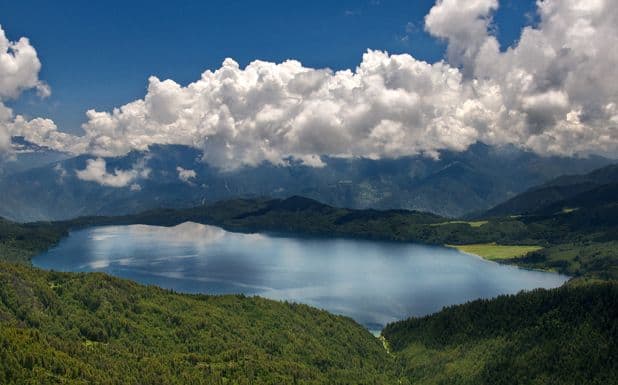
Rara Lake lies at 2,990 m in Mugu district, Karnali Province, and is the largest lake in Nepal at roughly 10.8 square kilometres. It is the centrepiece of Rara National Park, the smallest national park in the country. Getting there means a flight to Talcha airstrip or two long days of driving, and it is the journey that keeps the crowds away.
| Detail | Figure |
|---|---|
| Lake elevation | 2,990 m |
| Surface area | about 10.8 square kilometres |
| National park area | 106 square kilometres |
| District and province | Mugu, Karnali |
| Nearest airstrip | Talcha, 2 to 3 hours from the lake on foot |
| Flight from Nepalgunj | about 45 minutes, weather permitting |
| Shoreline circuit | roughly 13 km, one day |
| Best months | September to November, April to June |
How to actually get there
There are three ways in, and they suit different budgets and tempers.
The flight is the fast one. Nepalgunj to Talcha takes about 45 minutes on a small aircraft, and from Talcha it is a two to three hour walk or a short jeep ride down to Rara village and the lake. The catch is that the strip sits high and unlit and flights only operate in clear morning weather, so cancellations of a day or more are routine. Never book a flight out of Talcha for the day before an international departure.
The road is the slow one, and it now goes all the way. Nepalgunj to Surkhet, Surkhet to Jumla and Jumla on to Gamgadhi and Talcha is two to three hard days by jeep or local bus on a mountain road that is rough for most of its length and closes with landslides in the monsoon. Our guide to reaching west Nepal by flight and road covers the connections in detail.
The walk is the good one. From Jumla the classic approach takes two to three days over the Ghurchi Lagna pass at around 3,450 m, through pine forest and village fields, and it is the version that gives the lake a context rather than dropping you at it. The Jumla district guide covers the town at that end, and the Mugu district guide covers the country around the lake itself.
What there is to do once you are there
The lake is the reason to come, and a full circuit of the shore is about 13 km on a level path that takes a comfortable day. Rowing boats operate from the north shore in season, with no motors permitted. Neither of those is why people stay a second night.
The views are. Murma Top, a grassy ridge on the western side, is a two to three hour climb from the lake and gives the standard photograph of the water with the Himalaya behind it. On the southern shore the Chuchemara ridge rises to just over 4,000 m and takes most of a day, with a wider panorama and almost nobody on it. Both are best in the first hours after dawn, before the surface of the lake loses its stillness.
The other thing worth doing is very little. This is not a place with an itinerary. Three nights is the right length: one to arrive, one to walk a ridge, one to sit by the water.
Where to stay and what to bring
Accommodation is limited and simple. There are basic lodges and homestays near the park headquarters and in the villages on the approach, plus organised camping, which is what most trekking groups use. Nothing on the shore is more than plain, rooms are unheated, and hot water is a bucket. The park does not permit building close to the water, which is exactly why the setting has survived.
Bring cash. There is no dependable ATM beyond Jumla, and card payment does not exist. Bring a warm sleeping bag whatever the month, because at 2,990 m the nights are cold even in June, and bring a torch. Park entry is charged per person at the gate, with a lower rate for Nepali and SAARC visitors, and is paid in rupees.
How deep is it, and the argument about it
Rara is usually cited at about 167 m deep, which would make it the deepest lake in Nepal. Shey Phoksundo in Dolpa is usually cited at around 145 m, and some surveys reverse the order. The honest position is that the figures come from different surveys using different methods, and that no single measurement is universally accepted. What is not in dispute is surface area: Rara is comfortably the largest lake in the country, and Shey Phoksundo is not close. Our article on how deep Rara Lake actually is works through the individual surveys.
Our Rara National Park ecology guide goes into the red panda, musk deer and bird populations the park protects, and our longer article on Rara National Park and Rara Lake covers the history of the park, including the resettlement of the two villages that stood on the shore before it was gazetted in 1976. This page is about getting there and what the visit is like; those two cover what the place is.
When to go
Late September to November is the best window: clear air, warm days, cold nights and settled flying weather. April to June is the second season, with wildflowers on the meadows and hazier views. December to March is beautiful and hard, with snow on the passes, sub-zero nights and lodges that may be shut. The monsoon from late June to early September closes the roads with landslides and hides the mountains behind cloud, and flights are at their least reliable. Our guide to the seasons in west Nepal covers the trade-offs.
Rara combines naturally with the wider region: our ten-day Karnali circuit itinerary links it with Jumla and the Sinja valley, and Shey Phoksundo in Dolpa is the obvious second lake for anyone who has come this far.
Frequently Asked Questions
How do you get to Rara Lake?
Fly Nepalgunj to Talcha in about 45 minutes and walk or drive two to three hours to the lake, or drive from Nepalgunj through Surkhet and Jumla over two to three days, or walk in from Jumla in two to three days over the Ghurchi Lagna pass.
How many days do you need at Rara Lake?
Three nights is right: one to arrive, one for Murma Top or the Chuchemara ridge, one for the shoreline circuit. Allow at least two spare days in the wider trip for flight cancellations at Talcha.
Is Rara the deepest lake in Nepal?
It is commonly cited at about 167 m, which would make it the deepest, but Shey Phoksundo in Dolpa is cited at around 145 m and some surveys put it first. Rara is unambiguously the largest by surface area.
Where do you stay at Rara Lake?
Basic lodges and homestays near the park headquarters and in nearby villages, or in tents with an organised group. Rooms are unheated, hot water comes in a bucket, and no building is permitted close to the shore.
When is the best time to visit Rara Lake?
September to November for the clearest air and the most reliable flights, or April to June for wildflowers and hazier views. Avoid the monsoon, when the roads slip and the flights rarely operate.
Do you need a permit for Rara National Park?
Park entry is charged per person at the gate in Nepali rupees, with a lower rate for Nepali and SAARC visitors. No restricted-area permit is required for the lake itself, unlike neighbouring Mugu and Humla routes.