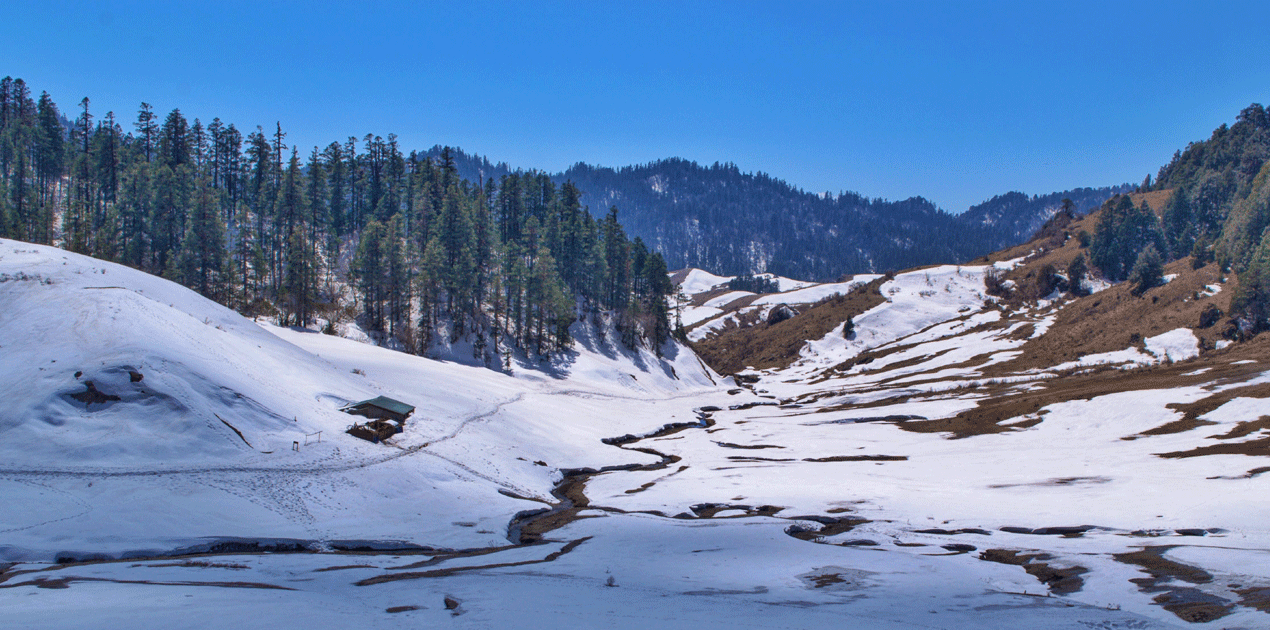
Khaptad National Park protects a rolling grassland plateau at around 3,000 m where the districts of Bajhang, Bajura, Doti and Achham meet, in Sudurpashchim Province. It covers 225 sq km, was gazetted in 1984, and no road reaches its centre. Every approach ends with a walk of at least a day out of the forest and onto the rim.
Four ways in, and none of them are quick
The absence of a road is the single fact that shapes any trip here. The plateau is ringed by road heads in four districts, and which one you use depends on where you are coming from rather than on which is best.
From Dhangadhi or Attariya in the Terai the usual line runs up to Silgadhi in Doti, on by jeep to Jhigrana, and then a walk of a day and a half to the ashram area at the centre of the plateau. From Bajhang the approach is from Chainpur, from Bajura it is from Martadi, and from Achham it is from Sanphebagar, which also has an airstrip that sees occasional service. In every case the last stretch climbs through oak and rhododendron onto the rim, and the transition is abrupt: hours of dense forest, then the trees stop and the whole plateau opens at once.
Khaptad in numbers
| Area | 225 sq km, with a buffer zone around it |
| Established | 1984 |
| Districts | Bajhang, Bajura, Doti and Achham |
| Province | Sudurpashchim |
| Plateau elevation | About 3,000 m |
| Main road heads | Silgadhi and Jhigrana (Doti), Chainpur (Bajhang), Martadi (Bajura), Sanphebagar (Achham) |
| Walk in | 1 to 2 days from the nearest road head |
| Best season | March to June, September to November |
| Birds recorded | Well over 200 species |
What you actually see up there
The plateau is not one meadow but a mosaic of them, known locally as patans, separated by belts of fir, oak and rhododendron. Walking between them is easy going by Nepali standards, with gentle gradients and open sightlines, which is why Khaptad suits people who want high country without a pass crossing. In April and May the rhododendron belt on the rim is in full colour; from late June the meadows themselves flower, which is the sight the plateau is known for locally, and also the point at which the trails are wettest.
The set pieces sit close together. Tribeni, where three streams meet, is the focus of the Ganga Dashahara fair in May or June and draws pilgrims from across the far west. Sahasra Linga, the highest point on the plateau, is a short climb with a view north to the Api and Saipal ranges on a clear morning. Khaptad Daha, a small lake, and the Ganesh and Nagdhunga shrines fill out a comfortable two-day circuit from the ashram.
The rules inside the religious area
Khaptad Baba lived on this plateau for decades until his death in 1996, and the ground around his ashram is treated as a religious zone. Meat, alcohol and animal sacrifice are not permitted there, and the ashram keeps hours and expectations of quiet that visitors are asked to respect. This is a local norm rather than something rangers enforce, and it holds. The story of the man and the ashram he built is told in our article on the Khaptad Baba ashram trek.
Wildlife and the herb economy
Khaptad is a birding park more than a mammal park. Well over 200 bird species have been recorded, the Himalayan monal among them, and the mix of open meadow and closed forest at a single elevation makes the edges productive in a way most parks are not. Barking deer, Himalayan black bear, leopard and musk deer are all present but seen far less often than the wildlife of the Terai reserves.
The other thing the plateau is known for is medicinal plants. Herb collection here is a real part of the local economy, and much of what leaves these meadows joins the wider Himalayan herb trade. The ecology behind that, and what collection pressure means for the park, is covered in the Khaptad biodiversity guide.
Where to sleep and what to bring
There is no lodge circuit in the sense that Annapurna has one. The ashram area has basic accommodation, there are a few park and army buildings, and beyond that most groups camp. Food is what you carry or what is cooked for you, there is no shop on the plateau, and mobile signal is unreliable across most of it. Nights are cold from October onwards even after warm days, because the plateau is exposed and there is nothing to hold the heat.
Stream water is available but should be treated. Bring cash from Silgadhi or Martadi. If you are combining Khaptad with the pilgrimage to Badimalika in Bajura, allow more days than the map suggests, because the two are close in a straight line and far apart on foot; our Badimalika guide covers that route.
When to go
March to June and September to November are the two windows. Spring gives rhododendron on the rim and long dry spells; autumn gives the clearest views north to the high peaks and firm trails underfoot. The monsoon brings the meadow flowers and also mud, leeches on the forest approach and cloud that can sit on the plateau for days at a time. From December to February the plateau holds snow and most visitors stay away. Reaching this corner of the country takes planning of its own, which the Bajhang district guide and the practical piece on getting to west Nepal by flight and road all address.
Frequently Asked Questions
How long does the walk into Khaptad take?
One to two days from the nearest road head. From Jhigrana in Doti most people reach the ashram area in a day and a half. The approaches from Chainpur, Martadi and Sanphebagar take a similar time.
Do you need a permit for Khaptad National Park?
You need a national park entry permit, charged per person at separate rates for foreign visitors, SAARC nationals and Nepalis. It is not a restricted area, so no agency booking or special permit is involved.
Is there accommodation inside the park?
Only basic rooms around the ashram area and a few park buildings. Most groups camp, carry their own food and treat stream water. There are no shops or teahouses on the plateau itself.
What is the best month to visit Khaptad?
April and May for rhododendron and settled weather, or October and early November for the clearest mountain views. The meadows flower during the monsoon, but the approach is muddy and the plateau is often in cloud.
Can you see the high Himalaya from Khaptad?
On a clear morning from Sahasra Linga, yes, with the view running north to the Api and Saipal ranges. Autumn gives the best chance; in spring haze the peaks often stay hidden until after rain.
Are there rules about food and behaviour in the park?
Around the ashram, meat, alcohol and animal sacrifice are not permitted, and visitors are expected to keep the area quiet. It is a local religious norm rather than a ticketed rule, and it is observed strictly.