
Khaptad National Park protects about 225 square kilometres of rolling grassland plateau and mid-hill forest in Sudurpashchim Province, spread across the districts of Bajhang, Bajura, Doti and Achham. Gazetted in 1984, it is the only protected area in Nepal built around an open plateau at roughly 3,000 metres rather than a river valley or a peak. That single feature gives it a flora and a bird community found nowhere else in the country at the same scale.
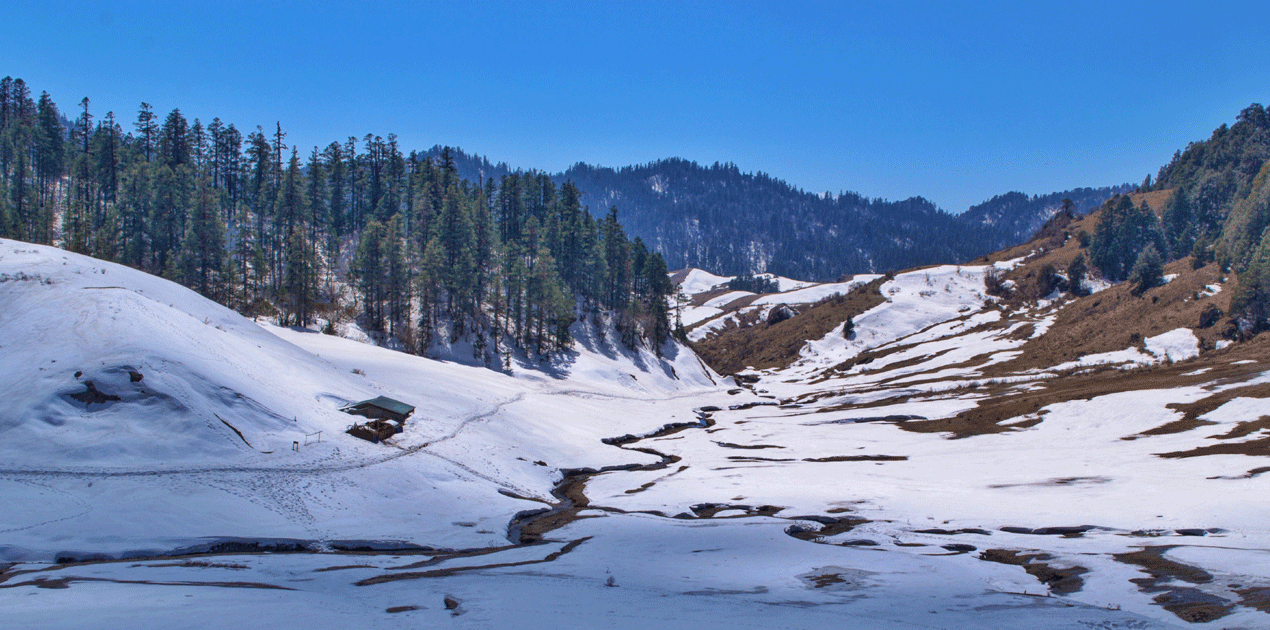
What kind of landscape is the Khaptad plateau?
Most of Nepal is vertical. Khaptad is not. The park core is a broad, gently undulating tableland that sits between roughly 2,800 and 3,300 metres, with the overall protected area dropping to around 1,400 metres on its outer slopes. On top, the ground rolls in long grassy swells broken by dark islands of fir, oak and rhododendron forest, and cut by shallow streams that feed the Seti and Karnali systems.
Ecologists call the grassland units patans. There are said to be twenty-two of them, each a distinct meadow with its own name, soil moisture and flowering sequence. Because the plateau is flat enough to hold water, the patans behave partly like wet meadows and partly like alpine pasture, which is why they support species assemblages you would normally have to climb another thousand metres to find. Anyone travelling through Doti on the way in gets a clear sense of the transition from subtropical valley to temperate plateau in a single day of driving.
What grows on the patan grasslands?
The patans are the biological heart of the park. Through the monsoon and immediately after it, they carry a dense herb layer rather than a simple grass sward. Primula, potentilla, anemone, gentian, buttercup, cinquefoil, wild iris and several orchid genera flower in overlapping waves from June through September. In a good year the meadows change colour every two or three weeks as one family gives way to the next.
The surrounding forest belt is dominated by fir, hemlock, oak, birch and three or four rhododendron species, which flower earlier, from late March into May. Below that, chir pine and mixed broadleaf forest takes over on the descent toward the district towns. This vertical stack of forest types inside a small park is why Khaptad records a plant list out of all proportion to its area, with several hundred flowering species catalogued and a substantial fraction of those used medicinally.
Which medicinal plants grow in Khaptad?
Far western Nepal has one of the oldest continuous herb-collecting traditions in the Himalaya, and Khaptad sits at its centre. Species recorded in the park and its buffer zone include jatamansi, kutki, atis, panch aunle, chiraito, timur and several Aconitum and Rheum species. Collection is regulated inside park boundaries, and unregulated harvesting outside them is the single biggest threat to these populations.
The economics are blunt. A porter load of dried roots is worth more than a season of subsistence farming, so pressure on the resource is constant. Effective protection here has meant working with buffer zone user groups on rotational harvest, quotas set by the community, and cultivation trials that take pressure off wild stands, rather than simple prohibition.
| Season | Months | What is happening on the plateau | Best for |
|---|---|---|---|
| Late spring | Late March to mid-May | Rhododendron and oak forest in flower, meadows still brown, nights near freezing | Forest birding, pheasants, clear mountain views |
| Early monsoon | June to mid-July | First herb flush on the patans, frequent cloud and afternoon rain | Early wildflowers, green meadows |
| Peak monsoon | Mid-July to August | Full meadow bloom, leeches on the approach trails, heavy cloud | Botany and photography of the flowering patans |
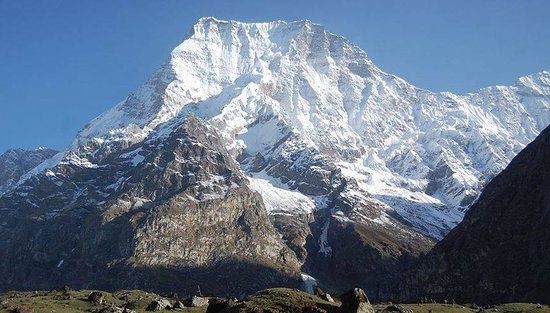
| Post-monsoon | September to mid-November | Late gentians, drying grass, clearest air of the year | Mammal tracks, raptors, long views to Api and Saipal |
| Winter | December to February | Snow on the plateau, most facilities closed, herders gone | Solitude only, with full winter equipment |
What birds live in Khaptad National Park?
Khaptad is a birding park first and a mammal park second. The mix of open grassland, dense fir and oak forest, streams and forest edge inside a compact area produces a long species list and, more usefully for a visitor, easy viewing. Forest edge along the patan margins at dawn is the single most productive habitat.
Expect Himalayan monal, the danphe and national bird of Nepal, on grassy slopes near the forest edge in the early morning. Koklass and kalij pheasant use denser cover. Blood pheasant appears in the higher fir. Woodpeckers, nuthatches, treecreepers, laughingthrushes, minivets, tits and warblers work the oak and rhododendron. Overhead the plateau draws raptors: Himalayan griffon, lammergeier, steppe and mountain hawk-eagles, and kestrel hunting the open grass. Migration periods add flycatchers, redstarts and rosefinches passing through.
Because the plateau is open, birding here is nothing like the neck-craning work of a dense subtropical forest. You can stand at a meadow edge and scan hundreds of metres of habitat, which is why researchers and photographers rate Khaptad well above its visitor numbers.
Which mammals survive on the plateau?
The mammal list is modest by Terai standards but genuinely wild. Common leopard is the top predator and is present throughout, though sightings are rare. Himalayan black bear uses the oak and fir forest, particularly in autumn when it feeds heavily before denning. Barking deer and goral are the usual ungulates, with musk deer recorded in the steeper forested ground. Wild boar, jackal, yellow-throated marten, Himalayan serow, rhesus macaque and langur complete most of the picture, alongside smaller carnivores such as civet and mongoose at lower elevations.
Livestock grazing shapes what you will actually see. Herders bring cattle, buffalo, sheep and goats onto the patans through the warm months, which keeps the sward short, pushes wild ungulates toward the forest edge, and gives leopards an easier alternative to hunting deer. Managing that overlap is the core day-to-day work of the park staff.
How does Khaptad compare with other protected areas in far western Nepal?
Khaptad occupies the middle rung of a three-step system in the far west. Below it, on the Terai floodplain, Shuklaphanta National Park protects grassland and swamp deer at around 200 metres. Above it, the glaciated country around Api Himal in Darchula protects high alpine and snow-leopard habitat above 4,000 metres. Khaptad fills the temperate band between them, which is exactly the elevation band most heavily converted to farmland elsewhere in Nepal.
That is the strongest argument for the park. Plenty of Nepali protected areas conserve snow and ice, or hot lowland forest. Very few conserve an intact mid-elevation grassland and oak-fir mosaic at scale, and none of them do it on a plateau of this shape. Treat Khaptad as a reference site for what the western midhills looked like before conversion, and its short species lists start to look far more significant.
FAQ
How large is Khaptad National Park and when was it established?
The park covers roughly 225 square kilometres and was gazetted in 1984. It is administered as a protected area with a surrounding buffer zone, and its boundaries fall across four far western districts: Bajhang, Bajura, Doti and Achham.
What are the patans of Khaptad?
Patan is the local term for the open grassland meadows that make up the plateau surface. Twenty-two are traditionally named. Each holds a slightly different soil moisture regime and therefore a different flowering sequence, which is why walking between several of them in one day shows more plant diversity than staying on one.
When do the Khaptad meadows flower?
The main herb bloom runs through the monsoon, roughly late June to early September, peaking in July and August. Rhododendron in the surrounding forest flowers much earlier, from late March into May. If flowers are the priority, accept the cloud and the rain that come with them.
Is Khaptad good for birdwatching?
Yes, and it is arguably the best reason to go. The combination of open plateau, forest edge and stream habitat gives long sightlines and a broad species mix, from Himalayan monal and koklass pheasant on the ground to griffon and lammergeier overhead. Dawn at a meadow edge in October or April is the most productive combination.
How do you get to Khaptad National Park?
Access is on foot from road heads in Doti, Bajhang, Bajura or Achham, most commonly from Silgadhi in Doti, with a walk of one to two days to the plateau. Regional flights serve Dhangadhi in the Terai, followed by a long road journey into the hills. There is no road onto the plateau itself.