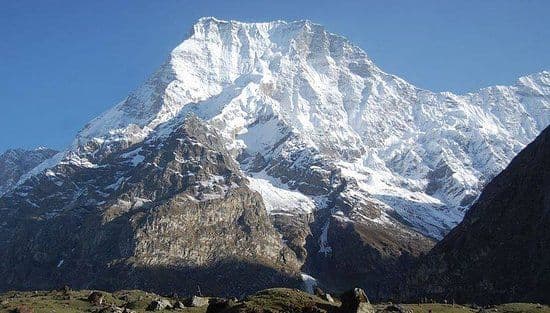
Api Himal Base Camp is a meadow at roughly 4,000 m below the north face of Api, the 7,132 m peak that is the highest mountain in Sudurpashchim Province. It lies in Darchula District, inside the Api Nampa Conservation Area, and is reached on foot from road heads near the Mahakali river on the Indian border. There are no teahouses on the route.
Getting to the start line is most of the journey
The trek is not the hard part of a trip to Api. Getting to Darchula is. From Kathmandu you fly to Dhangadhi, then travel north by bus or jeep along the Mahakali corridor through Attariya, Syaule and Gokuleshwar to Khalanga, the district headquarters. Allow a full day for that road and expect it to take longer in the wet, when landslides close sections without warning. Nepalgunj works as an alternative arrival airport but adds distance rather than saving it.
From Khalanga or Gokuleshwar the walking starts. Routes vary between operators, but the line most parties follow climbs through Makarigad and Ghusa, then up the Chamaliya valley through forest and small settlements before breaking out into open meadow below the peak. Four to six days in and three to four out is the usual shape, so the trek itself takes ten to twelve days and the whole trip closer to a fortnight.
Api Base Camp at a glance
| Mountain | Api, 7,132 m, the highest peak in Sudurpashchim |
| Base camp meadows | Around 4,000 m |
| District and province | Darchula, Sudurpashchim |
| Protected area | Api Nampa Conservation Area, 1,903 sq km, declared 2010 |
| Road heads | Khalanga (Darchula) and Gokuleshwar |
| Nearest airport | Dhangadhi, a full day by road |
| Trek length | 10 to 12 days on foot, round trip |
| Best season | April to May, September to October |
| Accommodation | Camping, with basic village lodging low down |
What the route is like
The lower half is forest walking: bamboo, oak and rhododendron, with steep sidehill trail and river crossings on bridges that vary in quality from year to year. Villages thin out as you climb, and above the last of them the valley opens into grazing meadows used in summer by herders. The final camp sits in that open ground with Api filling the head of the valley, and the mountain is close enough that avalanche noise off the face carries down at night.
Nampa, the peak next door, is just under 6,800 m and shows well from the upper valley. You are unlikely to meet other trekkers. That is the appeal, and it is also the risk: there is no rescue infrastructure to speak of, no lodge to retreat to in bad weather and no reliable phone signal above the villages.
Permits and paperwork
Api Base Camp is not a restricted area. What you need is an Api Nampa Conservation Area entry permit, charged per person, plus the usual trekker information card. That is a materially different and cheaper proposition than Dolpa or Humla, where a restricted-area permit has to be bought through an agency by the week. Do not confuse the base camp route with the upper Byas valley towards Tinkar and Chhangru near the Tibet border, which sits under different rules entirely.
What the permit does not cover is competence. This is a camping trek in a district with almost no trekking industry, so a guide who knows the valley and a crew who can cook and carry are not optional extras. Arrange them before you leave the Terai; hiring in Khalanga is possible but unpredictable. The wider paperwork picture across the west is set out in our guide to restricted-area permits in Dolpa, Humla and Mugu, which explains which areas need what.
When to go
April and May, then September and October. Spring gives rhododendron through the forest section and generally settled weather high up. Autumn gives the firmest trails and the cleanest views of the face. The monsoon makes the road in unreliable and the forest trail miserable, and winter puts snow on the upper valley and closes the meadows. Because the road journey is the fragile part of the plan, shoulder weeks either side of the monsoon are worth avoiding even when the trekking would be fine.
Who this suits, and who it does not
Api rewards people who are comfortable being self-contained for a fortnight and who do not need the trek to be busy. If you want lodges, hot showers and a menu, the Annapurna and Everest circuits do that far better. If you want a week without meeting another foreign trekker, in a district almost nobody visits, this is one of the few places in Nepal that still delivers it reliably.
Altitude is a genuine consideration despite the modest top height, because parties often gain height quickly out of the forest; the acclimatisation guide applies here as much as on any 5,000 m pass. For the history of the peak, the Byansi and Sauka communities of the valley and how the region was first surveyed, see our article on Api Base Camp. The Darchula district guide covers the border country either side of the Mahakali, and Nepal seven-thousanders puts Api in context among its peers.
Frequently Asked Questions
How long is the Api Base Camp trek?
Ten to twelve days on foot round trip from the road head near Darchula, plus two travel days each way from Kathmandu via Dhangadhi. A fortnight is the realistic minimum for the whole trip.
Do you need a restricted-area permit for Api?
No. The base camp route needs an Api Nampa Conservation Area entry permit and a trekker information card. The upper Byas valley towards Tinkar and Chhangru near the Tibet border is governed separately.
Are there teahouses on the way to Api Base Camp?
Not in any usable sense. There is basic village lodging in the lower valley, but from the last settlements upwards you camp, carry food and cook. A guide and porters are effectively required.
How high is Api Base Camp?
The base camp meadows sit at roughly 4,000 m, below the north side of Api at 7,132 m. That is low by Nepali trekking standards, but the approach gains height quickly from the forest.
What is the best time of year to trek to Api?
April to May and September to October. The monsoon makes the long road journey from Dhangadhi unreliable, and winter snow closes the upper meadows. Autumn gives the clearest views of the face.
How do you get to Darchula from Kathmandu?
Fly to Dhangadhi, then take a bus or jeep north along the Mahakali corridor through Attariya and Gokuleshwar to Khalanga. Allow a full day, and more in the wet season when landslides close the road.