Banke National Park is a 550 square kilometre protected area in the western Terai of Nepal, gazetted in July 2010 as the tenth national park in the country. It was created less to showcase a landscape than to hold open the forest corridor between Bardiya National Park and the Indian border, so that tigers, elephants and their prey can move across country otherwise cut by highway and farmland. The 2022 national tiger survey counted 25 tigers inside the park, against a handful of confirmed animals at the time it was declared.
Where is Banke National Park and how big is it?
Banke lies in the western Terai and the lower Churia hills, spread across Banke, Salyan, Dang and Surkhet districts on the boundary between Lumbini and Karnali provinces. The core measures 550 square kilometres. A buffer zone of a further 343 square kilometres wraps around it, where villages farm, graze livestock and cut thatch under managed rules and receive a share of park revenue in return.
Elevation runs from roughly 150 metres on the plain to a little under 1,300 metres on the Churia crest. That is only about a kilometre of vertical, but it is enough to give the park genuinely different forest at the top and the bottom. Sal dominates, mixed with khair and sissoo along the watercourses, patches of grassland, and the wide bleached gravel beds of the Rapti river system. Park managers describe eight distinct ecosystem types inside the boundary.
The geology matters more than it sounds. The Churia is young, soft, porous rock. Rain that falls in July drains straight through it, so streams that run hard in monsoon are dry sand by April. Waterholes, natural and artificial, become the single most important feature in the park for three months of the year, and they are where wildlife viewing in Banke actually happens.
Why was Banke declared a national park in 2010?
The short answer is connectivity. Bardiya National Park, immediately to the west, covers 968 square kilometres and had become the strongest tiger population in Nepal outside Chitwan. Without protection to the east, Bardiya risked becoming an island, and island populations of large cats lose genetic diversity and eventually decline. Banke plugged the gap.
Taken together, Bardiya and Banke plus their buffer zones give more than 2,300 square kilometres of contiguous protected habitat on the Nepali side alone. The Kamdi corridor runs south from Banke towards Suhelwa Wildlife Sanctuary in Uttar Pradesh, extending the unit across the international border. This is a key link in what conservationists call the Terai Arc Landscape, a chain of parks, corridors and community forests strung along the foot of the Himalaya. WWF marked the declaration with a Gift to the Earth award in 2010.
Understanding that is the key to visiting Banke well. It is a corridor park. Wildlife density is lower than in Bardiya or Chitwan because the habitat is drier, hillier and more heavily forested, and because the park is young. What it offers instead is space, silence and a working example of how a fragmented landscape gets stitched back together. Read it alongside the older and larger reserve next door at Bardiya National Park and the whole design makes sense.
How many tigers live in Banke National Park?
Twenty-five, according to the national tiger survey published in 2022. That was the fourth national count. It put the Nepal total at 355 tigers, close to triple the 2009 baseline of 121, and it is the reason Nepal is the only tiger range country to have publicly announced that it met the international goal of doubling its wild tiger population.
| Protected area | Tigers in the 2018 survey | Tigers in the 2022 survey |
|---|---|---|
| Chitwan National Park | 93 | 128 |
| Bardiya National Park | 87 | 125 |
| Parsa National Park | 18 | 41 |
| Shuklaphanta National Park | 16 | 36 |
| Banke National Park | 21 | 25 |
| Nepal total | 235 | 355 |
The Banke figure looks modest beside Bardiya, and it should. Banke was never going to carry Bardiya densities. There is less alluvial grassland, less dry-season water and a thinner deer population. Its job is to give young tigers dispersing out of a crowded Bardiya somewhere to go other than a village edge. On that measure it is working. It also creates a real problem: as tiger numbers rise across the Terai, so do attacks on people, and the Bardiya and Banke buffer zones have recorded some of the highest rates of human and tiger conflict in the country.
What wildlife can you realistically see in Banke?
Spotted deer, wild boar and grey langur on almost any drive. Sambar and barking deer inside the forest. Nilgai on the open edges and in the buffer-zone fields, where they are more of a farming problem than a wildlife spectacle. Banke is also one of the better places in Nepal for four-horned antelope, a small, shy ungulate that most visitors have never heard of and few ever see.
Striped hyena and sloth bear are both present, and the Asiatic wild dog has been camera-trapped inside the park. Asian elephants move between Bardiya, Banke and India, mostly as bull groups, and their movements through the buffer zone are the single biggest source of crop damage complaints. Leopards outnumber tigers and are easier to see near settlement, where they take dogs and goats. More than 300 bird species have been recorded, with winter bringing raptors down along the Churia and waders working every wet channel in the riverbed.
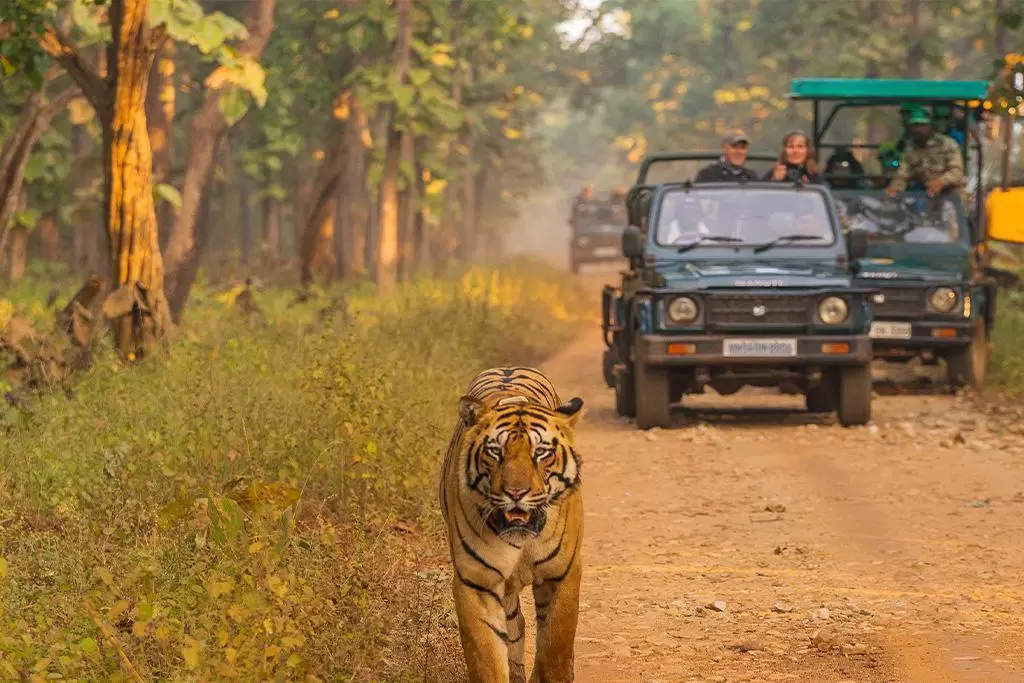
Be honest with yourself about the odds. Tiger sightings in Banke are rare. Anyone promising you a guaranteed tiger has told you something untrue about how tigers work. Go for the forest, for tracks pressed into river sand at dawn, and for a park where you can spend an entire morning without meeting another vehicle.
When is the best time to visit Banke National Park?
October to March. The monsoon ends in late September, the air clears, the Churia comes into view from the plain and the grass has not yet been cut or burned. November through February gives cool mornings, comfortable afternoons and the most consistent general wildlife viewing. It is also the safest window for the park tracks, which turn to slurry in the rains.
March to mid-May is hot, reaching the low forties Celsius on the plain, but it is the peak of dry-season viewing. Water shrinks to a handful of pools and animals are forced to them. If you can tolerate the heat and start at first light, April is arguably the strongest month for a sloth bear or a tiger. From June to September the Rapti floods, tracks close, leeches take the forest floor and most lodges shut. That is not a season to plan around.
How do you get to Banke National Park?
Nepalgunj is the gateway. It has the busiest airport in western Nepal, with several daily flights from Kathmandu taking about an hour, and it sits on the East-West Highway within an easy drive of the park headquarters at Obari. Overland from Kathmandu the journey runs somewhere in the region of twelve to fourteen hours depending on the state of the highway, which is why nearly everyone flies.
The East-West Highway runs straight through the park, which is convenient for visitors and a serious problem for wildlife. The Banke stretch is a documented hotspot for animals killed by vehicles at night, and it is one of the reasons wildlife crossing structures keep being proposed for this section of road. Entry permits are issued at the park office and rates are revised periodically, so confirm the current fee on the day. A licensed guide is required; independent walking inside the core area is not permitted, and would be unwise even if it were.
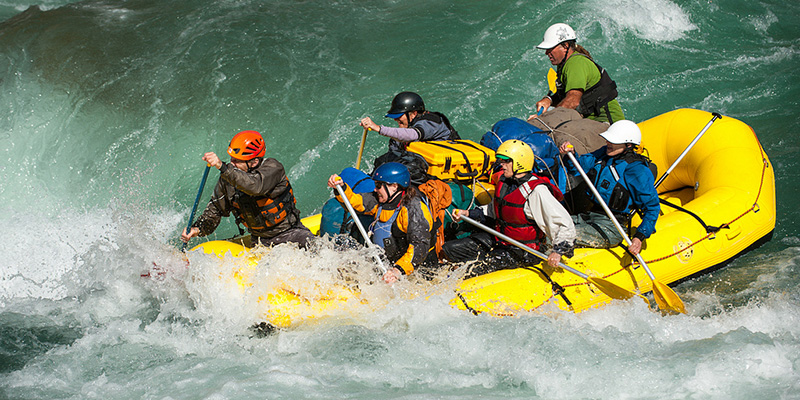
Most visitors reach Banke as an extension of a Bardiya trip, which is the sensible way to do it. Adding a river stage makes a strong western Nepal week, and the raft and dolphin stretch of the Karnali river is within reach of the same road.
Is Banke worth visiting if you have already seen Bardiya or Chitwan?
If what you want is density and a strong chance of a tiger, no. Go to Bardiya. If you want to understand how tiger conservation in Nepal actually functions, with corridors, buffer zones, revenue sharing and the awkward compromise between a national highway and a national park, then Banke is the more instructive place and you will have it very nearly to yourself. Set against the crowds and the long safari history of Chitwan National Park, the experience here is unpolished and quiet.
Facilities are thin. A small number of buffer-zone homestays and modest lodges sit near the eastern and western entrances, with comfortable hotels back in Nepalgunj. Bring your own binoculars, bring patience, and do not expect a resort.
FAQ
Is Banke National Park open all year?
Officially the park does not close, but the monsoon between June and September makes most internal tracks impassable and many buffer-zone lodges shut for the season. In practice the visitor season runs from October to late May, with October to March the most comfortable window and April the best month for dry-season waterhole viewing.
Do you need a permit to enter Banke National Park?
Yes. Entry permits are issued at the park office for each day of the visit, with separate rates for Nepali citizens, nationals of SAARC countries and other foreign visitors. Rates are set by regulation and revised from time to time, so confirm the current figure with the park office or your operator rather than relying on older published numbers.
Can you actually see tigers in Banke?
Tigers are certainly there, with 25 counted in the 2022 national survey, but the forest is dense, the terrain is hilly and density is low. Sightings are uncommon and should not be the reason you come. If a tiger is the objective, Bardiya next door gives far better odds on the same road trip.
How far is Banke from Bardiya National Park?
The two parks share a boundary, and the drive between the main visitor areas along the East-West Highway takes roughly two hours. Combining them into a single trip is straightforward and is how most itineraries in the region are built.
What is the difference between the core area and the buffer zone?
The core is strictly protected, with no settlement and access only by permit with a guide. The buffer zone is a managed belt of villages, farmland and community forest around the core where regulated grass cutting, grazing and firewood collection are allowed, and where a share of park income is returned to community development and conflict compensation.