Shey Phoksundo National Park is the largest national park in Nepal, covering roughly 3,555 square kilometres of Dolpa and Mugu districts in Karnali Province. Gazetted in 1984, it runs from river gorges near 2,100 metres to the summit of Kanjiroba Himal at 6,883 metres and contains Phoksundo Lake at about 3,600 metres. Its conservation role is unambiguous: this is core snow leopard range, holding blue sheep herds dense enough to support a resident breeding population of the cat.
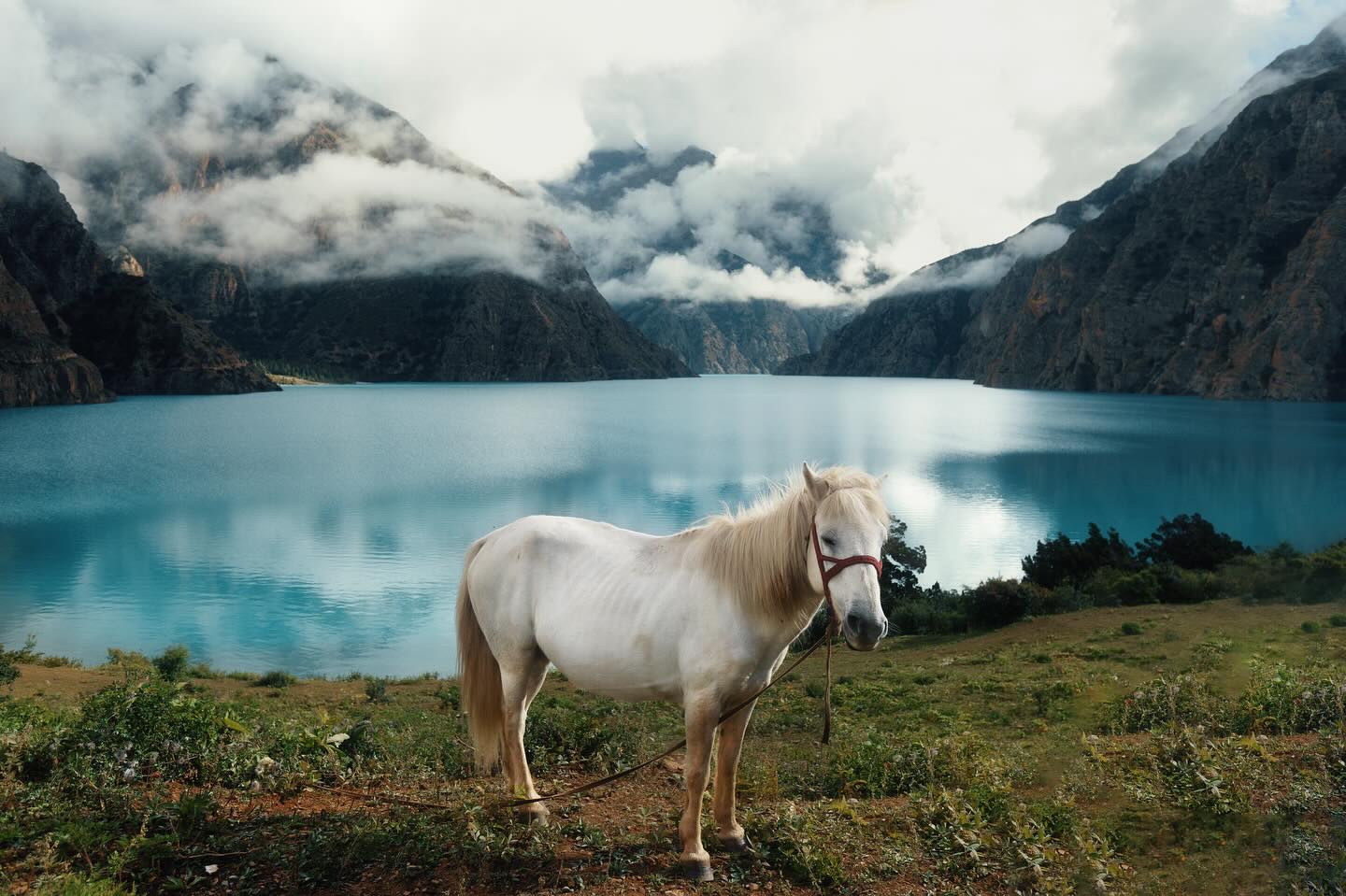
Where is Shey Phoksundo National Park and how do you reach it?
The park occupies the northern half of Dolpa district and a strip of neighbouring Mugu, pressed against the Tibetan frontier in the rain shadow of the Dhaulagiri and Kanjiroba ranges. No road reaches the core. Almost every visitor flies to the airstrip at Juphal above Dunai, then walks north along the Thuli Bheri and Suli Gad rivers for two to three days to reach the park boundary and the village of Ringmo. From Ringmo, trails climb over passes above 5,000 metres into Upper Dolpo, the restricted northern zone that holds Shey Gompa and the Crystal Mountain circuit.
Flights into Juphal are weather dependent and usually connect through Nepalgunj. Anyone planning a walk into the wider Dolpa region should hold spare days at both ends of the itinerary, because one clouded morning can cost two days. Overland approaches from Jumla exist and are used by herders, porters and researchers, but they add close to a week of walking each way.
Why is Upper Dolpo the best snow leopard habitat in Nepal?
A snow leopard needs three things, and Upper Dolpo supplies all three at once. First, broken cliff ground: the cat hunts by ambush from above and will not settle in open rolling country. The park is built from cliff bands, gullies and moraine benches that give a stalking animal cover every few metres. Second, a wild prey base. Blue sheep, called naur or bharal locally, graze the alpine turf here in herds that can run to several dozen animals, and a blue sheep is close to the ideal weight for a single snow leopard kill.
Third, low human pressure. Upper Dolpo carries only scattered settlements of a few hundred people, most of them Bon and Tibetan Buddhist herding communities whose religious practice discourages killing wildlife. That combination is rare. Elsewhere in the Nepal Himalaya, one of the three is usually missing, which is why survey work has repeatedly placed some of the country’s densest snow leopard signs in the Dolpa and Mugu highlands. Sightings remain unusual for the ordinary walker, but tracks, scrapes and scent marks on ridge trails are found regularly.
What wildlife lives inside the park?
Below the treeline the park is a mid-Himalayan forest system. Himalayan black bear, barking deer, rhesus macaque, yellow-throated marten and leopard use the blue pine and birch belt along the Suli Gad. Musk deer favour dense birch and rhododendron thickets between 3,000 and 4,000 metres, and remain vulnerable to poaching for the musk pod.
Above the trees the fauna turns Tibetan rather than Indian. Blue sheep, Himalayan tahr, woolly hare and Tibetan wolf occupy the pasture and scree. The wolf matters more than most visitors realise: it competes with the snow leopard for the same prey and takes a share of livestock, which shapes how herders view all predators. Griffon vulture, lammergeier and Himalayan snowcock work the ridgelines. The lake itself is famously fishless, a detail covered in the dedicated Phoksundo Lake guide.
How does habitat change with altitude here?
The park compresses several biomes into a two-day walk. Use the table below to picture where each species belongs before you go looking for it.
| Zone | Approximate elevation | Vegetation | Characteristic wildlife |
|---|---|---|---|
| River gorge | 2,100 to 2,900 m | Blue pine, walnut, terraced barley and buckwheat | Rhesus macaque, barking deer, Himalayan black bear |
| Upper forest | 2,900 to 3,600 m | Blue pine, birch, juniper, rhododendron | Musk deer, Himalayan tahr, blood pheasant |
| Treeline and shrub | 3,600 to 4,200 m | Dwarf juniper, caragana thorn, alpine herbs | Blue sheep, Himalayan monal, lammergeier |
| Alpine pasture | 4,200 to 5,000 m | Cushion plants, sedge turf, medicinal herbs | Snow leopard, Tibetan wolf, woolly hare |
| Rock, scree and permanent snow | Above 5,000 m | Lichen and bare moraine | Himalayan snowcock, chough, transiting snow leopard |
What makes the trans-Himalayan side of the park so different?
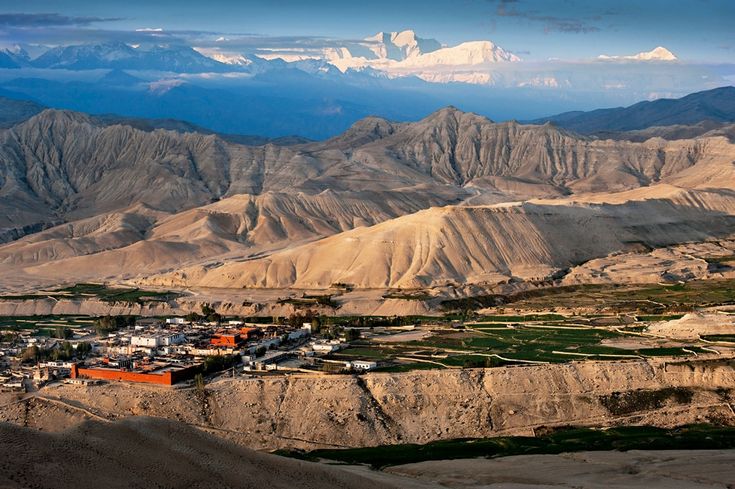
Cross the Kang La or Numa La north of Ringmo and the landscape changes completely. Annual rainfall drops sharply because the main Himalayan wall strips the monsoon before it arrives, so the north side is a cold desert of ochre and grey rock with barley fields only where meltwater can be channelled. Vegetation is sparse, low and aromatic. Junipers grow as ground-hugging mats rather than trees, and pasture appears in patches on north-facing slopes where snow lingers.
That aridity is why the wildlife community resembles the Tibetan plateau more than the Nepal midhills, and why the ecosystem is so easily disturbed. A single overgrazed pasture takes many seasons to recover at this altitude. Park management therefore focuses less on fencing and more on herding agreements, corral improvement and compensation schemes that keep herders from retaliating after livestock losses.
How do herders and predators share the same valleys?
Snow leopard conservation in Dolpa is mostly a livestock problem. Yak, dzo, goat and sheep graze the same alpine turf as blue sheep, and a leopard that finds an unguarded corral can kill several animals in one night. For a household with a few dozen head, that is a catastrophic loss. The standard responses are predator-proof corrals with solid roofs, community-managed insurance pools funded partly by tourism revenue, and buffer zone committees that decide how park income is spent.
Visitors influence this directly. Money that stays in Ringmo, Saldang or Dho Tarap raises the value of a live snow leopard relative to a dead one. Hiring local guides and porters, buying food locally rather than carrying everything from Kathmandu, and paying camping fees to village committees all feed the same equation.
When is the best time to visit Shey Phoksundo National Park?
Two windows work. Mid-May to late June gives long days, flowering alpine pasture and passable high passes, though the walk in can be humid below 3,000 metres. Mid-September to late October is the more reliable season, with clear air, settled weather and cold but manageable nights above 4,000 metres. Winter closes the high passes with snow and empties the northern settlements as families move to lower ground. The monsoon months affect the southern approach more than the trans-Himalayan north, but flight cancellations become frequent.
Permits are compulsory. Everyone needs a national park entry permit, and travel north of Ringmo into Upper Dolpo requires a restricted area permit that must be arranged through a registered agency, with a minimum group size and a licensed guide. Lower Dolpo requires its own permit. Fees change, so confirm current rates with the issuing office rather than trusting an old blog post. Anyone comparing Karnali options should also look at Rara Lake, which is far easier to reach and needs no restricted permit.
FAQ
How big is Shey Phoksundo National Park?
It covers roughly 3,555 square kilometres, which makes it the largest national park in Nepal. The protected area spans northern Dolpa and part of Mugu district, with a surrounding buffer zone that includes the settlements most dependent on park resources.
Can you actually see a snow leopard there?
Direct sightings are rare and should never be promised. What is realistic on a two-week trek in good conditions is finding pugmarks in fresh snow, scrapes on ridge trails and scent-marked boulders, plus large blue sheep herds. Camera-trap research in the region records the cat regularly, but the animal is solitary, crepuscular and superbly camouflaged.
Do I need a special permit for Upper Dolpo?
Yes. Travel north of Ringmo falls inside a restricted area, so you need a restricted area permit in addition to the national park entry permit. Restricted permits are issued only through a registered trekking agency, require a licensed guide and normally require a minimum of two trekkers. Lower Dolpo has its own separate permit.
Why is Phoksundo Lake free of fish?
The lake has no recorded native fish population. The usual explanations combine the water chemistry, the extreme depth and cold, and the fact that the outlet drops over a high waterfall that blocks any upstream colonisation. Local tradition offers its own account, and both are worth hearing on site.
How difficult is the trek into the park?
Physically demanding rather than technical. Lower Dolpo itineraries cross passes near 5,000 metres and the Upper Dolpo circuits cross several, on consecutive days, with camping rather than lodges through much of the north. Expect long days, cold nights and a genuine acclimatisation plan.