
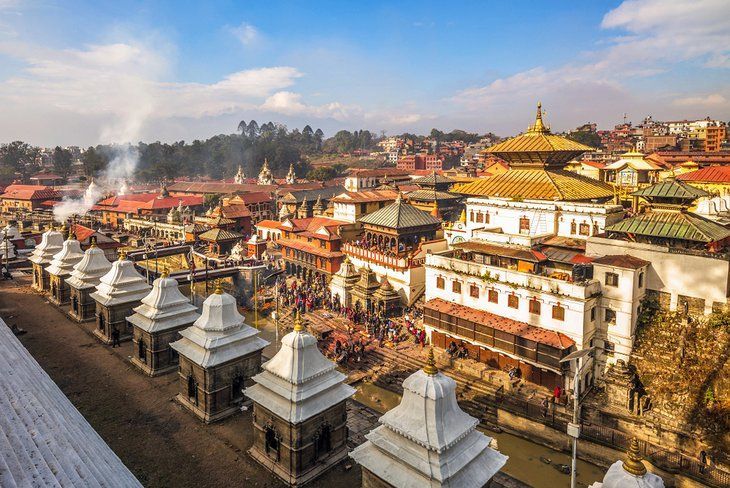
Once a year in late August or early September, the queue outside Pashupatinath Temple in Kathmandu turns red from one end to the other. Women arrive in wedding saris, many of them having eaten nothing since the previous night, and wait for hours to reach the shrine. This is Haritalika Teej, and it is the largest womens religious gathering in Nepal.
Teej photographs well, which is part of the problem. The colour and the dancing get the coverage. The fast, the songs and the argument now running through the festival get much less attention. All three belong to the same day.
What is Teej and why do women wear red?
Teej is a Hindu festival kept on the third day of the bright fortnight of the Nepali month of Bhadra. On the Gregorian calendar that falls in late August or early September, so the date moves each year. It is observed by Hindu women across Nepal and in parts of northern India, and in Nepal it has become one of the most visible days in the calendar.
The story behind it belongs to Parvati. In the version most often told in Nepal, Parvati wanted Shiva as her husband while her father intended to marry her to Vishnu. A close friend took her away and hid her in the forest so that the wedding could not take place. The name Haritalika comes from that act of being carried off by a companion. In the forest Parvati fasted, shaped a lingam out of sand, and prayed until Shiva accepted her. The Teej fast repeats hers.
Red is the colour of the Nepali wedding sari, and that is the whole reason for it. Married women wear the sari they were married in, or one close to it, with the green and gold glass bangles and the pote necklace that mark a married woman. Unmarried women wear red as well. The dress is not decoration. It announces who is fasting and on what grounds.
How does the Teej fast actually work?
Married women fast for the long life and wellbeing of their husbands. Unmarried women fast in the hope of a good husband. That is the stated purpose and it is worth saying plainly rather than softening it, because it is exactly the part of Teej now under discussion inside Nepal.
The fast itself varies more than outsiders expect. Some women drink water and take fruit or milk through the day. Others keep a nirjala fast and take nothing at all, not even water, from before dawn until the fast is broken after the evening worship of Shiva. Nepali doctors publish warnings about the strict version every year, particularly for women who are pregnant, diabetic or anaemic, and many families now negotiate a lighter fast for older relatives.
The day is not spent resting. Women walk to a Shiva temple, sometimes several kilometres, queue for hours in monsoon heat, offer flowers, fruit, incense and water to the lingam, and then dance in groups outside. Fasting and dancing at the same time is a physical undertaking, and the women doing it know that. The effort is a large part of what gives the fast its weight.
What happens on each day of Teej?
Teej is usually described as a three day festival, although the full sequence of observances stretches across about five days of the lunar calendar. Few households keep all of them. Younger urban families often keep only the feast and the fast.
| Day | Nepali name | What happens | Who takes part |
|---|---|---|---|
| The day before | Dar khane din | A large late meal eaten before the fast begins, usually at a mother’s or a married daughter’s house, with singing and dancing running into the night | Women of the household plus daughters and sisters invited home |
| Teej itself | Haritalika Teej | The fast, worship of Shiva at a temple, red saris and group dancing; the fast is broken after the evening puja | Married and unmarried Hindu women |
| The following day | Ganesh Chaturthi | Ganesh is worshipped at home; kept by some households and skipped by many | Families that follow the longer sequence |
| Fifth day | Rishi Panchami | Ritual bathing with datiwan twigs and red mud, followed by worship of the seven sages; understood as a purification rite | Mostly older and more traditional observers |
Where is Teej celebrated in Kathmandu?
The largest gathering by far is at Pashupatinath Temple, where the crowd builds through the night before and holds until evening. Access to the main courtyard is restricted to Hindus, but the riverside terraces, the bridges and the lanes leading to the gates are open, and much of the singing and dancing happens there rather than inside.
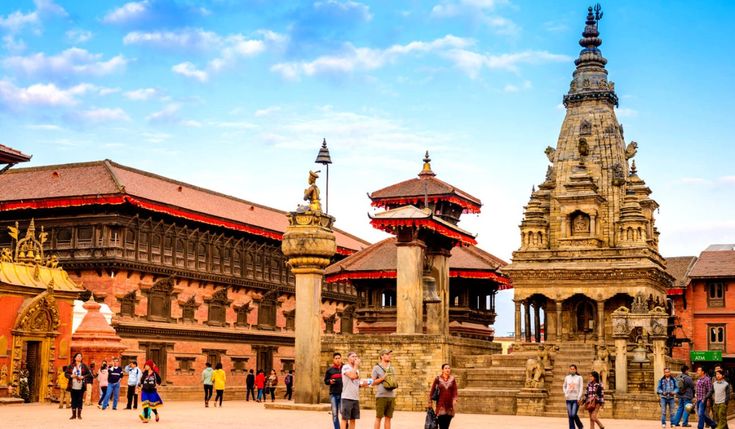
Every neighbourhood Shiva shrine has its own smaller version. In the older Newar cities the festival overlaps with a dense local calendar of its own, and you will find groups of women in red around the temples of Patan Durbar Square and in the courtyards behind Bhaktapur Durbar Square without any of the crowd pressure of Pashupatinath. If you want to watch rather than be carried along by a crowd, those are the better places.
What are Teej songs actually about?
New Teej songs are written every year. This is not a fixed repertoire being repeated. Songs are composed, recorded and released ahead of the season, and the good ones are picked up and danced to across the country within days.
Historically the songs were a channel for things that were difficult to say directly. Teej brought married women back to their birth homes, sometimes for the only visit of the year, and the songs carried what happened in between: hard treatment by in laws, a husband away for work, a marriage arranged too young, the loneliness of a household where you arrived as an outsider. The dancing was public and the grievance was sung rather than spoken, which made it possible to voice at all.
That function has not disappeared. Modern Teej songs deal openly with labour migration to the Gulf and Malaysia, with money, with corruption, and with politics. Some are frankly commercial. Some are pointed enough to draw complaints. The form has changed but the licence to say things out loud has held.
Why is Teej debated in Nepal today?
Three arguments run at once, and they do not resolve neatly into a single position.
The first is about cost. Teej parties now begin weeks ahead of the festival, hosted in banquet halls and hotels, with new saris and gold bought for the occasion. Critics inside Nepal describe this as competitive display that puts real pressure on households that cannot match it. Womens organisations run campaigns most years asking people to scale it back, and some communities have agreed collective limits on how early and how lavishly the parties can start.
The second argument is about the premise of the fast. A festival in which women go without food and water for the longevity of men, while men observe nothing at all, reads to many younger Nepalis as an unequal bargain dressed as devotion. That criticism is made in Nepali, by Nepali women, in Nepali media, every single year. It is not an outsider observation.
The third argument answers the second. For very large numbers of women, Teej is the one day of the year that is unambiguously theirs: a day away from the household they married into, in public, in a crowd of other women, singing. Taking that apart in the name of equality would remove a rare space rather than create a new one. Many women hold both positions at the same time, keeping the fast in a modified form while criticising what the festival has become commercially.
When does Teej fall and how should visitors behave?
Teej falls in the monsoon, in late August or early September, on a lunar date that shifts each year. Check the current Nepali calendar rather than assuming a fixed date. Expect rain, mud and heavy humidity around the temple approaches.
If you go to watch, the basic courtesies matter more than usual. This is an act of worship performed by people who have not eaten, not a street performance. Ask before photographing individual women, keep out of the queue if you are not joining it, and do not push into restricted temple areas. Visitors in red are common and nobody objects, but wearing a wedding sari as a costume is a poor idea. Standing at the edge, watching the dancing and leaving the space to the people it belongs to, is the whole of the etiquette.
FAQ
When is Teej festival in Nepal?
Teej falls on the third day of the bright fortnight of Bhadra, which places it in late August or early September. The date is lunar and moves every year, so confirm it against a current Nepali calendar rather than a fixed Gregorian date.
Can men take part in Teej?
Men do not keep the Teej fast, which is the core of the observance. They take part around it, cooking the dar meal, driving family members to temples, and attending the parties. A small number of men now fast alongside their wives as a deliberate statement, but this is uncommon and is not traditional practice.
Do women really go without water for the whole day?
Some do. The strict form of the fast, called nirjala, excludes water as well as food from before dawn until the fast is broken in the evening. Others drink water and take fruit or milk. The choice is made household by household, and health guidance published in Nepal each year advises pregnant, diabetic and anaemic women against the strict version.
Can tourists visit Pashupatinath during Teej?
Non Hindus cannot enter the main temple courtyard at any time of year, and that restriction holds during Teej. The riverside terraces, the bridges and the surrounding complex are open to everyone, and most of the singing and dancing takes place outside the restricted area. Expect very large crowds and long delays on the approach roads.
Is Teej only celebrated by married women?
No. Unmarried women fast as well, traditionally in the hope of a good husband, and girls take part in the dancing and the feast without fasting. In practice Teej functions as a gathering of women of all ages from the same family and neighbourhood, which is one reason it has held its place so firmly.