
Singha Durbar in central Kathmandu was finished in 1908 and was said at the time to be the largest palace in Asia. It was not built for a king. It was built for a prime minister, and it tells you almost everything you need to know about how Nepal was governed for 104 years. From 1846 to 1951 the Shah kings remained on the throne, appeared at religious festivals and signed what they were given to sign. Real authority sat with one extended family, the Ranas, who passed the office of prime minister down a fixed roll of succession as though it were a family estate.
The Rana period is the hinge of modern Nepali history. Everything that came afterwards, including the return of an active monarchy, the long argument about democracy and the deep development gap between the Kathmandu valley and the far west, runs through it.
How the Ranas Took Power: the Kot Massacre of 1846
Court politics in Kathmandu after the fall of Bhimsen Thapa in the late 1830s were violent and unstable. Factions formed around King Rajendra, the senior queen and rival noble houses, and ministers were appointed and removed at speed. In September 1846 a favoured courtier, Gagan Singh, was murdered. The queen summoned the nobility to the Kot, the armoury courtyard beside the old palace, and demanded that the killer be identified. The confrontation turned into a general fight in an enclosed space full of armed men. When it ended a large part of the ruling elite was dead.
Jung Bahadur Kunwar walked out of the Kot in control of the army and the court. Within a year he had King Rajendra exiled to Benares and the young Surendra on the throne. In 1856 he obtained a royal grant confirming his family in the office of prime minister, giving him the title Rana and the honorary principality of Kaski and Lamjung. From then on the king reigned and the Rana prime minister ruled.
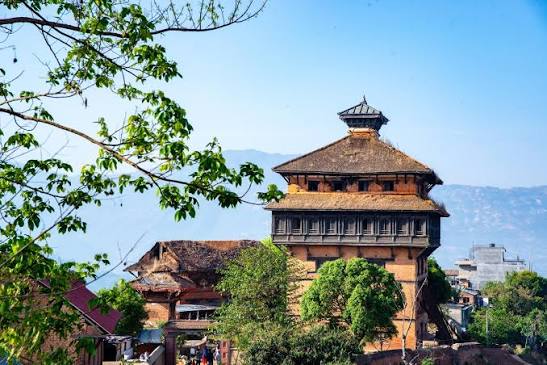
What Hereditary Rule Meant in Practice
The Rana system was unusual because succession did not pass from father to son. It moved along an agreed roll among brothers, half-brothers and nephews, which meant the office often went to elderly men and made the family arithmetic of who counted as a legitimate heir enormously important. Sons of full-caste marriages ranked above sons of other unions, and the resulting disputes produced palace coups of their own. Bir Shumsher took power in 1885 after the killing of Ranodip Singh. Dev Shumsher lasted only months in 1901 before being removed by his brothers.
Government revenue and family income were not clearly separated. Land grants, forest concessions and customs rights were distributed inside the family and to its allies. Successive prime ministers built palaces on a scale that only made sense if the state and the household were the same thing.
The Muluki Ain of 1854
Jung Bahadur’s most durable act was the Muluki Ain, the first national legal code, promulgated in 1854. It applied a single body of law across the whole country for the first time, which was a genuine administrative achievement. It also codified an all-encompassing caste hierarchy, ranking Brahmin and Chhetri groups, Tibeto-Burman hill communities, Newar castes, Madhesi groups, Muslims and so-called untouchable castes, and attaching different punishments to the same offence depending on rank. That code shaped Nepali social and legal life until it was replaced in 1963, and its effects are still argued about.
Isolation, Reform and Contradiction
The Ranas were not simply reactionary, which is what makes the period interesting. Chandra Shumsher, who held office from 1901 to 1929, banned sati in 1920 and moved to end formal slavery in the 1920s, compensating owners from the treasury. He founded Tri-Chandra College in 1918, the first college in the country. Small hydropower arrived at Pharping in 1911, and a ropeway was built to move goods into the valley. In 1923 he signed a treaty with Britain that acknowledged Nepal as a fully independent state.
At the same time the regime kept the country closed. Foreigners were admitted only by permission and rarely. There was no free press, no political party, no representative body. Education was limited on purpose, because an educated public was understood to be a political risk. Nepalis who wanted schooling went to India, and it was in India that the opposition eventually organised.
| Prime minister | Approximate term | Remembered for |
|---|---|---|
| Jung Bahadur Rana | 1846 to 1877 | Seized power after the Kot; issued the Muluki Ain of 1854 |
| Ranodip Singh | 1877 to 1885 | Continuity; killed in a family coup |
| Bir Shumsher | 1885 to 1901 | Took power by coup; early public works in Kathmandu |
| Dev Shumsher | 1901 | Brief reformist term; removed by his brothers |
| Chandra Shumsher | 1901 to 1929 | Banned sati, ended formal slavery, founded Tri-Chandra College |
| Bhim Shumsher | 1929 to 1932 | Short term; heavy palace spending |
| Juddha Shumsher | 1932 to 1945 | Rebuilding after the 1934 earthquake |
| Padma Shumsher | 1945 to 1948 | Attempted a limited constitution under pressure |
| Mohan Shumsher | 1948 to 1951 | Last Rana prime minister; headed the transitional cabinet |
Rana Architecture in the Kathmandu Valley
The visual signature of the period is white stucco neoclassicism: columned facades, pediments, long ranges of shuttered windows and ballrooms hung with European mirrors. Singha Durbar is the largest survivor, though most of it burned in 1973 and what stands today is a reconstruction of the front block. Others include Bagh Durbar, the Thapathali complex, Babar Mahal and Keshar Mahal with its walled garden, laid out for Kaiser Shumsher in the 1920s.
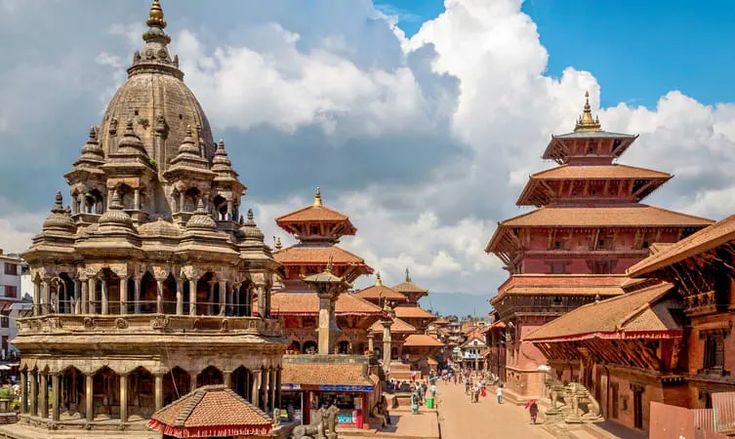
The contrast with what came before is the whole point. Walk from a Rana facade into Patan Durbar Square or Bhaktapur Durbar Square and you move from imported European taste to Newar brick, carved timber and tiered temple roofs developed over centuries. The Ranas did not destroy that tradition, but they stopped patronising it, and craft workshops that had depended on state commissions contracted sharply.
How Rana Rule Ended in 1951
The regime survived as long as it did partly because British India found it a reliable neighbour. When the British left in 1947, that external support vanished. The Nepali Congress had been founded that same year among Nepali exiles in India and began organising armed and political resistance. In November 1950 King Tribhuvan took refuge in the Indian embassy in Kathmandu and was flown to Delhi, which turned a constitutional dispute into an open crisis. Fighting broke out in the Terai and the eastern hills.
The settlement, brokered in Delhi in early 1951, produced a coalition cabinet with Rana and Congress members under Mohan Shumsher and restored the king to an active political role. The hereditary system was finished. Nepal had traded one form of concentrated power for another, and the next four decades would be spent arguing about what should replace both.
What the Ranas Left the Far West
Kathmandu got palaces, a college and a power station. Karnali and the far west got extraction. Forest and land grants moved resources toward the capital and its allies while the western hills received almost no roads, schools or clinics. Districts such as Jumla, Dolpa, Humla and Bajhang entered the second half of the twentieth century with administrative structures that had barely changed since the eighteenth. That is a large part of why the development gap between the valley and the west is still measurable today, and it is worth reading alongside the older story of the Khas Malla kingdom, when the balance of power sat in the opposite direction.
Practical Information for Travellers
Rana Kathmandu is easy to see in a day on foot. The Garden of Dreams beside Keshar Mahal is the most complete restored Rana interior open to the public. Babar Mahal Revisited has been converted into shops and restaurants but keeps the courtyards and proportions. Singha Durbar is a working government complex, so photograph it from outside. Then spend the following day in Patan and Bhaktapur for the contrast, which is the fastest way to understand what changed in 1846. October to April is the pleasant season in the valley; the monsoon does not stop sightseeing but does hide the mountains.
FAQ
How long did the Rana regime last in Nepal?
From the Kot massacre of 1846 to the Delhi settlement of early 1951, a period of 104 years, during which the prime ministership passed by hereditary right within one family.
Did Nepal still have a king during the Rana period?
Yes. The Shah kings remained on the throne throughout, but they held ceremonial and religious authority only. Executive power belonged to the Rana prime minister.
What was the Muluki Ain?
Nepal’s first national legal code, issued by Jung Bahadur Rana in 1854. It unified law across the country and also codified a detailed caste hierarchy that remained in force until 1963.
What reforms did the Ranas actually make?
Sati was banned in 1920 and formal slavery was ended in the 1920s under Chandra Shumsher, who also founded the first college and introduced early hydropower. These coexisted with strict censorship and a ban on political activity.
Which Rana buildings can visitors see today?
The Garden of Dreams at Keshar Mahal, the exterior of Singha Durbar, Babar Mahal Revisited and several converted palaces now used as hotels, ministries or museums in central Kathmandu.