Kami Rita Sherpa has stood on the summit of Everest more times than any other person alive. That fact travels well. What travels less well is that Sherpa is not a job description. It is not a synonym for porter, and it is not a rank printed on a climbing permit. Sherpa is the name of an ethnic group, just over a hundred thousand people in Nepal according to the national census, whose ancestors crossed into the country from eastern Tibet several centuries ago and settled at altitudes the rest of the world treats as barely habitable.
Three separate things get blurred together in mountaineering coverage: an ethnic identity with its own language and religion, a homeland in the high valleys of eastern Nepal, and an industry that grew up around foreign expeditions during the twentieth century. The first two are roughly five hundred years old. The third is barely a hundred. Keeping them apart is most of the work of understanding the Sherpa people of Nepal.
Where the Sherpa people came from
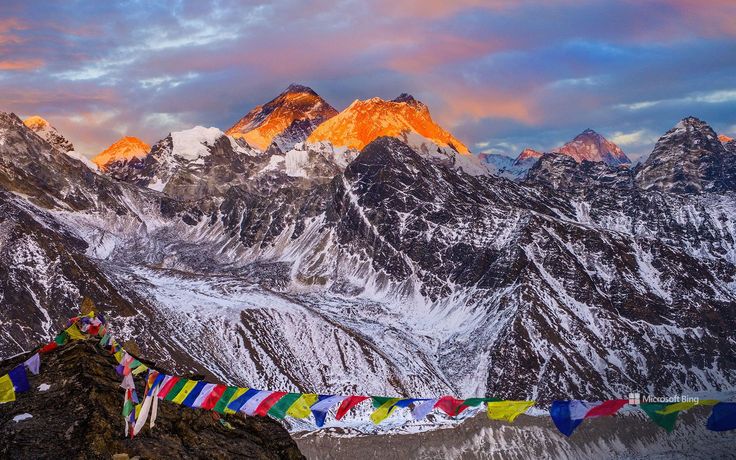
The name itself is the first clue. In Tibetan, shar means east and pa marks a people, so Sherpa reads roughly as those from the east. Clan genealogies and oral history point to Kham in eastern Tibet as the point of departure, with a migration west across the plateau and then south over the main Himalayan chain, most likely across the fifteenth and sixteenth centuries. The crossing point was the Nangpa La, a glaciated pass above 5,700 m linking Tingri on the Tibetan side with the Bhote Koshi valley above Namche Bazaar. It stayed a working trade route within living memory. Salt, wool, grain and livestock moved over the ice in both directions for generations, and the wealth of the old Namche trading families came out of that traffic long before it came out of tourism.
Sherpa society organised itself into patrilineal clans, known as ru, which still govern who may marry whom. Early settlement concentrated in Khumbu at villages such as Thame, Khumjung and Pangboche, then spread south into Solu and Pharak. Religion arrived with the settlers rather than after them. The Sherpa follow the Nyingma school, the oldest of the Tibetan Buddhist traditions, and their valleys are understood as beyul, hidden refuges said to have been set aside by Padmasambhava for use in difficult times. That belief is not decorative. It has shaped which slopes get farmed, which forests are left standing, and which mountains nobody climbs.
One agricultural accident changed the trajectory of the whole society. The potato reached Khumbu in the nineteenth century and produced far more calories per plot at 3,800 m than barley or buckwheat ever had. Population grew, surplus appeared, and a large share of that surplus went into building and endowing monasteries. Tengboche, the best known gompa in the region, was founded in 1916. The great age of Sherpa monastic architecture is therefore surprisingly recent, and it rests on a South American tuber.
Where Sherpa communities live in Nepal
Sherpa country is not one valley. It is a scatter of high settlements across the eastern and central Himalaya, each with its own dialect shading and its own calendar of village rituals. Khumbu attracts the attention because the trail to Everest Base Camp runs straight through it, but it is neither the largest nor the oldest area of Sherpa settlement.
| Area | District | Main settlements | Rough elevation | Character |
|---|---|---|---|---|
| Khumbu | Solukhumbu | Namche Bazaar, Khumjung, Thame, Pangboche | 3,400 to 4,400 m | Trade and expedition heartland, above the treeline in places |
| Pharak | Solukhumbu | Lukla, Phakding, Monjo | 2,600 to 2,900 m | The forested corridor every Everest trekker walks first |
| Solu | Solukhumbu | Junbesi, Phaplu, Salleri | 2,300 to 3,000 m | Older farming villages, terraces, the district headquarters |
| Rolwaling | Dolakha | Beding, Na | 3,700 to 4,200 m | A narrow beyul valley, very few lodges, seasonal occupation |
| Helambu | Sindhupalchok | Tarke Ghyang, Sermathang | 2,400 to 2,700 m | Closest Sherpa country to Kathmandu, related Hyolmo community |
| Eastern hills | Taplejung, Sankhuwasabha | Olangchung Gola and upper Tamor villages | 3,000 to 3,500 m | Old Tibet trade posts on the Kanchenjunga approaches |
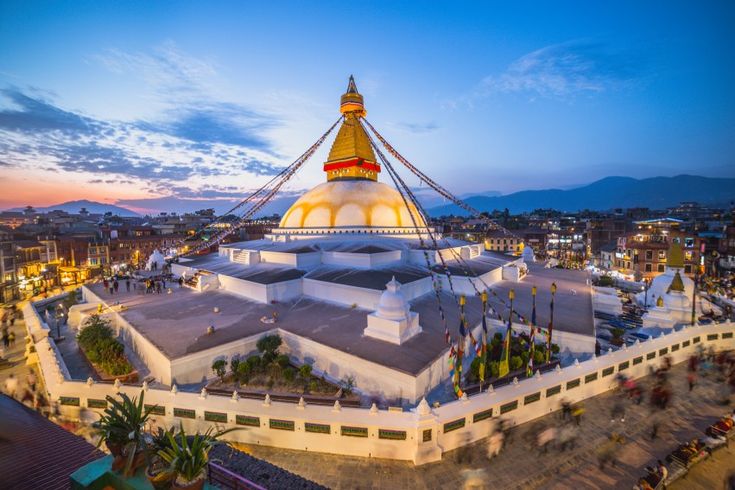
There is also a large urban Sherpa population in Kathmandu, concentrated around Boudhanath Stupa, where lodges, trekking agencies and monasteries sit within a few minutes of each other. Many families now run a two-address life: a house in the city for schooling and business, and a village home used through the trekking season and for the big festivals. Beyond that, a substantial diaspora has settled in New York, Colorado and Japan, and remittances from it now matter as much to some villages as the climbing season does.
Buddhism and the shape of the Sherpa year
Village religious life runs on a lunar calendar and is led by married household lamas at least as often as by celibate monks. Every settlement has its yul lha, a local mountain deity treated less as a symbol than as a landholder, and offerings are made to it before planting, before a journey and before a climb. The juniper smoke at an Everest base camp puja is not a tourist performance. It is the same rite performed at a village threshold, moved uphill.
Losar and Dumje
Gyalpo Losar, the new year, falls in February or early March and is the largest household festival of the year, with cleaning, new clothes, visiting and a great deal of chang. Dumje comes in the summer monsoon, sponsored by a rotating group of village households, and combines merit making with a communal feast that effectively redistributes wealth across the settlement. It is the clearest example of how Sherpa religion doubles as social insurance.
Mani Rimdu
Mani Rimdu is the festival outsiders are most likely to catch. It runs at Tengboche in the autumn and at Thame in the spring, over roughly nineteen days of preparation that culminate in several public days of masked cham dancing, an empowerment ceremony and a fire ritual. The dances are not entertainment. They enact the subjugation of hostile forces and the protection of the valley, and villagers attend to receive blessing rather than to watch a show.
How Sherpa bodies handle thin air
The physiology is genuinely unusual, and it is not simply a matter of fitness or practice. Sherpa share with Tibetans a variant of a gene called EPAS1, which regulates the body response to low oxygen. Evidence suggests the variant entered the population through ancient interbreeding with Denisovans, an archaic human group. Its effect is to prevent the runaway increase in red blood cell production that high-altitude newcomers experience. Blood that thickens too much moves badly and strains the heart, which is why some long-settled Andean populations suffer chronic mountain sickness at altitudes where Sherpa do not.
Alongside that, research on Sherpa climbers has found higher circulating nitric oxide, which widens blood vessels and increases flow, together with muscle mitochondria that appear to extract more useful work per unit of oxygen and lean more on glucose than on fat as fuel. The overall picture is of a body optimised for efficiency rather than for storage. None of this makes Sherpa immune to altitude illness. Sherpa climbers develop pulmonary and cerebral oedema too, and the assumption that they do not has cost lives on working expeditions.
Mountaineering, work and risk
Sherpa involvement with expeditions began not in Nepal but in Darjeeling, where families had migrated for work and where British Himalayan expeditions of the early twentieth century recruited their high-altitude porters. Tenzing Norgay came out of that Darjeeling world before reaching the summit of Everest with Edmund Hillary in 1953. When Nepal opened to foreigners in the 1950s, the centre of the trade moved home.
The work is skilled and the risk is not evenly shared. The route through the Khumbu Icefall is fixed each season by a specialist team known as the icefall doctors, and load carriers cross it many times over a season while a client may cross it twice. In April 2014 an ice release in the icefall killed sixteen Nepali mountain workers, most of them Sherpa, in the deadliest single incident on the mountain to that point. The following year an earthquake-triggered avalanche struck base camp itself. Those two seasons forced changes to insurance minimums, load rules and relief arrangements, and they also accelerated a shift that was already underway: the largest and best equipped operators on Everest today are Nepali owned and Sherpa led.
Visiting Sherpa country without being a nuisance
The etiquette is simple and worth learning. Pass mani walls, chortens and prayer wheels so that they stay on your right, which means walking to the left of them, and do not sit or stand on carved mani stones. Ask before photographing inside a gompa, and expect the answer to be no during a ceremony. Do not call the staff on your trek your Sherpas, particularly since a large share of trekking crews are Tamang, Rai, Magar or Gurung and being renamed for someone else convenience is tiresome. Book teahouses on arrival rather than through long chains of intermediaries, and build in acclimatisation days, which protect you and reduce the odds that someone else has to carry you down.
If the Everest corridor feels crowded, the same high Buddhist culture exists in quieter form in Rolwaling and Helambu, and there are parallel mountain cultures with entirely different histories in the far west of the country, which is worth reading about alongside this if you are choosing between regions. Our comparison of west Nepal against the Everest and Annapurna circuits sets out the trade-offs on cost, crowding and logistics.
FAQ
Are Sherpa people the same thing as porters?
No. Sherpa is an ethnicity with its own language, clan system and Buddhist tradition. Many Sherpa work in mountaineering, but many do not, and most trekking porters in Nepal belong to other ethnic groups entirely.
What language do Sherpa people speak?
Sherpa is a Tibetic language related to but not the same as standard Tibetan, and it is not mutually intelligible with Nepali. Most Sherpa today also speak Nepali, and in the trekking valleys a good deal of English.
How many Sherpa people live in Nepal?
The national census records a little over a hundred thousand, spread mainly across Solukhumbu, Dolakha, Sindhupalchok, Taplejung and Sankhuwasabha, plus a large community in Kathmandu and a growing diaspora abroad.
Why can Sherpa climbers carry loads at altitudes that flatten visitors?
A combination of lifelong acclimatisation, inherited genetic adaptations that keep the blood from thickening dangerously, higher nitric oxide levels and more oxygen-efficient muscle metabolism. Training and experience do the rest.
When is the best time to see a Sherpa festival?
Mani Rimdu at Tengboche falls in the autumn trekking season and is the easiest major festival for a visitor to attend. Losar in late winter and Dumje in the summer monsoon are more household and village centred, and much harder to reach.