Everest was attempted for more than thirty years before anybody stood on top of it, and every one of those early attempts came from the wrong side of the mountain. Nepal was closed to foreigners. Tibet was not. So the first generation of Everest climbing happened entirely from the north, and the route that eventually worked was not found until Nepal opened its borders around 1950.
What follows is the sequence that matters: how the mountain was approached, who solved it, what was left to do afterwards, and how a mountaineering objective turned into an industry that employs thousands of Nepali workers and generates a large share of the country’s mountaineering revenue.
Before Nepal Opened: The Tibet Expeditions of the 1920s
The British reconnaissance of 1921 was the first serious attempt to find a way onto the mountain. It approached through Tibet, mapped the northern glaciers and identified the North Col as the likely key. George Mallory was on that trip and on the two that followed.
The 1922 expedition put climbers above 8,000 metres for the first time using bottled oxygen and ended with an avalanche that killed seven Sherpa porters, the first recorded deaths on Everest. The 1924 expedition ended in the mountain’s most durable mystery. Mallory and Andrew Irvine were last seen high on the north ridge on 8 June and never returned. Whether they reached the summit before they died has been argued about ever since, and the discovery of Mallory’s body in 1999 did not settle it.
1950 and 1951: Finding the Way Through Nepal
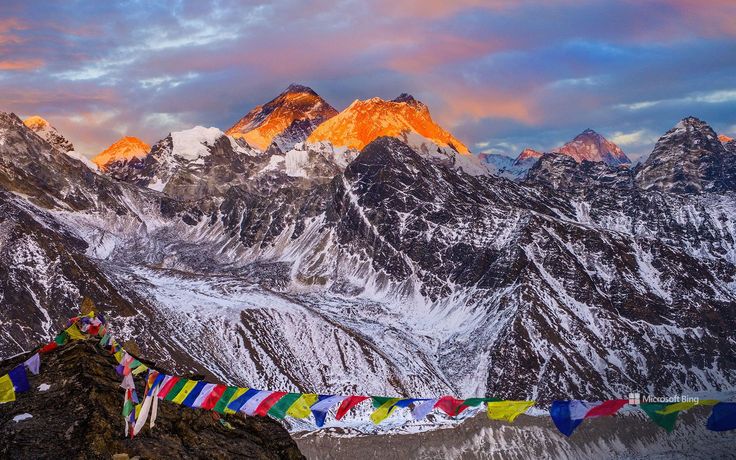
Tibet closed to foreign expeditions at the start of the 1950s just as Nepal opened. That reversal changed everything. A small party in 1950 walked up through the Khumbu and looked at the southern approach for the first time. The following year a British reconnaissance led by Eric Shipton examined the Khumbu Icefall and established that a route through it to the Western Cwm was feasible, if dangerous.
A Swiss expedition in 1952 came very close. Raymond Lambert and Tenzing Norgay pushed to roughly 8,600 metres on the southeast ridge before turning back, short of oxygen and out of daylight. That effort mapped the last unknown ground and gave Tenzing intimate knowledge of the route he would use the following year.
29 May 1953: Hillary, Tenzing and the South Col Route
The 1953 British expedition, led by John Hunt, was organised like a military operation, with staged camps, a large porter and Sherpa workforce and a carefully rationed oxygen supply. A first summit pair, Tom Bourdillon and Charles Evans, reached the South Summit and turned back with equipment problems. Two days later Edmund Hillary and Tenzing Norgay left the top camp and reached the summit on the morning of 29 May 1953.
They climbed the southeast ridge from the South Col, the line that had been probed by the Swiss the year before, and passed the rock step near the top that has been called the Hillary Step ever since. The news reached London on the eve of the coronation of Elizabeth II, which is why the ascent became a global event rather than a mountaineering footnote.
Both men declined for the rest of their lives to say who stepped onto the summit first, describing it as a team effort. That refusal, repeated consistently for decades, is one of the better things in the history of the sport.
The Decades of Firsts, 1956 to 1993
Once the mountain had been climbed, the interesting questions became how, by which line, in which season and with what assistance. The next forty years answered nearly all of them.
| Year | Milestone | Climbers |
|---|---|---|
| 1921 | First reconnaissance of the mountain, from Tibet | British expedition including George Mallory |
| 1924 | Disappearance high on the north ridge, unresolved to this day | George Mallory and Andrew Irvine |
| 1953 | First confirmed ascent, by the South Col route from Nepal | Edmund Hillary and Tenzing Norgay |
| 1963 | First traverse of the mountain, up the West Ridge and down the South Col | Tom Hornbein and Willi Unsoeld |
| 1975 | First ascent by a woman | Junko Tabei |
| 1975 | First ascent of the South West Face | Doug Scott and Dougal Haston |
| 1978 | First ascent without supplementary oxygen | Reinhold Messner and Peter Habeler |
| 1980 | First winter ascent | Leszek Cichy and Krzysztof Wielicki |
| 1980 | First solo ascent, from the north | Reinhold Messner |
| 1993 | First Nepali woman to reach the summit | Pasang Lhamu Sherpa |
Two of those entries changed the sport rather than merely adding to the list. The 1978 oxygen-free ascent by Messner and Habeler destroyed the widely held medical assumption that the human body could not survive on the summit without bottled gas. Messner then went back in 1980 and climbed the mountain alone, from the Tibetan side, in monsoon conditions, without oxygen, which remains a benchmark nobody has meaningfully surpassed. Pasang Lhamu Sherpa reached the top in 1993 and died on the descent; she is now a national figure in Nepal and the reason a generation of Nepali women went into mountaineering.
How Everest Became a Commercial Mountain
Guided commercial expeditions began in earnest in the early 1990s. The model was simple: a client pays an operator, and the operator supplies logistics, oxygen, guides and a fixed rope line from base camp to summit. It democratised a mountain that had previously required national sponsorship, and it created an entire Nepali industry around the Khumbu.
It also produced the famous problems. Fixed ropes on the standard route concentrate everyone into the same narrow corridor, and a short weather window forces hundreds of climbers into it at once. The photographs of queues on the southeast ridge are not exaggerated. Nepal has periodically debated qualification requirements, permit limits and cleanup rules in response, and the rules have shifted more than once.
The deeper change is who actually does the work. High altitude Nepali workers, most from Sherpa communities in Solukhumbu but increasingly from Rai, Tamang and other groups, fix the ropes, carry the loads, break the trail and run the risk on the Khumbu Icefall many times each season. Kami Rita Sherpa has now stood on the summit more than thirty times, more than anyone else alive. Ang Rita Sherpa summited ten times without supplementary oxygen. The record book of Everest is, increasingly and correctly, a Nepali record book.
Disasters That Changed the Rules
Three events reset the mountain in the modern era. In May 1996 a storm caught multiple commercial teams high on the mountain and eight people died in a single day, a toll that became the subject of a bestselling book and a lasting argument about guided climbing. In April 2014 a serac collapse in the Khumbu Icefall killed sixteen Nepali workers, and the resulting strike ended the climbing season and forced a reckoning over insurance, compensation and risk distribution.
In April 2015 the Gorkha earthquake triggered an avalanche that swept base camp, killing more people in one afternoon than any other event in the mountain’s history and ending the season with no summits from the Nepali side. Each of those seasons produced regulatory change, and each is a reminder that the objective hazard on Everest falls hardest on the people who work there rather than on the people who pay.
Practical Information for Travellers
Almost nobody reading this will climb Everest, and that is fine, because the trek to Everest Base Camp requires no climbing at all. It takes roughly twelve to fourteen days from Lukla, tops out around Kala Patthar at about 5,545 metres for the classic view, and needs acclimatisation days rather than fitness heroics. Altitude, not difficulty, is what turns people back.
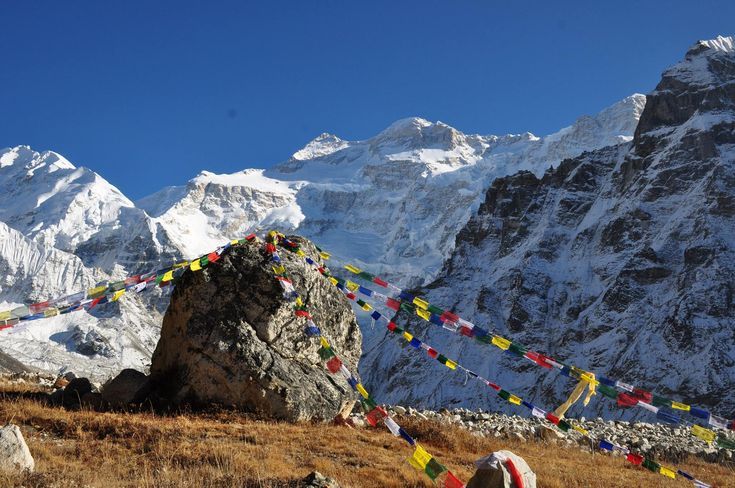
Spring, from late March to May, is climbing season and the busiest trekking period. Autumn, from late September to November, gives the most stable weather and the clearest views without the base camp circus. If the crowds put you off entirely, Kangchenjunga in the far east and the western ranges offer comparable scale with a fraction of the traffic; our west Nepal comparison sets out the trade-offs honestly.
FAQ
Who climbed Everest first?
Edmund Hillary and Tenzing Norgay, on 29 May 1953, by the South Col and southeast ridge route from Nepal. Both refused for the rest of their lives to say which of them stepped onto the summit first.
Did Mallory and Irvine reach the summit in 1924?
Nobody knows. They disappeared high on the north ridge on 8 June 1924, and although Mallory’s body was found in 1999, no conclusive evidence of a summit has ever been recovered.
Has anyone climbed Everest without oxygen?
Yes. Reinhold Messner and Peter Habeler made the first ascent without supplementary oxygen in 1978, and Messner climbed it solo and without oxygen from the north in 1980. Ang Rita Sherpa did it ten times.
When was Everest first climbed in winter?
In February 1980, by the Polish climbers Leszek Cichy and Krzysztof Wielicki, an ascent that effectively opened Himalayan winter mountaineering as a discipline.
Do you need to be a climber to visit Everest Base Camp?
No. The base camp trek is a walking route of roughly twelve to fourteen days from Lukla with no technical climbing. The real challenge is altitude, so build in acclimatisation days and go slowly.