
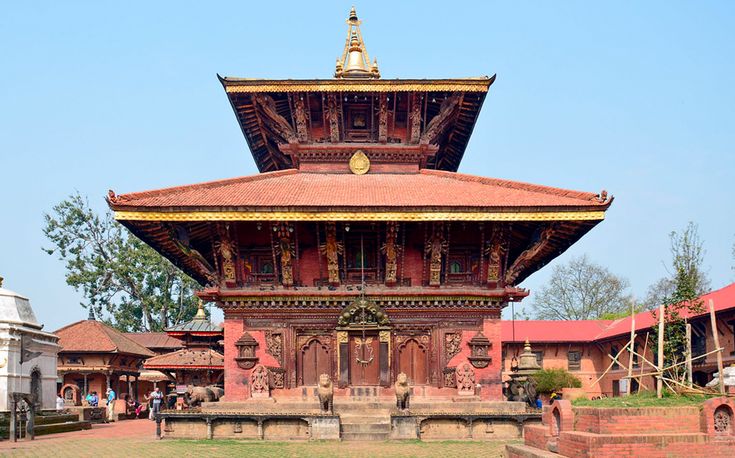
Sometime in 464 CE a Licchavi king named Manadeva had an inscription cut into a stone pillar at Changu Narayan, on a ridge east of Kathmandu. It is the oldest firmly dated document in Nepal, and it changes the character of Nepali history the moment it appears. Before it, the record is chronicle and legend. After it, kings have dates, officials have titles, villages have tax obligations, and the country enters documented time. The Licchavi period is where the history of Nepal becomes verifiable.
When Was the Licchavi Period in Nepal?
Licchavi rule over the Kathmandu Valley is generally placed between roughly the fourth and the eighth centuries CE, with the inscriptional record thickest from the fifth to the seventh. The dynasty took its name from the Licchavis of Vaishali in the Gangetic plain, and Nepali chronicle tradition holds that they came north into the valley and displaced the Kirats. How literally to read that migration story is debated, but the Indic cultural orientation of the dynasty is not in doubt: they governed in Sanskrit and patronised Hindu and Buddhist institutions alike.
Their inscriptions use more than one dating era, which has given historians decades of work reconciling reign sequences. The broad outline is nonetheless stable. Manadeva in the fifth century and Amshuverma in the early seventh are the two figures whose activity is best attested, and between and after them a series of kings and co-rulers governed a valley that was clearly prosperous.
Manadeva and the Oldest Dated Inscription in Nepal
The Changu Narayan pillar records Manadeva in a way that reads as political self-presentation rather than pious formula. It is a genuine historical document, and it establishes several things at once: that the valley had a functioning monarchy with a court, that Sanskrit was the language of record, that Vaishnava worship at Changu Narayan was already established, and that the dynasty wanted its achievements permanently visible on a ridge overlooking its territory.
Manadeva also issued coins, and Licchavi coinage is one of the few Nepali material records that circulates internationally among numismatists. Coins matter here for the same reason inscriptions do: they imply administration, standardised value and trade. A valley kingdom minting coins in the fifth century was not an isolated pocket.
How the Licchavis Governed
Licchavi inscriptions are unusually informative about ordinary administration because many of them are, in effect, legal documents. They record grants of land and revenue, exemptions from specific taxes, the duties of local assemblies, and rules about the maintenance of water channels. Village-level bodies appear repeatedly, which suggests real local self-management under royal oversight rather than a purely top-down state.
The period also includes an unusual constitutional arrangement. Amshuverma governed with immense authority while a Licchavi king remained on the throne, an arrangement that historians have compared to later Nepali episodes where formal and effective power sat in different hands. He is remembered as an able administrator and builder, credited in tradition with a grand palace complex called Kailashkut Bhawan, described admiringly in Chinese accounts of the era but never located archaeologically with certainty.
Amshuverma, Tibet and the Himalayan Trade Route
The seventh century is when the valley becomes visible in foreign sources. Chinese envoys travelling between the Tang court and India passed through, and their reports describe a well-built and well-watered kingdom. Tibetan tradition holds that a Nepali princess, remembered as Bhrikuti, married the Tibetan king Songtsen Gampo and helped introduce Buddhism to Tibet. The story is central to Tibetan cultural memory, though its historical detail is debated by scholars.
What is not debated is the route itself. The valley sat on a viable corridor between the Indian plains and the Tibetan plateau, and that position underwrote its wealth for centuries. Nepali history repeats this pattern again and again: whoever controls the valley controls a chokepoint on Himalayan trade, and the profits of that chokepoint pay for the temples that visitors admire later.
Licchavi Art: Why the Stone Still Looks Modern
Licchavi sculpture is the reason art historians use the phrase golden age for this period. The best pieces combine calm volume with restrained detail, and they set a template that Newar craftsmen worked within for another thousand years. Stone was the primary surviving medium, though metalwork and terracotta were certainly produced. Many surviving figures were carved for open-air settings and remain in situ, worn by weather and daily worship rather than sitting behind museum glass.
Two subjects show the range. The great reclining Vishnu on the northern edge of the valley, a monumental stone figure lying in a water tank, is among the most powerful pieces of the era. And numerous smaller Licchavi images, scattered around courtyards and shrine platforms across Kathmandu and Patan, are still garlanded and vermilion-marked every morning. The continuity of use is as remarkable as the carving.
The Water Systems the Licchavis Left Behind
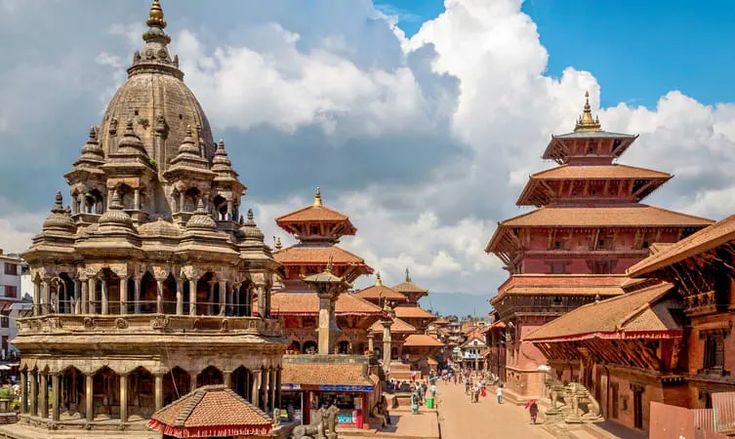
The most underrated Licchavi legacy is plumbing. The valley network of stone spouts, sunken fountains and feeder channels has its origins in this period, and some spouts have been delivering water more or less continuously ever since. The system works by gravity, drawing from shallow aquifers and springs through buried conduits to carved outlets set below street level.
The engineering deserves attention because it explains the shape of valley towns. Neighbourhoods grew around water access, and the maintenance obligations recorded in Licchavi inscriptions show that keeping the channels clear was a public duty, not an afterthought. Urbanisation in the Kathmandu Valley has damaged many of these systems in recent decades, and restoration efforts are now trying to bring individual spouts back into service.
Where to See the Licchavi Period Today
Licchavi remains are scattered rather than concentrated, which makes them easy to walk past. The table below lists the most rewarding places to look, with what to look for at each.
| Site | Where | What to look for | Effort |
|---|---|---|---|
| Changu Narayan | Ridge east of Bhaktapur | The 464 CE Manadeva pillar inscription and early stone sculpture | Half day from Kathmandu |
| Hadigaun and Deopatan | North-east Kathmandu | Licchavi-era settlement areas with reused inscribed stones | Short taxi ride plus walking |
| Budhanilkantha | Northern valley rim | The monumental reclining Vishnu carved in a single stone | Half day, easy road access |
| Chabahil | North-east Kathmandu | An early stupa with sculpture of the period around its base | One hour |
| Patan courtyards | Central Patan | Licchavi stonework reused in later Malla shrine platforms | A slow morning on foot |
Practical Advice for Visiting Licchavi Sites
These are working religious sites, not archaeological parks. Dress modestly, remove shoes where signs ask, and do not step onto shrine platforms during worship. Photography is generally fine outdoors but often restricted inside sanctums, and at some Hindu temples non-Hindus cannot enter the inner precinct at all. Ask rather than assume.
Practically, one good day covers Changu Narayan and Bhaktapur together, and a second covers Budhanilkantha, Chabahil and the Hadigaun area. Pair either with a walking morning in Patan. To place all of this in sequence with the dynasties before and after, read our complete timeline of Nepali history, and see the destination guides for Changu Narayan, Pashupatinath and Patan Durbar Square for access details.
FAQ
Why is the Licchavi period called the golden age of Nepal?
Because it combines the first reliable written record with a peak in stone sculpture, urban water engineering and Himalayan trade. It is the first period in Nepali history that can be described in administrative detail rather than legend.
What is the oldest inscription in Nepal?
The pillar inscription of King Manadeva at Changu Narayan, dated to 464 CE, is the oldest firmly dated inscription in the Kathmandu Valley and in Nepal.
Who was Amshuverma?
A powerful early seventh-century ruler who governed with sweeping authority alongside a Licchavi king. He is remembered as an administrator and builder, and tradition credits him with the palace complex known as Kailashkut Bhawan.
Are Licchavi buildings still standing?
Very little Licchavi architecture survives intact, because brick and timber structures were rebuilt many times. What survives is stone: inscriptions, sculpture, stupa bases and the water spout systems, much of it reused within later Malla-era buildings.
How long does it take to see the main Licchavi sites?
Two unhurried days in and around the Kathmandu Valley covers Changu Narayan, Budhanilkantha, Chabahil, the Hadigaun area and a walking morning through Patan.