Nepal has been a federal democratic republic since 2008. Before that it was a kingdom for 240 years. Before that it was a patchwork of more than fifty small hill states, and before that a valley kingdom whose rulers cut their names into stone pillars in Sanskrit. The history of Nepal is unusually well documented in some centuries and close to blank in others. This timeline puts the whole sequence in order, from the semi-legendary Kirat kings to the constitution promulgated in 2015.
Where the Written History of Nepal Actually Begins
Nepali history rests on three kinds of evidence, and they do not overlap neatly. The oldest is stone: hundreds of inscriptions cut into pillars, temple plinths and water spouts across the Kathmandu Valley, the earliest securely dated one from the fifth century CE. The second is chronicle literature, above all the Gopalarajavamshavali, a genealogy compiled in the fourteenth century that lists dynasties reaching far back into legend. The third is foreign record, particularly Chinese and Tibetan accounts of envoys, monks and royal marriages.
Historians treat these sources very differently. Inscriptions are contemporary and specific, so dates drawn from them are firm. Chronicles were written centuries after the events they describe and mix royal lists with myth, so their early sections are read as tradition rather than fact. Keeping that distinction in mind is the single most useful habit when reading anything about early Nepal, including this article.
Prehistory, the Valley Lake and the First Kingdoms
Every Kathmandu origin story starts underwater. Tradition holds that the valley was once a lake, drained when the bodhisattva Manjushri cut open the gorge at Chobhar. Geology agrees about the lake, if not the sword: the valley floor is lake sediment, and the water eventually drained through the Bagmati gorge. The story is a good example of how Nepali legend and Nepali landscape often describe the same event in two different languages.
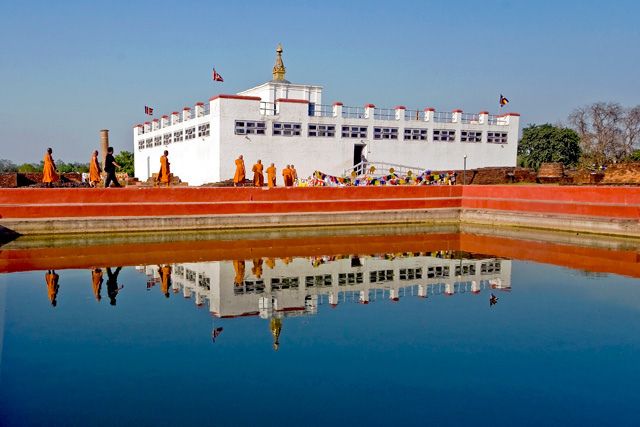
The chronicles name two dynasties before the Kirats, the Gopals and the Mahispals, cowherds and buffalo herders. No inscription confirms either. What archaeology does confirm is that the Tarai was settled and urbanised early. Lumbini, the birthplace of the Buddha in the sixth century BCE, and the nearby city mound at Tilaurakot are the hard evidence for that era. The Ashokan pillar at Lumbini, raised in the third century BCE by the Mauryan emperor Ashoka, is the oldest firmly dated monument in the country.
The Kirat Dynasty and the Valley Before Records
The Kirats are the first rulers the chronicles treat as a continuous dynasty, traditionally beginning with a king named Yalambar and running through a long line of successors before they were displaced from the valley. Their chronology cannot be pinned down from any contemporary document. But the Kirat presence in Nepal is not merely literary. The Rai, Limbu, Sunuwar and Yakkha communities of the eastern hills identify as Kirat today, preserve the Mundhum oral tradition, and still mark the turning of the agricultural seasons with the Sakela dance.
The Licchavi Period, the First Documented State
With the Licchavis the record hardens. From roughly the fourth to the eighth century CE, Licchavi kings ruled the Kathmandu Valley and left inscriptions naming officials, land grants, irrigation arrangements and taxes. The pillar inscription of King Manadeva at Changu Narayan, dated to 464 CE, is the earliest firmly dated document in Nepal, and it reads like administration rather than legend. Licchavi stone sculpture set an artistic standard the valley never really abandoned, and some Licchavi water spouts still run.
The Transitional Centuries and the Khas Malla Kingdom of the West
Between the end of Licchavi rule and the rise of the Mallas lies a stretch usually called the transitional or early medieval period, sometimes attached to a Thakuri line of kings. Valley records thin out badly. What did not thin out was activity elsewhere. While the valley was quiet, western Nepal held the Khas Malla kingdom, ruled from Sinja in what is now Karnali Province between roughly the twelfth and fourteenth centuries. Its administrative language became modern Nepali, and its influence reached into western Tibet.
The Malla Dynasty and the Three Kingdoms of the Valley
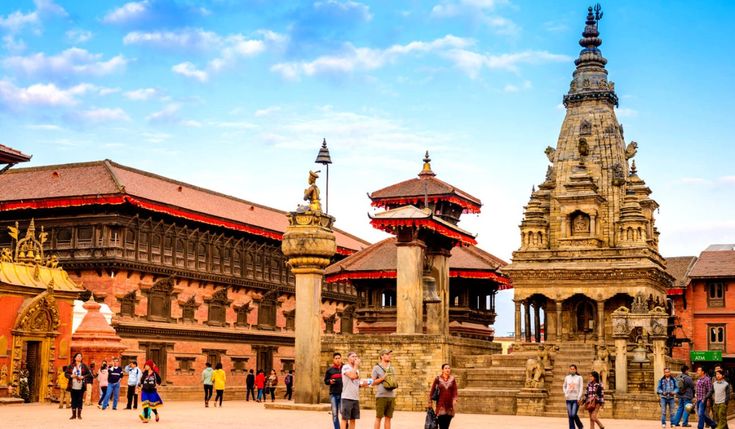
From the early thirteenth century the Malla dynasty ruled the Kathmandu Valley. Jayasthiti Malla, late in the fourteenth century, is credited with codifying law and social order in a way that shaped Newar society for centuries. The death of Yaksha Malla in the fifteenth century split the realm among his heirs and produced three rival kingdoms: Kathmandu, Patan and Bhaktapur. That rivalry is the reason three towns within an hour of each other each hold a palace square crowded with temples.
Unification and the Rise of the Shah Dynasty
In 1743 Prithvi Narayan Shah took the throne of Gorkha, a modest hill state west of the valley. Over three decades he seized Nuwakot, tightened a trade blockade around the valley, captured the fortified town of Kirtipur, and in 1768 entered Kathmandu during the Indra Jatra festival. Patan fell soon after and Bhaktapur the following year. He moved his capital to Kathmandu, and the state he founded kept expanding east and west until it collided with the British East India Company. The Anglo-Nepal War ended with the Treaty of Sugauli in 1816, which fixed the borders close to their present lines.
The Rana Regime, 1846 to 1951
In 1846 a night of violence at the Kot armoury in Kathmandu left Jung Bahadur, later titled Rana, in command of the state. He made the office of prime minister hereditary within his family and reduced the Shah kings to ceremonial figures. The Ranas held power for more than a century. They kept Nepal formally independent while keeping it deeply closed: travel restricted, education limited to a narrow elite, and the country largely sealed to outsiders. The regime collapsed in 1951 under combined pressure from King Tribhuvan, exiled political parties and a newly independent India.
Democracy, Panchayat and the Road to a Republic
Nepal held its first general election in 1959. The elected government lasted around eighteen months before King Mahendra dismissed it and installed the partyless Panchayat system, which governed until a mass movement forced the restoration of multiparty democracy in 1990. A Maoist insurgency began in 1996 and ran for a decade, reaching most districts of the country and costing thousands of lives. In 2001 ten members of the royal family, including King Birendra, were killed inside the palace in Kathmandu.
A second mass movement in 2006 stripped the monarchy of executive power and brought the Maoists into open politics through a comprehensive peace agreement. In 2008 a newly elected Constituent Assembly declared Nepal a federal democratic republic and ended the monarchy outright. A second assembly promulgated the constitution in 2015, restructuring the country into seven provinces and 77 districts. That framework is the one in place today.
Nepal History Timeline at a Glance
The table below compresses the sequence. Dates for the earliest periods are traditional or approximate; everything from the Licchavi period onward rests on inscriptions, documents or living memory.
| Period | Approximate dates | Seat of power | What it is remembered for |
|---|---|---|---|
| Kirat dynasty | Traditional, undated | Kathmandu Valley | First named dynasty in the chronicles; ancestors of eastern Kirat communities |
| Licchavi period | Around 400 to 750 CE | Kathmandu Valley | Sanskrit inscriptions, stone sculpture, Himalayan trade with Tibet |
| Transitional and Khas Malla | Around 750 to 1200 CE | Valley and Sinja in Karnali | Thin valley records; a powerful Khas kingdom in the west |
| Malla dynasty | Around 1200 to 1769 | Kathmandu, Patan, Bhaktapur | Three rival kingdoms, Newar art, the durbar squares |
| Shah kingdom | 1768 to 2008 | Kathmandu | Unification, the Sugauli treaty, the modern state |
| Rana regime | 1846 to 1951 | Kathmandu | Hereditary prime ministers, a closed country |
| Republic | 2008 onward | Kathmandu | Monarchy abolished, 2015 constitution, seven provinces |
Where to See Nepal’s History on the Ground
Almost every layer of this timeline is still standing somewhere. For the pre-dynastic Tarai, go to Lumbini and the excavated city mound at Tilaurakot. For the Licchavis, the hilltop temple at Changu Narayan holds the oldest dated inscription in the country. For the Mallas, walk the palace squares at Bhaktapur and Patan on the same day and compare them. For unification, the ridge fort at Nuwakot is the clearest surviving statement of Gorkhali ambition.
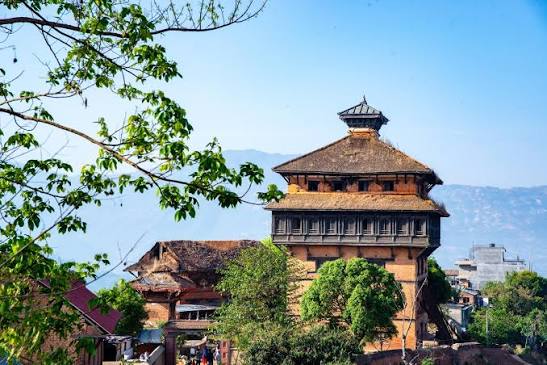
Western Nepal adds the chapter most itineraries skip entirely. The Khas Malla capital at Sinja in Karnali is where the Nepali language took shape, and it is covered in detail in our guide to the Khas Malla kingdom of west Nepal. Pairing a valley heritage circuit with a few days in Karnali gives you a far more complete picture of the country than Kathmandu alone can.
FAQ
How old is the history of Nepal?
The oldest firmly dated evidence is the third century BCE Ashokan pillar at Lumbini, and the oldest dated inscription in the Kathmandu Valley is from 464 CE. Chronicle traditions describing the Kirat and earlier dynasties reach further back but cannot be dated reliably.
Who was the first king of Nepal?
Chronicle tradition names Yalambar of the Kirat dynasty as the first king of the Kathmandu Valley. The first ruler documented by a contemporary inscription is the Licchavi king Manadeva in the fifth century CE, and the founder of the modern unified state is Prithvi Narayan Shah.
When did Nepal stop being a kingdom?
In 2008, when the Constituent Assembly abolished the monarchy and declared Nepal a federal democratic republic. The Shah dynasty had ruled since 1768, with real power held by the Rana prime ministers from 1846 to 1951.
Was Nepal ever colonised?
No. Nepal was never a British colony, though it lost territory to the British East India Company under the Treaty of Sugauli in 1816 and remained closely constrained by British India during the Rana period.
What is the best order to visit Nepal’s historical sites?
Chronologically it works well to start in the Tarai at Lumbini and Tilaurakot, move to the Licchavi sites around the Kathmandu Valley rim, spend two days on the Malla durbar squares, then finish at Nuwakot or in Karnali for the unification and Khas Malla chapters.