Every year a pine tree is felled in a forest outside the Kathmandu valley, hauled into the city, and raised by hand in front of the old royal palace at Hanuman Dhoka. Until that pole stands upright, Indra Jatra has not begun. When it is lowered eight days later, the festival is over.
Indra Jatra is the largest street festival in Kathmandu and the one that has changed least. It is a Newar festival, held in the Nepali month of Bhadra, which puts it in late August or September. Over eight days it stages masked dances, a public appearance by the living goddess Kumari, a procession for the dead of the past year, and a set of rites that predate the modern Nepali state.
What is Indra Jatra and why is Indra tied up?
Indra is the Vedic god of rain, and the festival is held as the monsoon ends and the rice ripens. The founding story is unusually undignified for a god. Indra came down to the valley in disguise to take parijat flowers his mother needed for a ritual. He was caught in the act by the people of the valley, who did not recognise him, and was bound and displayed in public as a common thief.
His mother, Basundhara, came looking for him. When the valley realised who they had tied up, Indra was released. In exchange his mother promised dew through the winter for the crops, and agreed to carry to heaven the souls of everyone who had died in the valley that year. Both of those promises are still enacted during the festival. Images of Indra with his arms bound are displayed around the city, which is the only Hindu festival anywhere where the chief deity spends the week in restraints.
What happens during the eight days of Indra Jatra?
The festival is not one event but a stack of them, several running on the same afternoon in different quarters. The following are the fixed points around which everything else moves.
| Element | What it is | Where it happens | What to look for |
|---|---|---|---|
| Yosin, also called the lingo | A tall pine pole cut outside the valley and pulled upright entirely by hand and rope | Hanuman Dhoka, Kathmandu Durbar Square | The moment the pole rises; the festival is not considered open until it stands |
| Sweta Bhairav | A large gilded mask of the white Bhairav that stays screened from view for most of the year | The old palace frontage at Hanuman Dhoka | The screen comes down for the festival and rice beer is served through the mouth of the mask |
| Kumari Jatra | A three day chariot procession carrying the living goddess, with separate chariots for Ganesh and Bhairav | Three different routes through the old quarters of Kathmandu | The ropes, pulled by hundreds of people, and the corners where heavy chariots are turned by hand |
| Masked dances | Lakhey, Pulukisi, Sawa Bhakku, Devi Pyakhan and others, performed by hereditary dancers | Squares and lanes across the old city | The Majipa Lakhey, a red haired demon figure whose drum sets the pace of the dance |
| Upaku Wonegu | An evening circuit of the old city carrying butter lamps, walked by families who lost someone in the past year | The traditional processional route of Kathmandu | Lamps and incense set down at shrines the whole way round |
Who is the Kumari and when does she appear?
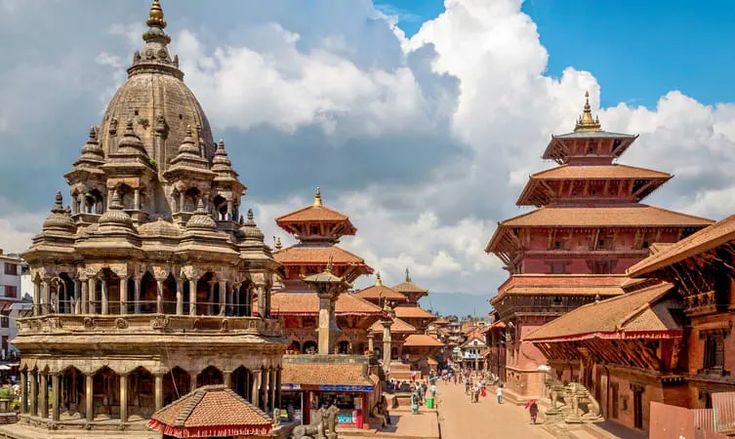
The Kumari of Kathmandu is a young girl from the Shakya community, selected as the living embodiment of the goddess Taleju and living in the Kumari Ghar beside Kathmandu Durbar Square until she reaches puberty. Most of the year she is seen briefly at a carved upper window. Indra Jatra is the exception. During the Kumari Jatra she comes out of the house, is placed in a wooden chariot, and is pulled through the streets in front of the whole city.
This is the clearest public statement of what the institution is for. The Kumari is not a museum piece maintained for visitors. She blesses the head of state during the festival, a role that survived the end of the monarchy in 2008 and passed to the president. Two attendant chariots carry boys representing Ganesh and Bhairav.
Kathmandu is not the only city with a Kumari. Patan and Bhaktapur maintain their own, with their own selection processes and their own festival appearances, and the Patan Kumari appears in the courtyards around Patan Durbar Square during that city’s own calendar. Anyone who wants to understand the institution rather than just photograph it should look at all three.
What happened at Indra Jatra in 1768?
Indra Jatra is the festival on which the Kathmandu valley changed hands. In 1768, while the city was full of festival crowds and its last Malla king, Jaya Prakash Malla, was attending the celebrations, the Gorkhali forces of Prithvi Narayan Shah entered Kathmandu. The king fled. The campaign that had been squeezing the valley for years ended during the one week when the city was least able to defend itself.
The account preserved in Kathmandu holds that Prithvi Narayan Shah went to the Kumari and received the tika from her, taking the blessing that had been given to the Malla kings before him. Whatever the exact detail, the political meaning is not in doubt. The conqueror stepped straight into the ritual role of the dynasty he had displaced rather than abolishing it, and the Shah kings continued to receive the Kumari’s blessing at Indra Jatra for the next two centuries.
This is why the festival matters beyond the valley. Nepali unification is usually taught as a military story. Indra Jatra is where the ritual half of that story is still performed in public, once a year, in the same square.
Where should you stand to watch Indra Jatra?
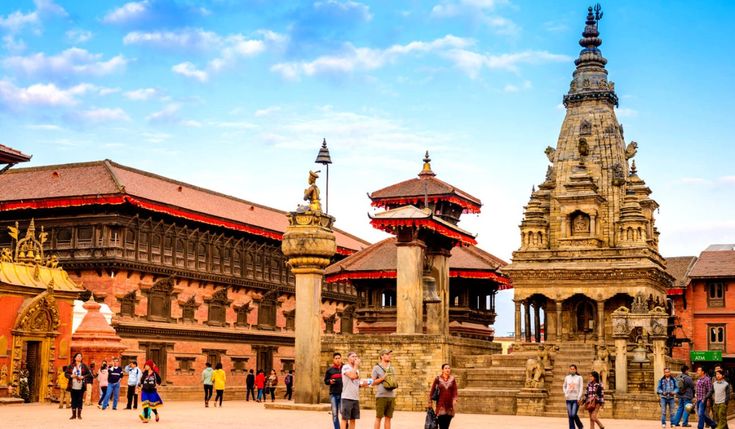
Kathmandu Durbar Square is where the pole goes up, where Sweta Bhairav is unveiled and where the chariots start and finish. It is also completely packed. If you want to see the chariot procession without standing in a crush for hours, pick a point along the route in the older lanes instead. The chariots move slowly and stop often, so a spot in a side street will give you a longer and closer look than the main square will.
The masked dances are worth planning around, because they are scattered. Ask locally on the day rather than relying on a printed schedule. Evenings are the strongest part of the festival, particularly the lamp procession, which is quiet and unstaged in a way the daytime events are not.
The hill shrine at Swayambhunath gives you the clearest sense of how the whole festival sits inside the valley, and the walk up is a reasonable way to spend a morning between events. If you have time after the festival, the older Newar towns of Bhaktapur run their own jatras on a different calendar, and they are far less crowded.
FAQ
When is Indra Jatra held?
Indra Jatra runs for eight days in the Nepali month of Bhadra, which falls in late August or September. The start is fixed to a lunar date and moves each year, so check a current Nepali calendar. The festival opens with the raising of the pole and closes when it is taken down.
Will I actually see the Kumari?
Yes, if you are there for the Kumari Jatra days rather than the festival in general. The chariot procession takes place on three of the eight days and the Kumari is visible in the chariot throughout. Photography of the procession is normally accepted; ask before photographing her at close range, and follow whatever the attendants indicate.
Is Indra Jatra a Hindu or a Buddhist festival?
Both, and the question does not map cleanly onto Newar practice. Indra is a Vedic deity, the Kumari is selected from a Buddhist Shakya family, and the same households take part in rites that scholars would classify separately. Newar religion has worked this way for centuries.
Can visitors join the crowd pulling the chariot?
The ropes are handled by specific communities with hereditary roles, and this is not a participation activity for visitors. Stand clear when the chariot is moving. The lanes are narrow, the chariots are extremely heavy, and injuries do happen when the crowd pushes.
How is Indra Jatra different from other Kathmandu festivals?
Scale and continuity. It is the biggest street festival in the city, it involves the largest number of hereditary performing groups, and its central rites still carry a formal role in the life of the state through the Kumari’s blessing. Other valley jatras are larger locally, but none of them carry the same national weight.