The Buddha was born at Lumbini, in the plains of what is now Rupandehi district in western Nepal. A stone pillar raised there by the emperor Ashoka in the third century BCE says so in an inscription, and that pillar is still standing on the spot. It is one of the oldest surviving pieces of physical evidence for any event in the life of any religious founder.
Buddha Jayanti is the day Nepal marks that birth. It falls on the full moon of the Nepali month of Baisakh, which puts it in April or May, and it is a national public holiday.
What does Buddha Jayanti actually commemorate?
Three events, not one. The tradition holds that the Buddha was born, attained enlightenment, and passed into parinirvana on the same full moon day of the same lunar month, in different years. Buddha Jayanti marks all three at once. Elsewhere in Asia the same festival is known as Vesak or Visakha Puja, and it is observed on dates that can differ by a lunar month depending on the local calendar.
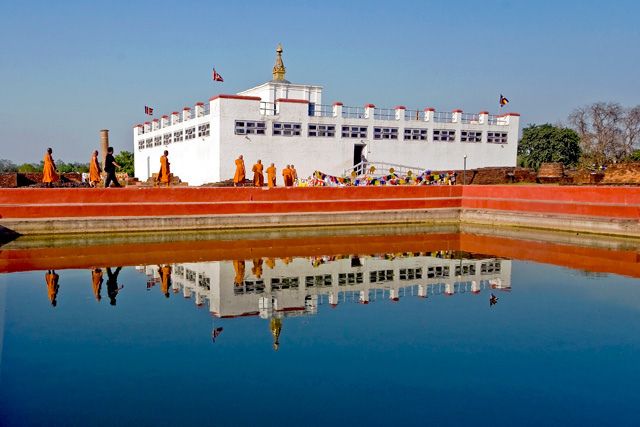
In Nepal the birth is the part that carries most weight, for obvious reasons. Queen Mayadevi of the Shakya clan was travelling from Kapilvastu to her family home when she stopped in a grove at Lumbini and gave birth there. The Mayadevi Temple at Lumbini encloses a marker stone identified as the precise spot, alongside excavated brick foundations of earlier structures built over the same point across many centuries.
What happens in Nepal on Buddha Jayanti?
The day starts early. At the major stupas people begin circumambulating before dawn, and butter lamps are lit in numbers that make the courtyards visibly hazy. White clothing is common. Monastic communities hold chanting sessions and processions, laypeople offer alms to monks, and many households keep a vegetarian day.
At Lumbini the scale is different from anywhere else in the country. Monastic delegations from across the Buddhist world maintain monasteries inside the site’s monastic zone, laid out under a master plan drawn up in the late 1970s, and Buddha Jayanti brings a concentration of pilgrims and processions from all of those traditions at once. Theravada, Tibetan and East Asian practice all take place within a few hundred metres of each other, which you will not see anywhere else in Nepal.
In Kathmandu the focus is on the two great stupas and on the Newar Buddhist viharas of the old cities. Processions carrying images move through the streets. Some communities display painted scrolls and sculptures kept out of sight for the rest of the year, which makes the day one of the better opportunities to see Newar Buddhist art in its own context rather than in a museum.
Where should you go for Buddha Jayanti in Nepal?
Lumbini is the obvious answer and the crowded one. The alternatives in the surrounding Greater Lumbini area are less visited and in some ways more interesting, because they are archaeological sites in open country rather than managed pilgrimage centres.
| Site | Where | Why it matters | On Buddha Jayanti |
|---|---|---|---|
| Lumbini | Rupandehi district, western Terai | The birthplace, marked by the Mayadevi Temple, the marker stone and the Ashokan pillar | The largest gathering in Nepal, with monastic processions and pilgrims from across Asia |
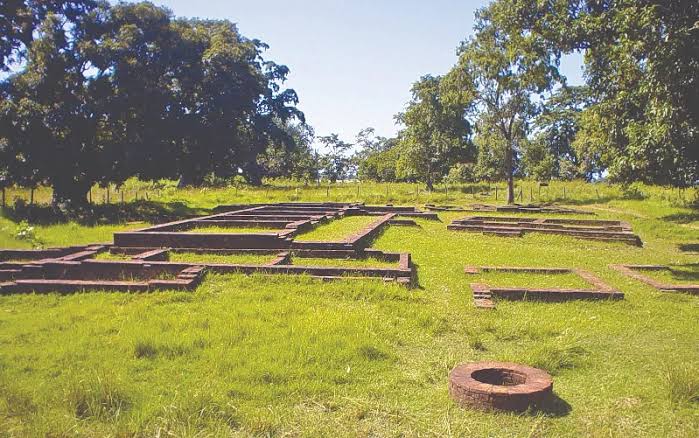
| Tilaurakot | Kapilvastu district, west of Lumbini | Widely identified as Kapilvastu, the Shakya capital where Siddhartha grew up | Quiet by comparison; brick foundations, a moat line and gateways in farmland |
| Ramagrama | Nawalparasi district | Held to be the one original relic stupa never opened or rebuilt | Local pilgrimage and a modest fair; still an earth mound rather than a restored monument |
| Swayambhunath | Kathmandu valley | Ancient hilltop stupa at the centre of Newar Buddhist practice | Butter lamps and circumambulation from before dawn, and heavy crowds all day |
| Boudhanath | Kathmandu | The largest stupa in the valley and the centre of Tibetan Buddhist life in Nepal | Lamps, fresh prayer flags and continuous circumambulation of the dome |
If you have more than a day, the pairing worth making is Lumbini with Tilaurakot. One is the birthplace and the other is where the man grew up, and seeing the second explains the first. Tilaurakot is largely unreconstructed, which is exactly why it works. You are looking at foundation courses and a gateway in a field, with almost nobody else there.
Is Lumbini in Nepal or India?
Nepal. This gets asked often enough that it is worth answering directly. Lumbini is in Rupandehi district in Nepal’s western Terai, close to the Indian border, and it was inscribed as a UNESCO World Heritage Site in 1997. The Ashokan pillar found there in 1896 carries an inscription recording that the emperor visited the site and marked it as the birthplace of the Buddha.
The confusion arises because the other three major sites in the Buddha’s life, meaning the places of his enlightenment, first teaching and death, are all in India. The birth is the Nepali one. The identification of nearby Tilaurakot as Kapilvastu is a separate and less settled question, with a competing candidate across the border in India, and archaeologists have argued it for over a century.
How should visitors behave at Buddhist sites on the day?
Remove shoes where indicated, and note that at Lumbini the barefoot zone around the Mayadevi Temple is larger than people expect and the brick paving gets extremely hot by midday. Walk clockwise around stupas and shrines. Do not point the soles of your feet at an image or a monk. Photography of the marker stone inside the Mayadevi Temple is restricted.
April and May in the Terai are hot, often above forty degrees, and the site is flat, open and largely unshaded. Go early, carry water, and plan to be somewhere covered in the middle of the day. In Kathmandu the practical problem is different: Swayambhunath and Boudhanath are both extremely crowded on Buddha Jayanti, and the approach roads are effectively closed to vehicles for much of the day.
FAQ
When is Buddha Jayanti in Nepal?
It falls on the full moon of the Nepali month of Baisakh, which places it in April or May. The date is lunar and moves each year. Because different Buddhist countries calculate Vesak differently, Nepal’s date can differ from the date observed elsewhere in Asia by up to a lunar month.
Was the Buddha really born in Nepal?
Yes. He was born at Lumbini, in present day Rupandehi district in Nepal. The Ashokan pillar at the site, raised in the third century BCE and rediscovered in 1896, records the emperor’s visit and identifies the spot as the birthplace. The site has been continuously identified as such ever since.
Do I need to be Buddhist to visit Lumbini on Buddha Jayanti?
No. Lumbini is open to all visitors regardless of faith, on Buddha Jayanti and every other day. The monasteries in the monastic zone are also open, though individual halls may be closed during ceremonies. Ordinary respect and quiet are all that is asked.
How far is Tilaurakot from Lumbini?
Tilaurakot lies west of Lumbini in Kapilvastu district and is a straightforward road trip of well under an hour by car or taxi. It can easily be combined with Lumbini in a single day, and most visitors do it as a half day out. Public transport exists but is slow and infrequent.
Is Buddha Jayanti a good time to visit Lumbini?
It is the most atmospheric day of the year and the most uncomfortable. The processions and the international monastic presence are worth seeing, but the Terai heat in April and May is severe and accommodation books out well ahead. If atmosphere is the point, go for the festival. If you want to walk the site properly, come in the cool season instead.