On 28 May 2008 the newly elected Constituent Assembly met in Kathmandu and voted to abolish the monarchy. Two hundred and forty years after Prithvi Narayan Shah took the Kathmandu valley, the Shah dynasty stopped governing Nepal. The vote itself took an afternoon. The process that produced it took fifty-seven years, two popular uprisings, a ten-year civil war and one night at the royal palace that the country has still not finished discussing.
This article sets out the sequence factually. The interpretation of these events is genuinely contested in Nepal, and the aim here is to describe what happened rather than to argue about who was right.
1951: the Monarchy Returns to the Centre
The end of Rana rule in 1951 did not deliver democracy. It restored King Tribhuvan to an active political role and produced a series of short-lived cabinets. Promised elections were repeatedly postponed. Tribhuvan died in 1955 and was succeeded by his son Mahendra, who finally held the first general election in 1959. The Nepali Congress won a large majority and B. P. Koirala became the first elected prime minister.
1960 to 1990: the Panchayat System
That government lasted about eighteen months. In December 1960 King Mahendra dismissed the cabinet, arrested the prime minister and much of the leadership, dissolved parliament and banned political parties. In their place he built the Panchayat system, a tiered structure of village, district and national councils in which candidates stood as individuals rather than as party members, with executive authority resting with the palace. A new constitution formalised it in 1962.
The Panchayat era brought the first serious road building, the eradication of malaria from parts of the Terai and a rapid expansion of primary schooling. It also brought censorship, political imprisonment and exile. Pressure built through the 1970s, and in 1980 King Birendra called a national referendum on whether to keep the partyless system or move to a multiparty one. The partyless option won narrowly, and the argument continued.
1990: Jana Andolan and Constitutional Monarchy
In the spring of 1990 the banned parties launched a joint movement, the Jana Andolan. Weeks of strikes and street demonstrations in Kathmandu and the major towns ended with the king lifting the ban on parties in April. A new constitution promulgated in November 1990 created a constitutional monarchy with a sovereign parliament and guaranteed civil liberties. Elections followed in 1991.
The decade that followed was democratic and unstable. Governments fell repeatedly, coalitions formed and collapsed, and the delivery of services to the hills improved much more slowly than expectations had risen. Land inequality, caste and ethnic exclusion and the near-absence of the state in remote districts remained largely untouched.
1996 to 2006: the Maoist Insurgency and the Civil War
In February 1996 the Communist Party of Nepal (Maoist) submitted a list of demands to the government and, days later, launched an armed campaign it called the People’s War. The first attacks were in Rolpa and Rukum in the mid-western hills, along with Sindhuli and Gorkha. Within a few years the insurgency had a presence in most districts of the country.
The state responded first with police operations and, from late 2001, with the deployment of the Royal Nepal Army. Both the state forces and the Maoist side were documented by the United Nations and by domestic and international human rights organisations as having committed serious violations, including extrajudicial killings, torture, abduction, forced recruitment and enforced disappearance. Commonly cited estimates put the number of people killed over the ten years in the range of thirteen to seventeen thousand. Many thousands more were displaced, and well over a thousand cases of disappearance remain formally unresolved before Nepal’s transitional justice bodies.
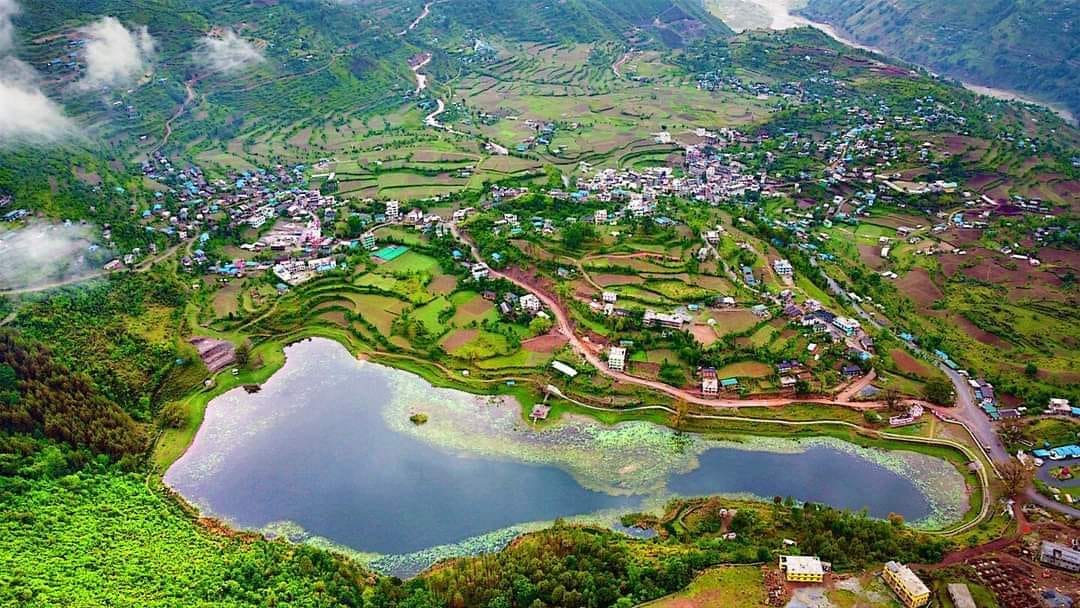
The causes are debated. Analysts point variously to entrenched rural poverty, caste and ethnic exclusion, the failure of the 1990s parliamentary parties to reach remote districts, land tenure, and organised political mobilisation. The districts that suffered most were mainly in the mid-west and far-west hills, where schools closed, bridges and government offices were destroyed and a generation of young people either fought, fled or migrated for work. Areas like Rukum and neighbouring Rolpa carry that history openly, and the recovery there is described in more detail in this guide to Rukum and Rolpa today.
2001: the Royal Palace Massacre
On 1 June 2001, King Birendra, Queen Aishwarya and most members of the immediate royal family were shot dead at Narayanhiti Palace in Kathmandu. An official inquiry commissioned shortly afterwards concluded that Crown Prince Dipendra was responsible and that he then shot himself. Parts of the Nepali public have never accepted that account, and alternative theories circulate widely. Birendra’s brother Gyanendra became king. The event removed a monarch who had accepted the 1990 constitution and replaced him at the height of an armed conflict.
2005 to 2008: Direct Rule, the Second Uprising and the Republic
In February 2005 King Gyanendra dismissed the government, assumed direct executive power, declared a state of emergency and cut communications for a period. The move united two groups that had been fighting each other. In November 2005 the seven main parliamentary parties and the Maoists signed a twelve-point understanding in Delhi committing them to end absolute monarchy and hold elections to a constituent assembly.
In April 2006 a second Jana Andolan brought nineteen days of nationwide protest and general strike. The king reinstated the dissolved parliament, which promptly stripped the crown of most of its remaining powers. On 21 November 2006 the government and the Maoists signed the Comprehensive Peace Accord, formally ending the armed conflict. Maoist combatants moved into monitored cantonments, and the party entered an interim government. Constituent Assembly elections were held in April 2008, and the assembly declared Nepal a federal democratic republic at its first sitting. Gyanendra left Narayanhiti as a private citizen, and Ram Baran Yadav became the first president.
| Year | Event | Result |
|---|---|---|
| 1951 | Rana regime ends | Monarchy restored to an active governing role |
| 1959 | First general election | Nepali Congress wins; B. P. Koirala becomes prime minister |
| 1960 | Royal takeover | Parties banned; Panchayat system introduced |
| 1990 | First Jana Andolan | Multiparty constitutional monarchy established |
| 1996 | Insurgency begins | Ten-year armed conflict, heaviest in the mid-western hills |
| 2001 | Royal palace massacre | King Birendra killed; Gyanendra takes the throne |
| 2006 | Second Jana Andolan and peace accord | Conflict ends; royal powers removed |
| 2008 | Constituent Assembly convenes | Monarchy abolished; Nepal declared a federal republic |
| 2015 | New constitution promulgated | Seven provinces; secular federal democratic republic |
2015: the Constitution and Federal Nepal
Writing the constitution took two Constituent Assemblies and seven years. The first failed to agree, largely over how to draw federal provinces and whether identity should be a basis for their boundaries. A second assembly was elected in 2013, and the constitution was finally promulgated on 20 September 2015, months after the April earthquakes. It declares Nepal a secular federal democratic republic with seven provinces, three tiers of government and a substantial devolution of budget and authority to municipalities. Its adoption was followed by sustained protests in the Madhes and by months of severe disruption to supplies entering from India.
What Federalism Changed in Karnali and the Far West
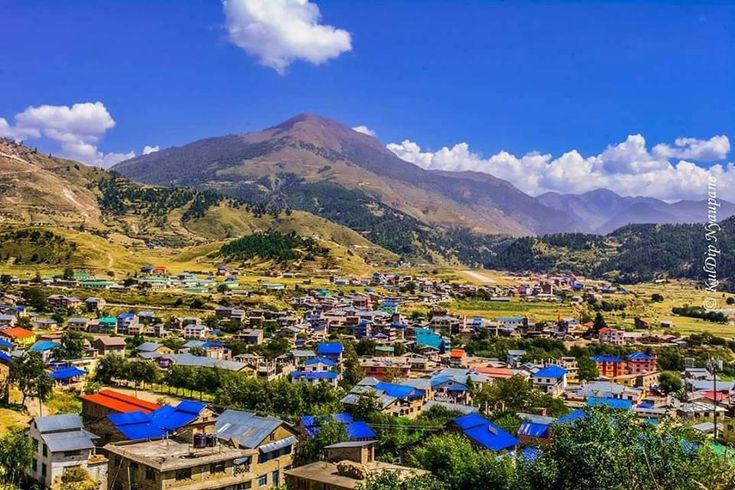
For the west, federalism was the largest administrative change since 1951. Karnali Province, with its capital at Birendranagar in Surkhet, and Sudurpashchim Province, with its capital at Godawari in Kailali, now hold their own budgets and assemblies. Rural municipalities that previously waited on Kathmandu for every decision can build a trail, a health post or a school themselves. The results are uneven but visible: more roads reaching district headquarters, more local revenue, and more local political capacity. Jumla, once a distant outpost of the state, is now a working provincial hub with an airport, a college and daily flights. Anyone travelling through the region can see how much is under construction, and this guide to Jumla and this Karnali circuit itinerary cover the practical side.
Practical Information for Travellers
The conflict ended in 2006 and the former conflict districts are open and safe for ordinary travel. Rolpa, Rukum, Jajarkot and Salyan see very few foreign visitors, which is a matter of transport rather than security. General strikes can still close highways for a day at short notice, so build slack into any itinerary that depends on a single road or a single flight. In Kathmandu, Narayanhiti Palace Museum is the most direct place to encounter this history, since the palace was opened to the public after 2008 and the site of the 2001 killings is part of the visit.
FAQ
When did Nepal become a republic?
On 28 May 2008, when the first Constituent Assembly voted at its opening sitting to abolish the monarchy and declare Nepal a federal democratic republic.
How long did the Nepali civil war last?
Ten years, from February 1996 to the Comprehensive Peace Accord signed on 21 November 2006.
What was the Panchayat system?
A partyless system of tiered councils introduced by King Mahendra after he dismissed the elected government in 1960. Political parties were banned and executive power rested with the palace until 1990.
What happened at the royal palace in 2001?
King Birendra, Queen Aishwarya and most of the immediate royal family were killed by gunfire at Narayanhiti Palace on 1 June 2001. An official inquiry attributed responsibility to Crown Prince Dipendra, a conclusion that many Nepalis continue to question.
Is it safe to travel in the former conflict districts now?
Yes. The armed conflict ended in 2006 and districts such as Rolpa, Rukum and Jajarkot are open to visitors. The practical constraints today are road conditions and limited accommodation, not security.