The Rukum and Rolpa highlands are the ridge country between the Karnali basin and the western end of the Dhaulagiri range. Under the federal restructuring the old district of Rukum was split in two, so a trip here crosses Rukum West in Karnali Province, Rukum East in Lumbini Province and Rolpa alongside it. There is no trekking industry to speak of, which is the whole point of coming.
Getting in, and which way round to do it
There are two sensible approaches and they suit different trips. From the west, fly to Nepalgunj, then take the road north through Surkhet or Salyan to Musikot, the Rukum West headquarters, which is a long day in a jeep. From the east, drive from Pokhara through Baglung to Burtibang and enter Rukum East over the ridges, which is how most people who are already trekking arrive. The Chaurjahari airstrip in Rukum West exists and occasionally has scheduled flights, but no itinerary should depend on one.
Roads have improved faster here than anywhere else in the region and continue to change year on year. That cuts both ways: a stretch that took two days on foot five years ago may now take four hours in a jeep, and the trail that replaced it may have gone quiet. Ask locally when you arrive rather than planning the walking from a map bought in Kathmandu.
The highlands at a glance
| Districts | Rukum West (Karnali), Rukum East and Rolpa (Lumbini) |
| District headquarters | Musikot, Rukumkot and Liwang |
| Nearest airports | Nepalgunj and Surkhet |
| Road journey | A full day by jeep from Nepalgunj or Surkhet |
| Jaljala | A broad grassland pass above 3,000 m between Rolpa and Rukum |
| Highest ground | Putha Hiunchuli, 7,246 m, on the northern district line |
| Best season | October to November, March to April |
| Permits | None beyond a trekker information card on an organised trek |
| Accommodation | Homestays and basic lodges, camping on the ridges |
Jaljala and the walking
The centrepiece of any route here is Jaljala, a wide grassland saddle above 3,000 m that separates Rolpa from Rukum. It is used as summer grazing, it holds small lakes and shrines, and it is one of the few places in Nepal where high open country is a day walk from a road rather than a week. From the pass the ground falls away in both directions into gorges deep enough that villages on opposite sides of a valley are half a day apart.
The best-known line through the area is the Guerrilla Trek, which links Rolpa, Rukum and eventually Dolpo and is named for the districts at the centre of the Maoist insurgency. It takes around two weeks end to end. Shorter loops out of Musikot or Liwang work well if you have a week, and lower routes stay open in months when the pass is snowed under.
Villages, lakes and the northern skyline
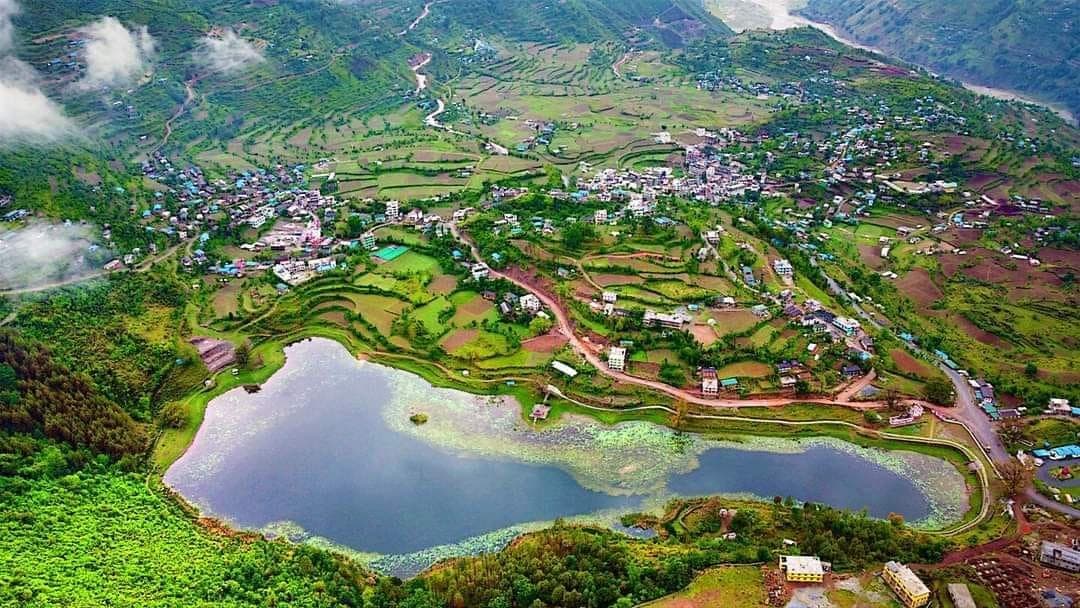
Rukum West has Syarpu Lake, a quiet stretch of water below terraced fields that sees more local visitors than foreign ones, and Chaurjahari down on the Bheri. Rukum East runs up towards Sisne, the peak locally called Murkatta, and the high lakes below it. Putha Hiunchuli, at 7,246 m the western outlier of the Dhaulagiri chain, closes the skyline to the north-east and is visible from a surprising amount of the district.
The villages themselves are the reason to walk slowly. Houses are stone and slate with flat roofs used for drying grain, and the settlements sit in tiers on the sunny side of each valley. Kham Magar communities dominate the high ground, and their Bhume observances, danced in early summer to ask for a good harvest, are among the few festivals in Nepal that have not been shaped for visitors. If you want that world in more depth, the article on Rukum takes up the history and the culture that this page leaves out.
What it is like on the ground
Expect homestays and small local lodges rather than a teahouse circuit. Food is dal bhat with whatever the household has, rooms are simple, and hot water means a bucket. There are banks and shops in Musikot, Rukumkot and Liwang and effectively nothing between them, so carry cash in small notes. Mobile coverage follows the roads and disappears on the ridges. A local guide is worth arranging in the district headquarters, both for route knowledge on trails that are not signed and because Nepali is the only language you will hear once you are off the road.
Dhorpatan is the natural extension eastwards, and a route across the ridges links the two; see the Dhorpatan reserve page for what that involves. Getting to this side of the country in the first place is covered in how to get to west Nepal.
When to go
October and November are the best weeks: dry trails, clear air and the harvest in. March and April are the second window, with rhododendron on the higher ridges and longer days, though haze can hide the peaks until the first pre-monsoon rain clears it. The monsoon puts landslides across the roads and makes the gorges genuinely dangerous. Winter is walkable low down but the passes hold snow and the highest villages empty out. The wider seasonal picture is in our seasons guide for west Nepal, and the case for spending a fortnight in one district rather than three days in five is made in slow travel in Nepal.
Frequently Asked Questions
Is Rukum one district or two?
Two. The federal restructuring split the old district into Rukum West, which is in Karnali Province with its headquarters at Musikot, and Rukum East, which is in Lumbini Province with its headquarters at Rukumkot.
Do you need a permit to trek in Rukum and Rolpa?
No special permit. This is not a restricted area, so a trekker information card on an organised trek is all that applies. That makes it far cheaper to visit than Dolpa or Humla.
How do you get to Rukum from Kathmandu?
Fly to Nepalgunj, then take a jeep north through Surkhet or Salyan to Musikot, which is a full day on the road. Coming from Pokhara, the route runs through Baglung and Burtibang into Rukum East.
What is the Guerrilla Trek?
A roughly two-week route linking Rolpa, Rukum and the country towards Dolpo, named after the districts at the centre of the Maoist insurgency. It crosses Jaljala and uses village homestays rather than teahouses.
Where do you sleep on these routes?
Homestays and small local lodges in the villages, with camping needed on the ridges and the higher stretches. Carry cash from the district headquarters, as there is nowhere to draw money in between.
When is the best time to visit?
October and November for dry trails and clear views, or March and April for rhododendron on the ridges. Avoid the monsoon, when landslides close the roads and the gorge trails become dangerous.