Gorkha is a district about a hundred kilometres northwest of Kathmandu, with a ridge-top palace, a shrine to the yogi Gorakhnath and a population of a few hundred thousand. The English word Gurkha is simply that place name, worn down by two centuries of use. It has ended up attached to soldiers from communities that in many cases have no historical connection to Gorkha at all, which is a good early warning that this subject is more tangled than the recruiting posters suggest.
The military history runs in a straight line from a small hill principality to three modern armies. Understanding it explains a surprising amount about how the Nepali hills are populated, financed and depopulated today.
Where the Name Gurkha Comes From
In 1743 Prithvi Narayan Shah inherited the throne of Gorkha, one of dozens of small hill states in what is now central Nepal. Over the next three decades he took Nuwakot, tightened a blockade around the Kathmandu valley and captured the valley cities in 1768 and 1769. His successors continued east and west until the state stretched from the Sutlej to the Teesta.
The army that did this was not ethnically uniform. It drew heavily on Magar and Gurung communities from the hills around Gorkha, Lamjung and Kaski, together with Khas Chhetri and Thakuri households from further west. Its equipment was mostly not advanced. Its advantages were mobility over broken ground, a supply system that expected very little, and commanders who understood that a defended ridge is worth several times its number in the open.
How the British Came to Recruit Them
British officers formed their opinion of these soldiers during the war of 1814 to 1816, particularly at Nalapani and in the long western campaign. Even before the fighting ended, Company commanders were raising battalions from Gorkhali troops who had surrendered or been discharged, and the Treaty of Sugauli included a clause permitting recruitment of Nepali subjects. The earliest units, raised in 1815, became the ancestors of the numbered Gurkha rifle regiments.
The reputation hardened during the revolt of 1857, when the Sirmoor Battalion fought alongside British units on the ridge at Delhi. From that point Gurkha regiments were a permanent fixture of the Indian Army, and recruitment expanded steadily into the eastern hills as well as the west.
The World Wars
The First World War was the largest mobilisation the Nepali hills had ever experienced. Commonly cited figures put the number of Nepali men who served at well over two hundred thousand, in a country whose total population was then a small fraction of today. They fought at Gallipoli, in Mesopotamia, in Egypt and Palestine and on the Western Front. Casualties were severe, and entire villages in Gorkha, Lamjung, Syangja and Palpa lost a large share of their young men.
The Second World War saw Gurkha battalions in North Africa, in the Italian campaign including the fighting around Monte Cassino, and above all in Burma, where they operated in terrain closer to their own. Many were taken prisoner in the fall of Singapore. Gurkha soldiers and the officers of their regiments have been awarded the Victoria Cross many times over, and the regimental histories of these campaigns remain the best documented part of the whole story.
| Conflict | Period | Note |
|---|---|---|
| Anglo-Nepalese War | 1814 to 1816 | Fought against the British; the first units were raised from its veterans |
| Indian rebellion | 1857 to 1858 | Service at Delhi established the regiments permanently |
| First World War | 1914 to 1918 | Gallipoli, Mesopotamia, Egypt and the Western Front |
| Second World War | 1939 to 1945 | North Africa, Italy and the Burma campaign |
| Malayan Emergency | 1948 to 1960 | Long jungle campaign after the 1947 split of the regiments |
| Borneo confrontation | 1963 to 1966 | Border and jungle operations in Southeast Asia |
| Falklands | 1982 | British Gurkha deployment to the South Atlantic |
| Afghanistan | 2001 onward | Repeated tours by British and other Gurkha units |
1947: One Force Becomes Three
When British India was partitioned in 1947, the ten existing Gurkha regiments had to be divided. A tripartite agreement between Britain, India and Nepal transferred six regiments to the new Indian Army and four to the British Army, where they became the Brigade of Gurkhas. Serving soldiers were given a choice of which force to join.
The Indian Army’s Gorkha Rifles remain by far the larger of the two and recruit both Nepali citizens and Indian Gorkhas from Darjeeling, Sikkim and Dehradun. The British Brigade of Gurkhas is much smaller and now recruits only in Nepal. A Gurkha contingent was established in the Singapore Police Force in 1949 and still exists, and the Sultan of Brunei maintains a Gurkha reserve unit staffed largely by retired British Gurkhas. Nepali soldiers therefore serve under at least four flags, including their own army.
Selection and the Recruiting Districts
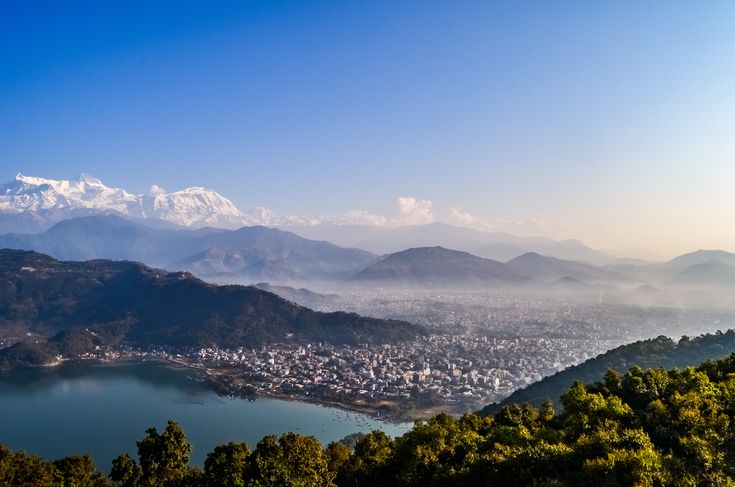
Recruitment has always been regional. The classic western catchment covers Gorkha, Lamjung, Kaski, Syangja, Tanahun, Baglung, Myagdi and Palpa, drawing mainly on Gurung and Magar communities. The eastern catchment covers Bhojpur, Khotang, Dhankuta, Taplejung and Ilam, drawing on Rai and Limbu communities. Selection centres operate around Pokhara and Dharan, and travellers in Pokhara valley during the selection season will see candidates training on the hills above the lake.
British selection is famously competitive. Thousands of applicants compete for a few hundred places through medical screening, education tests, English assessment and a set of physical events, the best known of which is a timed uphill run carrying a doko basket weighted with sand. Failure is normal, repeat attempts are common, and unofficial training camps have grown up around the selection centres.
The Khukuri
The curved khukuri is the one object everyone associates with Gurkha soldiers, and it deserves an honest description. It is first a working tool: hill households use it for clearing brush, splitting kindling and butchering. The best-known smithing traditions are in Bhojpur and Dhankuta in the east. It has genuine ceremonial weight in regimental life, and it has been used in combat. The often-repeated claim that a khukuri must draw blood whenever it is unsheathed is folklore rather than regulation, repeated far more often outside Nepal than inside it.
Money, Migration and the Hills
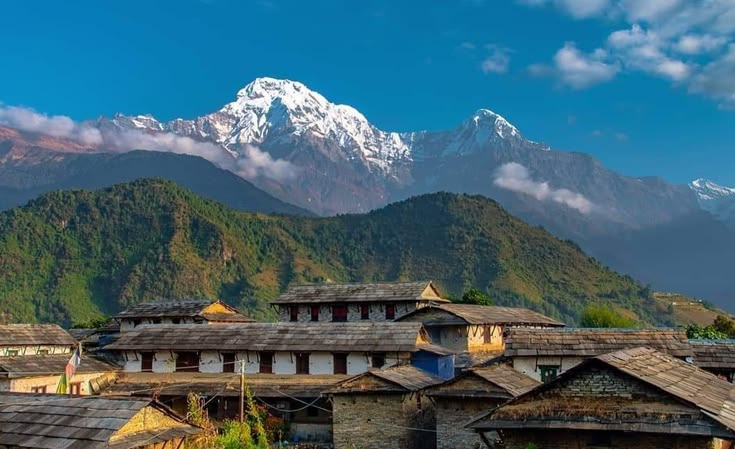
The economic effect on the hills has been enormous and double-edged. Military pay and pensions were, for a century and a half, one of the very few reliable sources of cash income in the middle hills. Pension paying stations shaped where towns grew, and Pokhara owes part of its early expansion to that role. Villages in Gurung and Magar areas built schools, tea houses and trails on soldier money long before tourism arrived. Ghandruk, Sikles and the villages around Bandipur all show it in their architecture.
The other side is permanent labour export. Recruitment removed young men in large numbers for decades, and today the same hills send workers to the Gulf, Malaysia and Korea instead. The pattern is old. Pay and pension parity between British Gurkha veterans and their British counterparts has been contested for years, and a long campaign led to a 2009 decision granting retired Gurkhas the right to settle in the United Kingdom. Pension equalisation for those who retired before a certain date is still disputed.
Practical Information for Travellers
The single best stop is the Gurkha Memorial Museum in Pokhara, near the British camp, which covers regimental history, campaigns and the selection process. Gorkha Durbar, the ridge-top palace above Gorkha bazaar, is the origin point and is reachable in a day from Kathmandu or Pokhara with a steep climb at the end. Ghandruk is the most accessible Gurung village with a strong military tradition and has a small local museum. In the mid-west, districts such as Rukum and Rolpa also supplied soldiers for generations, though they see far fewer visitors. October to April is the reliable season for all of these.
FAQ
What does the word Gurkha actually mean?
It comes from Gorkha, the hill district and former principality whose ruler unified Nepal in the eighteenth century. The soldiers were named after the state they served, not after a single ethnic group.
Which armies do Gurkhas serve in today?
The Nepali Army, the Indian Army’s Gorkha Rifles, the British Army’s Brigade of Gurkhas, the Singapore Police Gurkha Contingent and the Gurkha reserve unit in Brunei.
Why were the regiments split in 1947?
Indian independence meant the existing Gurkha regiments of the British Indian Army had to be divided. A tripartite agreement between Britain, India and Nepal sent six regiments to India and four to Britain.
Where does Gurkha recruitment happen in Nepal?
Selection is run through centres around Pokhara and Dharan, drawing mainly on Gurung and Magar communities in the western hills and Rai and Limbu communities in the east.
Where can visitors learn about Gurkha history in Nepal?
The Gurkha Memorial Museum in Pokhara is the main collection. Gorkha Durbar above Gorkha bazaar is the historical origin, and village museums in places such as Ghandruk cover the local side of the story.