
The Shah dynasty ruled Nepal for 240 years, from Prithvi Narayan Shah's capture of Kathmandu in 1768 to the vote that abolished the monarchy on 28 May 2008. Twelve men held the throne, one of them twice. For 104 of those years, from 1846 to 1951, they reigned without governing, while hereditary Rana prime ministers held the actual power.
Most accounts of the dynasty spend their length on the two ends: the unification campaign at the start and the collapse at the finish. The middle, roughly 1775 to 1951, gets a paragraph. That middle is where the Nepali state was actually built, and it is where the weight of this article sits. The founding campaign is covered in our article on Prithvi Narayan Shah and the unification of Nepal, and the final six decades in our history of how Nepal went from monarchy to republic.
The Shah Kings in Order
| King | Reign | Note |
|---|---|---|
| Prithvi Narayan Shah | 1743 to 1775 | King of Gorkha from 1743; took the Kathmandu valley in 1768 |
| Pratap Singh Shah | 1775 to 1777 | A short reign that ended the campaigning pause |
| Rana Bahadur Shah | 1777 to 1799 | Acceded as an infant; abdicated in 1799 and was killed in 1806 |
| Girvan Yuddha Bikram Shah | 1799 to 1816 | Also an infant king; the Anglo-Nepalese War was fought in his reign |
| Rajendra Bikram Shah | 1816 to 1847 | On the throne at the Kot massacre of 1846 |
| Surendra Bikram Shah | 1847 to 1881 | The first king to reign entirely under Rana control |
| Prithvi Bir Bikram Shah | 1881 to 1911 | Acceded as a child; the Rana system at its most settled |
| Tribhuvan | 1911 to 1950, 1951 to 1955 | Fled to the Indian embassy in 1950; restored in 1951 |
| Gyanendra | 1950 to 1951 | Placed on the throne as a small child during Tribhuvan's flight |
| Mahendra | 1955 to 1972 | Dismissed the elected government in 1960 and built the Panchayat system |
| Birendra | 1972 to 2001 | Accepted constitutional monarchy in 1990; killed in 2001 |
| Dipendra | 1 to 4 June 2001 | Proclaimed king while unconscious; died without regaining consciousness |
| Gyanendra | 2001 to 2008 | The last king of Nepal |
1768 to 1775: The Founding Reign
Prithvi Narayan Shah took Kathmandu in 1768 and Bhaktapur the following year, ending the Malla kingdoms of the valley, and died in 1775 at Devighat below Nuwakot. He ruled the unified state for seven years, which is short enough that most of what is credited to him is really the work of the people who followed.
What he did establish was the shape of the thing: a hill state with its capital in the valley, funded by the valley's trade and craft economy, expanding along the length of the Himalaya rather than down into the plains. That template held for the next forty years, until the British stopped it.
1775 to 1846: Regencies, Bhimsen Thapa and the Court Wars
This is the period nobody writes about and it accounts for a fifth of the dynasty. Its defining feature is that three consecutive kings came to the throne as infants or young children. Actual power therefore sat with regents and chief ministers for most of seventy years, and the court became a place where families competed for control of a child.
Bahadur Shah, a younger son of Prithvi Narayan, ran the state as regent through the late 1780s and early 1790s, and it was under him that the expansion west accelerated: Jumla fell in 1789 and Doti in 1790, bringing the whole Karnali and far west under Kathmandu for the first time. Those campaigns finished the Baise and Chaubise states described in our article on Nepal before unification.
The dominant figure of the next generation was Bhimsen Thapa, effectively head of government from 1806 for three decades. He built the standing army, ran the state through the Anglo-Nepalese War of 1814 to 1816, and absorbed the consequences of losing it. The treaty that followed cost Nepal about a third of its territory and put a British Resident permanently in Kathmandu; the terms are set out in our reading of the Treaty of Sugauli. Bhimsen Thapa fell from power in 1837 and died in custody in 1839, and the court spent the following decade in factional violence.
1846: The Kot Massacre and the Eclipse
On the night of 14 September 1846 an assembly of courtiers at the Kot armoury in Kathmandu ended in a killing that removed most of the senior nobility at a stroke. Jung Bahadur Kunwar emerged in control, took the title Rana, and made the office of prime minister hereditary within his family.
The Shah kings stayed on the throne. They appeared at religious festivals, signed what was put in front of them, and had no authority over anything. For the next 104 years the dynasty existed as a ceremonial institution inside a state run by somebody else, which is covered in full in our history of the Rana regime.
One consequence of the arrangement is worth noting because it later mattered enormously: the monarchy spent a century accumulating no responsibility for anything that went wrong. When it re-emerged in 1951 it carried the prestige of an ancient institution and none of the record of a government.
1951: The Throne Returns to the Centre
King Tribhuvan left Narayanhiti in November 1950, took refuge in the Indian embassy and was flown to Delhi. The Ranas placed his grandson Gyanendra, then a small child, on the throne. It did not hold. Armed opposition inside the country, pressure from a newly independent India and the collapse of the Rana coalition produced a settlement that restored Tribhuvan on 18 February 1951, a date still marked in Nepal.
What returned was not a constitutional monarchy. It was a king with real power, at the head of a political system that had no settled rules, and a promise of an elected assembly that took eight years to arrive.
1960 to 1990: Mahendra and the Panchayat
Nepal held its first general election in 1959 and B. P. Koirala formed a government with a large majority. On 15 December 1960 King Mahendra dismissed it, jailed the prime minister and banned political parties. The constitution he introduced afterwards established the Panchayat system, a structure of tiered councils operating under what was called partyless democracy, with executive authority resting with the palace.
Mahendra's reign is genuinely two-sided and both sides are usually reported separately by people who prefer one of them. He shut down parliamentary politics for thirty years. He also drove the administrative reorganisation of the country into zones and districts, pushed land reform that ended the surviving western rajya arrangements, and started the road-building that eventually reached the hills. The framework behind the modern administrative map is described in our explanation of Nepal's districts.
Birendra succeeded in 1972 and kept the system, submitting it to a referendum in 1980 which the Panchayat option won narrowly.
1990 to 2001: Constitutional Monarchy and Civil War
The first Jana Andolan, in the spring of 1990, ended the Panchayat. Birendra accepted a multiparty system and a new constitution in November 1990 that made the king a constitutional monarch. It lasted eleven years and was not a settled decade: governments fell repeatedly, and from February 1996 the Communist Party of Nepal (Maoist) launched an armed insurgency that ran until 2006. Commonly cited estimates put the total conflict death toll at around 17,000.
2001: The Narayanhiti Killings
On 1 June 2001, King Birendra, Queen Aishwarya and eight other members of the royal family were killed at the Narayanhiti palace in Kathmandu. Crown Prince Dipendra was gravely wounded, was proclaimed king while unconscious, and died on 4 June without regaining consciousness. Gyanendra, Birendra's brother, acceded the same day.
An official inquiry, conducted by the Speaker of the House and the Chief Justice, concluded that Dipendra was responsible. That finding is the documented official record and it is what this site reports. It is also true that a large part of the Nepali public did not and does not accept it, that alternative accounts circulate widely, and that the speed of the inquiry and the absence of surviving senior witnesses are the reasons usually given. Both facts belong in any honest account: the inquiry reached a conclusion, and the conclusion was not generally believed. Visitors should be aware the subject is raw and is not small talk.
2005 to 2008: Direct Rule and the Republic
On 1 February 2005 Gyanendra dismissed the government and assumed direct rule. It produced the alliance that ended the monarchy: the parliamentary parties and the Maoists agreed a common platform, and nineteen days of protest in April 2006, the second Jana Andolan, forced the restoration of parliament on 24 April. Parliament stripped the king's powers in May. A comprehensive peace accord in November 2006 ended the insurgency.
The Constituent Assembly elected in 2008 met on 28 May and voted to declare Nepal a federal democratic republic. Gyanendra left Narayanhiti on 11 June 2008 and remained in Nepal as a private citizen. A new constitution followed on 20 September 2015.
Where the Dynasty Is Visible Today
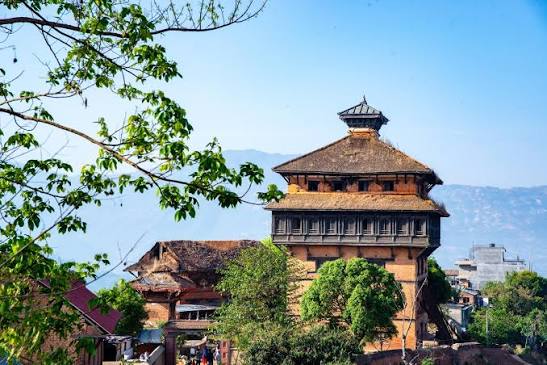
Narayanhiti, the palace the last kings lived in, opened as a museum in 2009 and is on the northern edge of Thamel in Kathmandu, so it is the easiest of these to fit into a trip. The Gorkha Durbar, on the ridge above Gorkha bazaar, is where the dynasty started and is a steep but straightforward climb from the town. Nuwakot Durbar, north-west of Kathmandu, is the fort Gorkha took in 1744 and where Prithvi Narayan Shah died; it was damaged in the 2015 earthquake and has been under restoration since.
The Kathmandu valley durbar squares the dynasty inherited from the Mallas are the most visited heritage sites in the country and are covered in our article on Nepal's UNESCO World Heritage sites.
Frequently Asked Questions
How long did the Shah dynasty rule Nepal?
240 years, from the capture of Kathmandu in 1768 to the abolition of the monarchy on 28 May 2008. The Shah line itself is older: it was established at Gorkha in 1559, more than two centuries before it took the valley.
How many Shah kings were there?
Twelve men held the throne across thirteen reigns, because Gyanendra was king twice: briefly as a child in 1950 to 1951 during Tribhuvan's flight, and again from 2001 to 2008.
When did the Rana regime end?
In 1951. King Tribhuvan was restored on 18 February 1951 after fleeing to the Indian embassy the previous November, ending 104 years of hereditary Rana prime ministers who had held power since the Kot massacre of 1846.
Who was the last king of Nepal?
Gyanendra, who acceded on 4 June 2001 and left Narayanhiti palace on 11 June 2008 after the Constituent Assembly voted to abolish the monarchy. He remained in Nepal as a private citizen.
What happened at the royal palace in 2001?
King Birendra, Queen Aishwarya and eight other members of the royal family were killed at Narayanhiti on 1 June 2001. The official inquiry concluded Crown Prince Dipendra was responsible. That conclusion is the documented record but was not widely accepted in Nepal, and alternative accounts continue to circulate.
Why did the Shah kings have no power for a century?
After the Kot massacre of 1846, Jung Bahadur made the office of prime minister hereditary in his own family. The kings kept the throne and their ceremonial role but had no authority over government for the following 104 years.
When did Nepal become a republic?
On 28 May 2008, when the newly elected Constituent Assembly voted to declare Nepal a federal democratic republic. The current constitution was promulgated on 20 September 2015.
Where can you visit Shah dynasty sites?
Narayanhiti Palace Museum in Kathmandu, opened in 2009, is the most accessible. Gorkha Durbar above Gorkha bazaar is where the dynasty began in 1559, and Nuwakot Durbar north-west of Kathmandu is the fort taken in 1744 and where Prithvi Narayan Shah died.