In 1743 a twenty-year-old inherited the throne of Gorkha, a hill state of no great wealth roughly seventy kilometres west of Kathmandu. Twenty-five years later he held the Kathmandu Valley, and the kingdom he founded lasted until 2008. The unification of Nepal under Prithvi Narayan Shah is the hinge on which the modern country turns, and it was neither quick nor bloodless. It took three decades, a long economic blockade, several failed assaults and one repelled British expedition.
Who Was Prithvi Narayan Shah?
Prithvi Narayan Shah was born in Gorkha in 1723 and took the throne on the death of his father in 1743. Gorkha was one of dozens of small principalities scattered across the Nepali hills, grouped loosely into confederacies, most of them agriculturally poor and hemmed in by neighbours of similar size. Nothing about its position guaranteed what followed.
What Gorkha did have was location and ambition. It sat on the western approaches to the Kathmandu Valley, and its new king had reportedly visited the valley before his accession and understood exactly what he was looking at: three wealthy rival kingdoms, dense with trade revenue, that did not cooperate with each other. That assessment shaped everything he did afterwards.
Why Gorkha Wanted the Kathmandu Valley
The valley was the prize because it was the money. Trade between the Indian plains and Tibet moved through it, and the three Malla courts taxed that traffic and minted coin on the back of it. It was also the cultural and religious centre of the central Himalaya. Taking the valley meant inheriting a functioning treasury, an administrative tradition, and a capital that already looked like one.
The Malla kings, meanwhile, spent the crucial decades in exactly the wrong posture. They quarrelled over trade rights and boundaries, made and broke alliances with each other, and treated Gorkha as one irritant among many rather than an existential threat. By the time they recognised the danger, the encirclement was largely complete.
Nuwakot, 1744: The First Real Victory
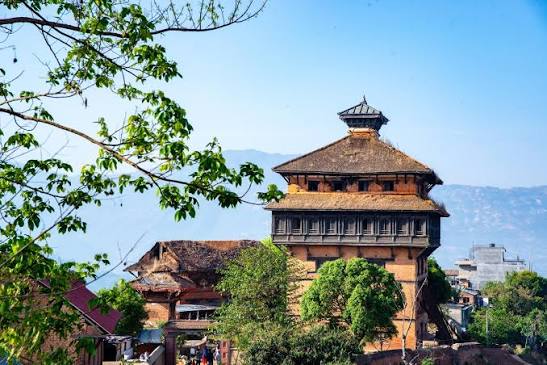
The first serious campaign targeted Nuwakot, a ridge position north-west of the valley controlling the route down from the Trishuli towards Kathmandu. An initial attempt failed. A second, in 1744, succeeded, and it changed the strategic situation immediately. Nuwakot gave Gorkha a permanent forward base within striking distance of the valley and a grip on one of the trade routes into it.
Prithvi Narayan Shah built up Nuwakot as a working seat of power, and the tall brick palace tower that stands there today is the clearest surviving monument of the unification period outside Kathmandu. He also died there, at Devighat near the confluence of the Trishuli and Tadi rivers, in 1775.
The Long Squeeze: Blockade and the Battle for Kirtipur
The campaign that followed was less a series of battles than a slow strangulation. Gorkhali forces took the passes and hill positions ringing the valley one by one, then choked the trade routes that supplied it. Salt, cotton and other goods became scarce inside the valley while the Gorkhali position hardened outside it. This blockade strategy, sustained over years, did more to decide the outcome than any single engagement.
Kirtipur, a fortified town on a ridge south-west of Kathmandu, was the exception, and it cost Gorkha dearly. Assaults in the late 1750s and 1760s were beaten back, and the campaign to take Kirtipur stretched across roughly a decade before the town finally fell in 1767. Nepali histories widely record harsh reprisals against the defeated townspeople afterwards, an episode still argued over by historians as to its scale and exact detail. Whatever the truth of the specifics, the reputation of the reprisal served its purpose: valley resistance weakened sharply afterwards.
The British Expedition of 1767
With the blockade tightening, the king of Kathmandu appealed to the British East India Company for help. A force under Captain Kinloch marched north in 1767 and got nowhere. Monsoon conditions, disease, difficult supply lines and Gorkhali harassment broke the expedition before it could relieve the valley. Its failure removed the last realistic hope of outside rescue for the Malla kings and taught the Gorkhali command a lasting lesson about fighting in the hills against a plains-based army.
1768: Kathmandu Falls During Indra Jatra
In September 1768 the Gorkhali army entered Kathmandu during Indra Jatra, when the city was full of festival crowds and the court was occupied with ceremony. The town was taken with limited fighting. Patan fell soon after, and Bhaktapur, the last of the three kingdoms to hold out, was taken in 1769. Prithvi Narayan Shah moved his capital from Gorkha to Kathmandu, and the valley became the centre of a state that would keep expanding for another forty years.
Unification Campaign Timeline
The table below sets out the main stages. Dates for the principal events are well established; the sequence of smaller hill campaigns is more loosely recorded.
| Year | Event | Outcome |
|---|---|---|
| 1723 | Birth of Prithvi Narayan Shah in Gorkha | Marked today as National Unity Day in the month of Poush |
| 1743 | Accession to the throne of Gorkha | Campaign against the valley begins within a year |
| 1744 | Capture of Nuwakot | Permanent forward base and control of a trade route |
| Late 1750s to 1767 | Repeated assaults on Kirtipur | Town finally taken in 1767 after years of failure |
| 1767 | British East India Company expedition under Kinloch | Turned back before reaching the valley |
| 1768 | Kathmandu taken during Indra Jatra; Patan follows | Two of the three Malla kingdoms fall |
| 1769 | Bhaktapur taken | Malla rule in the valley ends; capital moves to Kathmandu |
| 1775 | Death at Devighat, near Nuwakot | Successors continue the expansion east and west |
Divya Upadesh and the Yam Between Two Boulders
Late in life Prithvi Narayan Shah dictated a set of counsels known as the Divya Upadesh, a mix of strategic advice, administrative instruction and blunt warning to his successors. It is the closest thing Nepal has to a founding political text, and it is still quoted, and still argued over, in Nepali public life.
Two ideas from it dominate. The first is the description of the country as a yam between two boulders, caught between much larger neighbours to the north and south, which remains the most durable metaphor in Nepali foreign policy. The second is his insistence on economic self-reliance and caution about foreign traders, framed as protection for domestic craftsmen and merchants. The description of the kingdom as a garden of many kinds of people is also frequently cited, and it is read very differently by different constituencies today.
What Happened After 1775
His successors kept expanding. Over the following decades Gorkhali armies pushed west towards the Sutlej and east towards the Teesta, absorbing the Baisi and Chaubisi confederacies of the western hills and the Limbuwan chiefdoms of the east. That expansion eventually brought Nepal into direct conflict with the British East India Company. The Anglo-Nepal War of 1814 to 1816 ended with the Treaty of Sugauli, which returned substantial territory and set the boundaries close to the ones Nepal has today.
How Nepal Remembers Him
Prithvi Narayan Shah is not a settled figure. To many Nepalis he is the founder of the nation, the ruler who prevented a fragmented Himalayan hill zone from being swallowed piecemeal by colonial expansion, and his birth anniversary is marked as National Unity Day. To others, particularly among the communities absorbed by conquest, the same campaign reads as the imposition of a single hill-caste dominated state on a genuinely plural region, with consequences for language and land rights that federalism is still working through.
Both readings sit on the same events. Anyone travelling through Nepal and paying attention will encounter both, often in the same week, and the disagreement is a live part of the political present rather than a settled historical debate.
Following the Unification Trail as a Traveller
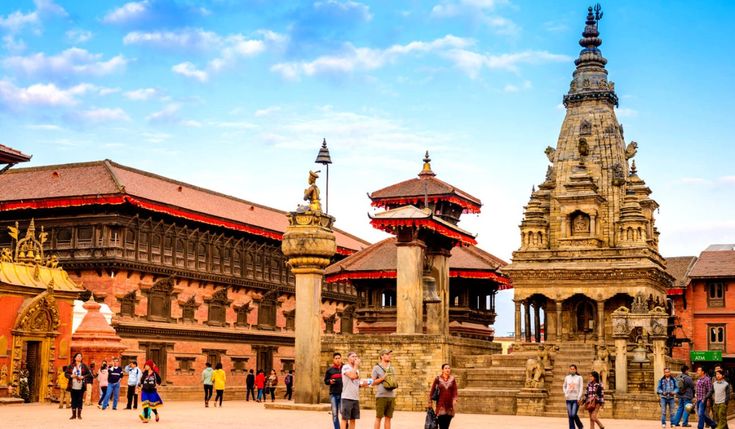
The route is genuinely followable. Gorkha itself, with its hilltop durbar above the town, is the starting point and an easy stop on the Kathmandu to Pokhara road. Nuwakot is a half-day drive north-west of Kathmandu through the Trishuli valley and sees very few visitors for the significance it carries. Kirtipur sits on its ridge on the edge of Kathmandu and can be walked in a morning. Bhaktapur completes the sequence at the point where Malla rule ended.
For the wider chronology, see our complete timeline of Nepali history. For practical details on the sites themselves, see the guides to Nuwakot palace, Bhaktapur Durbar Square and the Trishuli river, which follows the same corridor the Gorkhali campaign used.
FAQ
When did Prithvi Narayan Shah unify Nepal?
The campaign ran from 1744, when Gorkha took Nuwakot, to 1769, when Bhaktapur fell. Kathmandu was captured in 1768 during the Indra Jatra festival, and expansion continued under his successors after his death in 1775.
Why did he attack the Kathmandu Valley?
The valley controlled trade between the Indian plains and Tibet and held three wealthy but divided Malla kingdoms. Taking it meant gaining a treasury, an administrative centre and command of the most valuable trade corridor in the central Himalaya.
What happened at Kirtipur?
Kirtipur resisted Gorkhali assaults for roughly a decade before falling in 1767. Nepali histories record severe reprisals against the townspeople afterwards, and the scale and detail of those reprisals remain debated by historians.
What is the Divya Upadesh?
A set of counsels dictated by Prithvi Narayan Shah late in his life, covering statecraft, administration and foreign relations. It contains the famous description of Nepal as a yam between two boulders and is still quoted in Nepali political debate.
Where can I see unification history in person?
Gorkha Durbar above Gorkha bazaar, Nuwakot Durbar north-west of Kathmandu, the ridge town of Kirtipur, and Bhaktapur Durbar Square, where Malla rule ended in 1769.