
Ask who ruled Nepal first and most Nepalis will answer without hesitation: the Kirats. Their king list appears in the chronicles, their name appears in Sanskrit epics, and their descendants are living communities across the eastern hills. What the Kirats do not have is a single dated inscription of their own. That gap is what makes the Kirat dynasty simultaneously the most familiar and the most slippery chapter in the history of Nepal.
Who Were the Kirats?
Kirata is an old Sanskrit term used in Indian literature for hill and forest peoples of the Himalayan fringe. It appears in the Mahabharata and in other early texts, generally describing skilled archers and hunters living east and north of the Gangetic plain. The word was broad and outsiders used it loosely, which is exactly why historians are careful with it. It is a label applied from outside before it was a name claimed from within.
In the Nepali context the term narrowed. The chronicles of the Kathmandu Valley present the Kirats as a dynasty that ruled the valley for a long stretch before the Licchavis, and modern Kirat communities of eastern Nepal trace their ancestry to that period. Both meanings are in circulation today, so it helps to be clear which one is being discussed: the dynasty in the valley, or the living cultural group in the hills.
What the Chronicles Say About the Kirat Kings
The Gopalarajavamshavali and later chronicles present a sequence of Kirat kings beginning with Yalambar, who is said to have taken the valley from the herder dynasties that preceded him. Later names in the list include Humati, Jitedasti and Sthunko, with a final king usually named Gasti who lost the valley to the Licchavis. The chronicles give reign lengths, but they were compiled many centuries after the fact and the numbers do not reconcile with any external evidence.
A few episodes attached to the list have become part of Nepali cultural memory. One tradition places the Buddha visiting the valley during the reign of Jitedasti. Another links Yalambar to the Mahabharata battlefield. These stories tell you a great deal about how later Nepalis understood their own antiquity, and very little about actual chronology. The honest summary is that the Kirat dynasty is historically real as a memory and unverifiable as a timeline.
Why the Kirat Period Still Matters
Even without dates, the Kirat era matters for one solid reason: continuity. When the Licchavis started producing inscriptions in the fifth century, they were describing an already organised society with settlements, irrigation, trade and religious institutions. Someone built that. The Kirat period is the name Nepali tradition gives to those undocumented centuries of state formation in the valley, and the Licchavi record makes far more sense with that stage assumed than without it.
Language leaves traces too. Several toponyms and ritual practices in the valley are argued to predate the Licchavi Sanskrit layer, and Kirat groups elsewhere in Nepal speak Tibeto-Burman languages quite distinct from the Indo-Aryan family that Nepali belongs to. That linguistic divide is one of the deepest features of the country and it long predates any dynasty.
Kirat Communities in Nepal Today
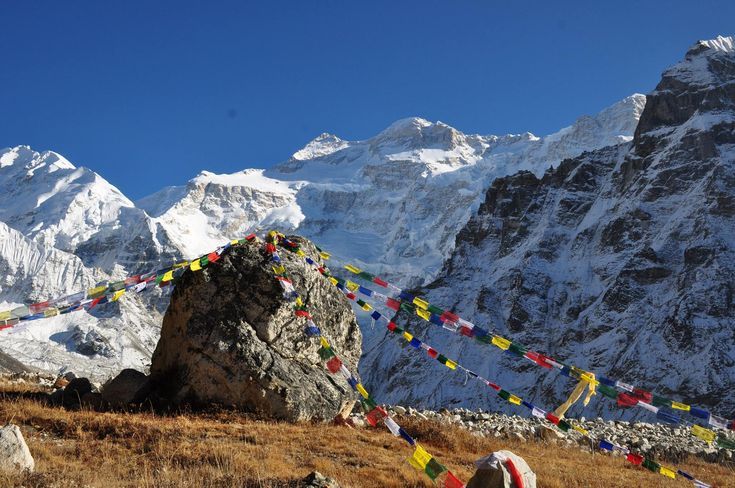
The Rai, Limbu, Sunuwar and Yakkha are the communities most commonly grouped as Kirat. Their heartland is the hill belt between the Sun Koshi and the Tamor, running east to the Singalila ridge below Kanchenjunga. Rai is itself an umbrella covering many groups with distinct languages, including Bantawa, Chamling and Kulung, which is why counts of Kirat languages vary depending on how you draw the lines.
Limbu tradition divides the far eastern hills into Limbuwan, historically a set of chiefdoms that negotiated their own terms with the expanding Gorkhali state in the eighteenth century rather than simply being conquered. That negotiated status left a lasting mark on land tenure and local identity in Taplejung, Panchthar and Ilam. It is one of the more distinctive political histories anywhere in Nepal.
Where Kirat Nepal Is on the Map
If you want to travel through the Kirat hills rather than just read about them, the eastern districts of Koshi Province are the place to do it. The table below covers the most accessible ones and what each offers a visitor.
| District | Province | Kirat association | Main traveller draw |
|---|---|---|---|
| Taplejung | Koshi | Limbu heartland of upper Limbuwan | Kanchenjunga base camp treks and high pastures |
| Panchthar | Koshi | Limbu villages and ridge settlements | Quiet ridge walking between Ilam and Taplejung |
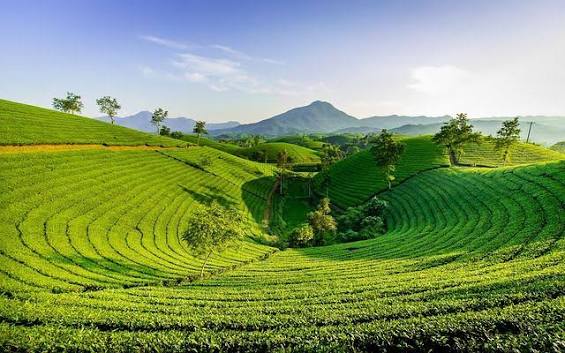
| Ilam | Koshi | Mixed Limbu and Rai farming communities | Tea gardens, cardamom terraces, cool ridge towns |
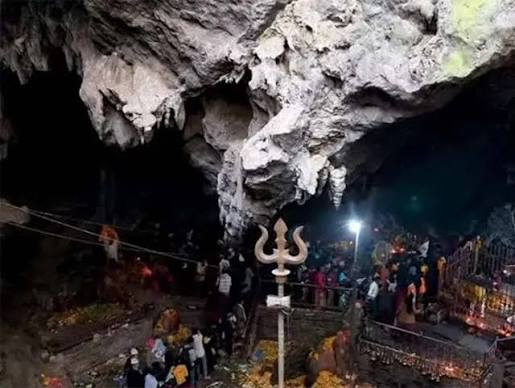
| Khotang | Koshi | Rai heartland of the middle hills | The cave shrine complex at Halesi Mahadev |
| Bhojpur | Koshi | Rai villages and old bazaar town | Traditional metalwork and hill-town architecture |
| Dhankuta | Koshi | Rai and Limbu administrative centre | One of the tidiest hill bazaars in eastern Nepal |
Mundhum, the Kirat Oral Scripture
The Mundhum is the body of oral tradition that carries Kirat cosmology, origin narratives, genealogy, ritual instruction and moral teaching. It is recited by ritual specialists, and versions differ between Rai and Limbu communities and between valleys. Because it was transmitted orally rather than fixed in a single canonical text, the Mundhum is better thought of as a living library than a book. Efforts to write it down are relatively recent and inevitably freeze one version of many.
Ancestor veneration sits at the centre of Kirat practice, along with reverence for natural features such as rivers, stones and forest groves. Many Kirats also observe Hindu and Buddhist festivals, and the boundaries between traditions in the eastern hills are permeable in a way that resists tidy categorisation.
Sakela, Ubhauli and Udhauli: The Kirat Year
The clearest public expression of Kirat culture is Sakela, also called Sakewa, a communal dance performed twice a year to mark the two turns of the agricultural cycle. Ubhauli, in spring, marks the move upward as households and livestock head to higher ground and the planting season begins. Udhauli, in late autumn, marks the descent to lower elevations after harvest. Dancers circle a central ritual point led by a pair of lead dancers, and the movements imitate farming tasks, birds and animals.
Sakela is now danced in Kathmandu, in Sikkim and Darjeeling, and wherever the Kirat diaspora has settled. If your visit lines up with either season, it is one of the most genuinely participatory festivals in Nepal, and small hill towns tend to be a far better place to see it than a city stadium.
Practical Notes for Travellers
Eastern Nepal is straightforward to reach and much less trafficked than the central trekking regions. Biratnagar and Bhadrapur both have flights from Kathmandu, and roads run north from there into the hills. Ilam and Dhankuta need no trekking permits and can be done in comfortable day stages by vehicle and short walks. The Kanchenjunga region requires permits and a registered guide, so plan that one further ahead.
Autumn and spring are the reliable seasons. Autumn gives the clearest mountain views and lines up with Udhauli; spring brings the tea flush, rhododendron and Ubhauli. If you want the historical arc that sits behind all of this, our complete timeline of Nepali history places the Kirat period alongside the dynasties that followed it. For specific destinations in the region, see our guides to Kanchenjunga base camp, the Ilam tea gardens and the Halesi Mahadev cave.
FAQ
Who were the Kirat rulers of Nepal?
The Kirats are the first dynasty named in the chronicles of the Kathmandu Valley, said to have ruled for many generations before the Licchavis. Their king list begins with Yalambar, but no contemporary inscription confirms the sequence or its dates.
Are the Kirats still in Nepal today?
Yes. The Rai, Limbu, Sunuwar and Yakkha communities of eastern Nepal identify as Kirat, speak Tibeto-Burman languages, and maintain the Mundhum oral tradition and the Sakela dance.
What is the Mundhum?
The Mundhum is the oral scripture of Kirat communities, covering creation narratives, genealogy, ritual procedure and moral teaching. It is recited by ritual specialists and varies between communities and valleys rather than existing as one fixed text.
When is the Sakela festival celebrated?
Twice a year. Sakela Ubhauli falls in spring at the start of the planting season, and Sakela Udhauli falls in late autumn after harvest. Both are marked with a communal circle dance led by a lead pair.
Where should I travel to experience Kirat culture?
The eastern hill districts of Koshi Province, especially Ilam, Panchthar, Taplejung, Khotang, Bhojpur and Dhankuta. Autumn and spring are the best seasons, and both Sakela celebrations fall within them.