
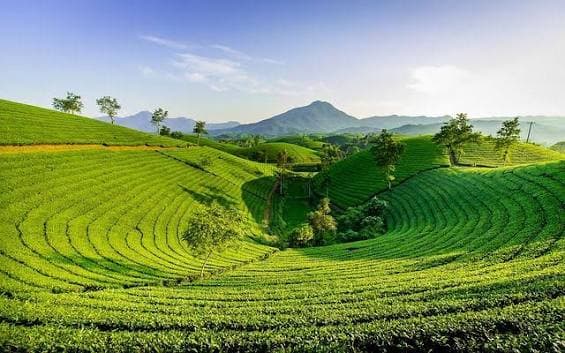
Ilam is a hill district in Koshi Province at the far eastern end of Nepal, on the ridge system that continues across the border into Darjeeling. Its town sits at roughly 1,200 metres among tea gardens planted from the 1860s onwards, and it is reached by road from Bhadrapur in the eastern plains in three to four hours.
Nepal's first tea garden
The Ilam Tea Estate was established in 1863, making it the oldest in Nepal and very nearly as old as the Darjeeling industry over the ridge. The two share the same geology, the same elevation band and the same monsoon, which is why Ilam's orthodox leaf tastes closer to Darjeeling than to anything grown in the Nepali plains.
What Ilam did not inherit was Darjeeling's brand. A long-standing complaint in the Nepali trade is that a large share of the country's orthodox tea leaves the country in bulk and is blended and sold under other names, so the growers capture a fraction of the final price. Buying directly at a garden shop is worth doing partly for the tea and partly because it is the one point in the chain where the money stays here.
Understanding the flushes
Orthodox tea is picked and processed in distinct seasons, and they taste nothing like each other. First flush, from roughly March into April, gives the pale, sharp, floral cup that specialist buyers pay most for. Second flush, in May and June, is darker and rounder. Monsoon leaf is bulk-grade. Autumn flush, in October and November, is the local favourite and the best value.
If you want to see plucking and processing rather than just walk through green rows, come during a flush and ask at a factory. Many will show visitors the withering troughs, the rollers and the drying, and the smell of a working factory in first flush is the reason to time the trip. The lower gardens also produce CTC tea for the domestic market, which is what you will actually be served in a tea shop.
Kanyam, Fikkal and the ridge
The photographed landscape is mostly around Kanyam and Fikkal on the Mechi Highway, where the gardens roll over open hills with very few trees and the road runs through the middle of them. It is an easy stop on the way up from the plains and busy with Nepali domestic tourists at weekends.
Ilam bazaar itself is a working hill town rather than a resort. Above it, Antu Danda at roughly 2,300 metres is the standard sunrise point, looking east over the Indian tea hills and, in clear weather, north to Kanchenjunga. Mai Pokhari, at around 2,100 metres, is a small forested lake designated a Ramsar wetland site in 2008 and a good half day for birds and rhododendron forest. Our overview of Nepal's Ramsar sites places it among the others.
Getting there, and why so few foreigners do
Ilam is about as far from Kathmandu as Nepal gets without leaving the hills. Fly to Bhadrapur in around an hour, then drive three to four hours up the Mechi Highway. Overland from Kathmandu is a long day and a half. The Indian border crossing at Kakarbhitta is close, which makes Ilam a sensible first or last stop for travellers moving between Nepal and West Bengal.
Almost no international trekking traffic passes through, because the mountains that draw visitors are on the other side of the country. That is the trade you are making: no crowds, no English menus in most places, and a landscape that looks like nowhere else in Nepal. For the wider context see our guide to Nepal's 77 districts and, if you are heading further north, the Kanchenjunga Conservation Area guide.
| Detail | Ilam tea country |
|---|---|
| District | Ilam, Koshi Province |
| Town elevation | About 1,200 m |
| Tea-growing band | Roughly 900 to 2,000 m |
| First garden | Ilam Tea Estate, established 1863 |
| Nearest airport | Bhadrapur, about 1 hour from Kathmandu by air |
| Bhadrapur to Ilam | 3 to 4 hours by road on the Mechi Highway |
| First flush | March to April; second flush May to June; autumn flush October to November |
| Nearby Ramsar site | Mai Pokhari, listed 2008, at about 2,100 m |
Accommodation is in small hotels in Ilam bazaar and a growing number of homestays in the villages around Kanyam, several of which are run by tea-growing families and will take you into the gardens at plucking time. Three days is enough to see a factory, walk the gardens properly and get up Antu Danda for a sunrise. Our argument for travelling slowly with fewer stops was more or less written for places like this, and the birdwatching guide covers what the eastern hill forests hold.
Frequently Asked Questions
How do I get to Ilam from Kathmandu?
Fly to Bhadrapur, about an hour, then drive three to four hours north on the Mechi Highway. Overland the whole way from Kathmandu takes a day and a half and is only worth it if you are stopping elsewhere in the east.
When should I visit to see tea being picked?
March and April for first flush, which is the most valuable and the most interesting to watch, or October and November for the autumn flush and clearer mountain views. Plucking stops in the coldest weeks of winter.
Can I visit a tea factory?
Several gardens around Kanyam and Ilam bazaar accept visitors, especially during a flush. Ask at your hotel or at the garden office rather than turning up at the processing floor, and expect it to be an informal arrangement rather than a scheduled tour.
Is Ilam tea the same as Darjeeling?
Not the same, but grown on the same ridge system at similar elevations and processed the same way, so the character is close. Much of Nepal's orthodox production is exported in bulk, which is why the name is far less known than the tea deserves.
What else is there to do besides tea?
Sunrise from Antu Danda, the forested Ramsar lake at Mai Pokhari, and walking between villages on the ridge. Give it three unhurried days; there is nothing to tick off in a morning and no trekking infrastructure of the Annapurna sort.