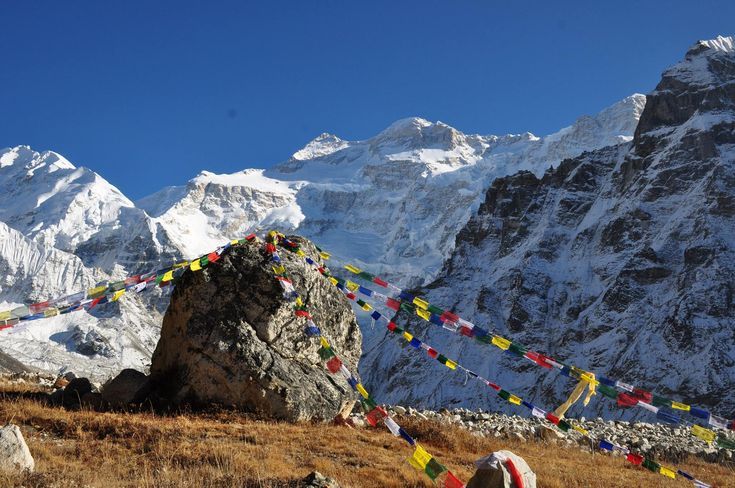
The Kanchenjunga Conservation Area protects 2,035 square kilometres of Taplejung district in far eastern Nepal, rising to Kangchenjunga at 8,586 metres, the third highest mountain on earth. It was declared in 1997 and in 2006 became the first protected area in Nepal to be handed over to a community institution, the Kanchenjunga Conservation Area Management Council. Snow leopard, red panda and Himalayan black bear all live inside it, and the entire area is a restricted zone requiring a permit arranged through a registered trekking agency.
What makes Kanchenjunga different from a national park?
Nepal separates its protected land into strict and multiple-use categories. A national park under the National Parks and Wildlife Conservation Act of 1973 bars permanent settlement and resource extraction from the core zone, is patrolled by the Nepal Army and is run by the Department of National Parks and Wildlife Conservation. A conservation area, created under the Conservation Area Management Regulations of 1996, accepts resident populations and legalises farming, controlled grazing, quota-based collection of firewood and medicinal plants, and private tourism business inside the boundary.
Kanchenjunga takes the model further than any of the other five. Annapurna, Manaslu and Gaurishankar are managed by the National Trust for Nature Conservation, and Api Nampa is run directly by the department. Kanchenjunga was transferred in 2006 to the Kanchenjunga Conservation Area Management Council, an elected body of local residents, making it the first protected area in the country where a community institution holds the management mandate outright. Roughly five thousand people live inside the boundary, largely Limbu, Sherpa, Rai and Tibetan-descended communities in Ghunsa, Yamphudin, Lelep and the surrounding settlements.
The area also has a trans-boundary role. It shares a border with Khangchendzonga National Park in the Indian state of Sikkim and with the Qomolangma preserve in Tibet, and the three sit inside a wider landscape initiative that treats snow leopard and red panda ranges as one unit rather than three national problems. That matters because a single conservation area of 2,035 square kilometres is too small to hold viable populations of either species on its own.
What wildlife lives in the Kanchenjunga Conservation Area?
The eastern Himalaya is the wettest part of the Nepali mountain chain, and that rainfall produces the richest temperate forest in the country. Red panda are the flagship here. Nepal holds only a few hundred nationally, and the bamboo understory in the fir and rhododendron belt above Ghunsa is among the strongest habitat left. Snow leopard hold the country above 4,000 metres, hunting blue sheep and Himalayan tahr across the glacial valleys. Asiatic black bear, musk deer, serow, goral and both grey wolf and Tibetan fox have been recorded, along with the assam macaque in the lower forests.
Birders rate the area highly. More than 250 species have been recorded inside the boundary, including satyr tragopan, blood pheasant, Himalayan monal and the fire-tailed myzornis, a small emerald bird of the eastern rhododendron zone that many visiting birdwatchers come specifically to see. Botanically the forests carry dozens of rhododendron species, oaks, magnolia and a heavy epiphytic orchid load in the wetter middle elevations. The spring flowering between mid-April and late May is the finest in Nepal, and it is the main reason to choose spring over autumn here even though the views are less reliable.
How do you get to the Kanchenjunga Conservation Area?
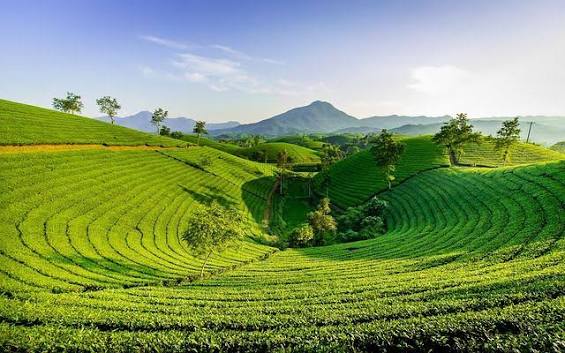
Access is the hardest part of the trip and the reason numbers stay low. Most parties fly from Kathmandu to Bhadrapur in the eastern Terai, then drive north through the tea gardens of Ilam and the ridge town of Phidim to Taplejung, a road journey of most of a day depending on conditions. There is also an airstrip at Suketar above Taplejung, though flights are irregular. From the roadhead the walking starts immediately, and the first three days climb through farmland and forest before the trail reaches genuinely alpine ground.
| Option | Highest point | Typical days on trail | Character | Best months |
|---|---|---|---|---|
| North base camp at Pangpema | About 5,140 m | 16 to 20 | Glacier walk, the classic view of the north face | Apr to May, Oct to Nov |
| South base camp at Oktang | About 4,730 m | 14 to 18 | Yalung glacier, Limbu villages on the approach | Apr to May, Oct to Nov |
| Full circuit linking both | Sele La, about 4,290 m | 21 to 26 | The complete route, high camps and a pass between valleys | Apr to May, Oct |
| Ghunsa cultural loop | About 3,600 m | 9 to 12 | Forest, red panda habitat and Tibetan-descended villages | Mar to May, Oct to Nov |
| Pathibhara pilgrimage add-on | About 3,800 m | 2 to 3 | Hindu shrine above Taplejung, busy at festival times | Oct to Nov, Mar to Apr |
Lodges exist along the main line but they are simple, spacing is uneven and some sections still require a tent or a night in a herders shelter. Most operators run the trek supported with a cook crew rather than lodge to lodge, which is a real cost difference against the Annapurna and Everest regions. Budget three weeks minimum for a full circuit including transport, and add contingency days because the road from Bhadrapur is vulnerable to monsoon damage well into October.
What permits do you need for Kanchenjunga?
Kanchenjunga is a restricted area, so a restricted-area permit must be issued through a registered Nepali trekking agency; you cannot buy one over the counter as an individual. A minimum party of two applies and a licensed guide is required. On top of that you need the Kanchenjunga Conservation Area entry permit, which is checked at Taplejung and again on the trail. Permit rates are revised periodically and the restricted-area fee is charged per person per week, so confirm current figures with your operator before you commit to an itinerary length.
Unlike a national park entry fee, the conservation area revenue is retained locally. It funds the management council, ranger and community forest work, trail and bridge repair, and school and health post support in the settlements inside the boundary. That is the point of the category: the people who bear the cost of living with snow leopard and black bear are the people who receive the tourism income.
When is the best time to trek Kanchenjunga?
Two windows work. Mid-April to late May gives the rhododendron and magnolia flowering, the best chance of red panda activity and long daylight for the high camps, at the price of afternoon cloud and less certainty of a clear summit view. Mid-October to late November gives the sharpest air and the most reliable weather, but it is cold at Pangpema, the flowers are gone and lodges at the top of both valleys begin closing from mid-November.
The monsoon between June and September is heavier here than anywhere else in the Nepali Himalaya, and the approach road and lower trails become unreliable. Winter is not practical for the high camps. If your travel dates are fixed to the monsoon months, a trans-Himalayan route in the rain shadow such as Upper Mustang or Dolpo is a far better choice than pushing east.
How does Kanchenjunga compare with Everest and Langtang?
Kanchenjunga is the least visited of the eight-thousander base camp treks in Nepal, and that is the whole proposition. Where the Everest Base Camp trail has an airstrip at Lukla, a helicopter industry, wi-fi and bakeries, Kanchenjunga has a long road approach, simple lodges and days on which you will meet nobody. Where Langtang Valley can be walked in a week from Kathmandu, Kanchenjunga needs three.
The trade is real in both directions. You get old-growth eastern forest, two glacier basins, functioning Limbu and Sherpa villages and a genuine sense of distance. You give up rescue speed, medical facilities, food variety and any flexibility in your itinerary once the permit is issued. Anyone considering it should already have completed a high-altitude trek elsewhere and should treat the trip as an expedition rather than a holiday, with proper insurance covering helicopter evacuation from above 5,000 metres.
For visitors who want the eastern lowlands as well, the same Bhadrapur or Biratnagar approach puts you within reach of Koshi Tappu Wildlife Reserve, which is the finest birding site in Nepal and works well as a two-night decompression stop after the mountains.
FAQ
How big is the Kanchenjunga Conservation Area?
It covers 2,035 square kilometres of Taplejung district in far eastern Nepal, running from middle-hill farmland up to the 8,586 metre summit of Kangchenjunga on the border with Sikkim.
Who manages the Kanchenjunga Conservation Area?
The Kanchenjunga Conservation Area Management Council, an elected community body that took over management in 2006. It was the first protected area in Nepal to be handed to a community institution rather than a government department, the army or a national trust.
Do you need a guide for Kanchenjunga?
Yes. The whole area is a restricted zone, which means a permit issued through a registered Nepali trekking agency, a licensed guide and a minimum group of two people. Solo trekking is not allowed.
How long does the Kanchenjunga trek take?
Allow around sixteen to twenty days on trail for one base camp and twenty-one to twenty-six for the full circuit linking Pangpema and Oktang over Sele La. Add three to four days for road and air transport from Kathmandu at each end.
Can you see red panda in the Kanchenjunga Conservation Area?
It is one of the better places to try, particularly in the bamboo and rhododendron forest around Ghunsa in spring, but sightings are uncommon and depend on a guide who knows the ground. Treat any encounter as a bonus rather than a reason to book the trip.