Nepal has ten Ramsar sites, wetlands designated as being of international importance under the 1971 Convention on Wetlands signed at Ramsar in Iran. Together they cover about 60,561 hectares and span an extraordinary altitudinal range, from Koshi Tappu on the Terai floodplain at under 100 metres to the Gokyo lakes above 4,700 metres in the Everest region. Nepal acceded to the convention in 1987 and listed Koshi Tappu as its first site in the same year; the most recent addition is the Lake Cluster of Pokhara Valley, designated in 2016.
What are the ten Ramsar sites in Nepal?
Three of them are in the Terai lowlands, four are high-altitude glacial or landslide-dammed lake systems, one is a mid-hill lake, one is an artificial irrigation reservoir, and one is a cluster of lakes in the Pokhara valley. The table sets out the full list with designation years, approximate areas and elevations.
| Ramsar site | District and province | Designated | Approx. area | Approx. elevation |
|---|---|---|---|---|
| Koshi Tappu Wildlife Reserve | Sunsari, Saptari and Udayapur, Koshi | 1987 | 17,500 ha | Under 100 m |
| Beeshazari and associated lakes | Chitwan, Bagmati | 2003 | 3,200 ha | About 285 m |
| Ghodaghodi Lake Area | Kailali, Sudurpashchim | 2003 | 2,563 ha | About 205 m |
| Jagadishpur Reservoir | Kapilvastu, Lumbini | 2003 | 225 ha | About 197 m |
| Gokyo and associated lakes | Solukhumbu, Koshi | 2007 | 7,770 ha | Above 4,700 m |
| Gosaikunda and associated lakes | Rasuwa, Bagmati | 2007 | 1,030 ha | About 4,054 m |
| Phoksundo Lake | Dolpa, Karnali | 2007 | 494 ha | About 3,611 m |
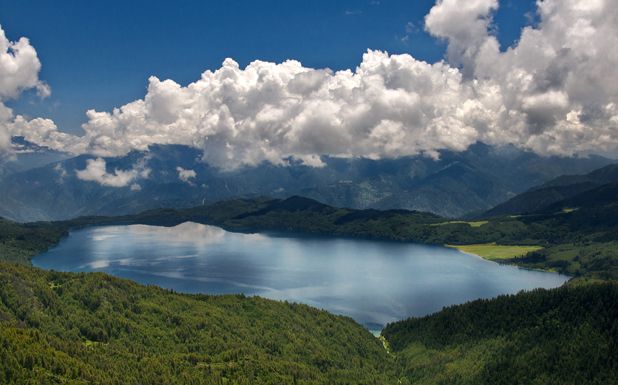
| Rara Lake | Mugu, Karnali | 2007 | 1,583 ha | About 2,990 m |
| Mai Pokhari | Ilam, Koshi | 2008 | 90 ha | About 2,100 m |
| Lake Cluster of Pokhara Valley | Kaski, Gandaki | 2016 | 26,106 ha | About 740 to 1,000 m |
Which Ramsar site in Nepal matters most for birds?
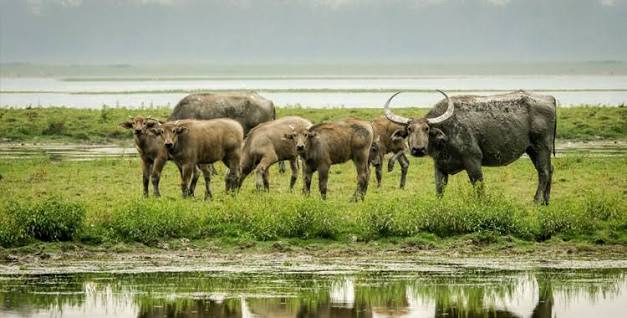
Koshi Tappu is not a close contest. Its bird list of more than 480 species is the largest of any protected area in Nepal and it sits directly on the Central Asian Flyway, so it carries wintering wildfowl and passage waders in numbers no other Nepali wetland approaches. It is also the only site in the country with a surviving wild water buffalo population, which is why it was gazetted as a wildlife reserve in 1976 before it was ever listed under Ramsar.
Beeshazari and associated lakes, inside the Chitwan buffer zone, run a distant second. The name means twenty thousand lakes, and the system is a network of oxbows in sal forest that serves as a corridor between the Chitwan lowlands and the Churia hills. It holds lesser adjutant, oriental darter, both jacanas and wintering duck, and it is unusually easy to reach from the Sauraha side of Chitwan. Ghodaghodi in the far west and Jagadishpur Reservoir in Kapilvastu complete the Terai group. Jagadishpur is the largest artificial reservoir in Nepal, built for irrigation, and it concentrates wintering waterfowl in a way that surprises visitors who expect a natural lake.
What do the high-altitude Ramsar lakes protect?
Four of the ten sites are high mountain lake systems, and their conservation value is different in kind. They are not bird hotspots in the Terai sense. Their significance is hydrological and cultural: they store water, buffer downstream flow, and in most cases carry deep religious meaning. Bird interest is concentrated in a short summer window and in the surrounding subalpine forest rather than on the water itself.
The Gokyo lakes in the Everest region form the highest freshwater lake system in the world at their upper end, above 4,700 metres. Gosaikunda, at about 4,054 metres in the Langtang region, is a major Hindu pilgrimage site associated with Shiva and draws thousands of pilgrims during the Janai Purnima full moon in August. Phoksundo Lake in Dolpa, at about 3,611 metres, is the deepest lake in Nepal and sits inside Shey Phoksundo National Park. Rara Lake in Mugu, at about 2,990 metres, is the largest lake in Nepal and the centrepiece of the smallest national park.
Rara is the one of the four with genuine birding value on the water. Wintering duck use it, and the surrounding blue pine, spruce and oak forest holds a good temperate assemblage including Himalayan monal on the ridges above. Mai Pokhari in Ilam, at about 2,100 metres, is small but botanically rich and sits in the tea-garden hills, making it an easy addition to an eastern circuit.
How do you visit several Ramsar sites in one trip?
The sites cluster into three practical circuits. The eastern circuit pairs Koshi Tappu with Mai Pokhari and the Ilam tea country, both reachable from Biratnagar, and is best done between November and March. The central circuit pairs Beeshazari inside Chitwan with the Pokhara valley lake cluster, which is a short drive apart and requires no trekking at all; add Jagadishpur if you are heading further west along the highway. The western circuit pairs Ghodaghodi with Bardiya and Shuklaphanta.
The high-altitude sites need separate planning because each one is a trek. Gosaikunda is the most accessible, reachable in three to four days from Dhunche with a stiff climb; Gokyo takes the best part of two weeks from Lukla with proper acclimatisation; Phoksundo requires a flight to Juphal in Dolpa and several days on foot with restricted-area permits for anything beyond the lake. Rara can be reached by flight to Talcha airport followed by a short walk, which makes it far easier than its remoteness suggests.
A realistic two-week trip covers three or four Ramsar sites. A month covers seven or eight if the itinerary is built around the flights rather than the roads. Trying to see all ten in a single visit is a logistics exercise rather than a birding trip.
What pressures are the Ramsar sites under?
The Terai sites face sedimentation from the degraded Churia hills, invasive water hyacinth and mikania, nutrient runoff from surrounding agriculture, encroachment of cultivation onto seasonal marsh, and altered flow regimes from barrages and irrigation offtakes. Koshi Tappu additionally has to manage grazing, grass cutting and fishing pressure inside its boundary, all of which affect the grassland birds that are its rarest species.
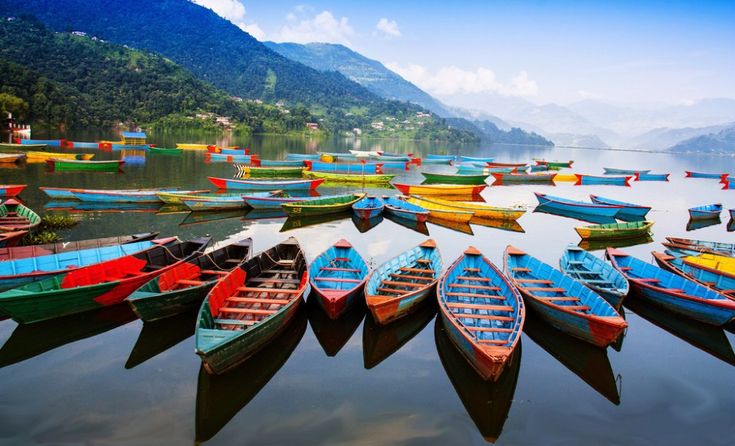
The Pokhara valley cluster is the site under the most visible stress, because it lies inside a fast-growing city. Phewa, Begnas and the smaller lakes around them are shrinking through sediment inflow and shoreline construction, and water quality has declined with untreated inflow. The high-altitude lakes face a different problem: glacial retreat is changing the volume and stability of the systems that feed them, and trekking pressure adds waste management issues at Gokyo and Gosaikunda.
Ramsar designation is not in itself protection. It commits the state to wise use and to reporting on ecological character, but implementation depends on national park authorities, buffer-zone user groups and local wetland committees. For a visitor, the most useful things are straightforward: use local guides, carry your waste out of the high lakes, and submit your bird records so that the counts these designations rest on keep being made.
FAQ
How many Ramsar sites does Nepal have?
Ten, covering about 60,561 hectares in total. Nepal acceded to the Ramsar Convention in 1987 and listed Koshi Tappu Wildlife Reserve as its first site that year. Three further Terai sites were added in 2003, four high-altitude lake systems in 2007, Mai Pokhari in 2008 and the Lake Cluster of Pokhara Valley in 2016.
Which was the first Ramsar site in Nepal?
Koshi Tappu Wildlife Reserve, designated in 1987, the same year Nepal joined the convention. It covers about 17,500 hectares of river island, marsh and grassland on the Sapta Koshi floodplain and remains the most important of the ten sites for birds, with more than 480 species recorded.
What is the highest Ramsar site in Nepal?
The Gokyo and associated lakes system in Solukhumbu, listed in 2007, with its upper lakes above 4,700 metres in the Everest region. It is often described as the highest freshwater lake system in the world and covers roughly 7,770 hectares within Sagarmatha National Park.
Which Ramsar sites in Nepal are easiest to visit?
Ghodaghodi and Beeshazari are both close to major roads and need no trekking, and the Pokhara valley lake cluster is inside a city with an airport. Koshi Tappu is a short drive from Biratnagar airport. The four high-altitude lakes all require multi-day trekking, though Rara can be reached quickly by flying to Talcha.
Does Ramsar designation mean a site is a protected area?
Not automatically. Ramsar listing is an international commitment to maintain the ecological character of a wetland and to use it wisely, not a domestic protection category. Some Nepali Ramsar sites sit inside national parks or wildlife reserves and are protected under national law; others rely on community wetland management committees and buffer-zone user groups.