Nepal has more public holidays than almost any country of its size, and the reason is arithmetic. The country runs on the Bikram Sambat calendar, which is about 56 or 57 years ahead of the Gregorian one, and most religious dates are set by lunar reckoning inside it. Add the separate new years of the Newar, Tamang, Gurung, Sherpa, Tharu and Kirat communities, and the result is a calendar with something significant in almost every month.
This is a national guide. Festival timing shifts by a couple of weeks each year against the Gregorian calendar, so the windows below are approximate by design. Check a current Nepali patro before booking anything around a specific festival day.
Why Nepali festival dates change every year
The Bikram Sambat year is divided into twelve months that begin roughly in the middle of a Gregorian month. Baisakh, the first month, starts in mid-April. Religious festivals are fixed to lunar positions inside those months, usually a full moon, a new moon or a numbered day of the waxing or waning fortnight. Because the lunar cycle does not divide evenly into the solar year, the Gregorian date drifts.
A few festivals are solar and therefore almost stable. Maghe Sankranti falls on the first day of Magh, in mid-January, every year. Nepali New Year falls on the first day of Baisakh, in mid-April. Everything tied to a full moon, including Holi, Janai Purnima and Buddha Jayanti, moves.
Nepal festival calendar month by month
The table below maps the twelve Nepali months to their approximate Gregorian window and the festivals that fall inside them. Treat the third column as a shortlist of the biggest events, not an exhaustive list, and the fourth as the practical consequence for a traveller.
| Nepali month | Approximate window | Main festivals | What it means for travel |
|---|---|---|---|
| Baisakh | Mid-April to mid-May | Nepali New Year, Bisket Jatra in Bhaktapur, Buddha Jayanti, Rato Machhindranath chariot begins in Patan | Warm, hazy, pre-monsoon. Good for valley festivals, poor for mountain views |
| Jestha | Mid-May to mid-June | Bhoto Jatra, the close of the Rato Machhindranath procession | Hot in the Terai. Trekking shifts to high altitude only |
| Ashadh | Mid-June to mid-July | Asar Pandra, the national rice-planting day | Monsoon begins. Flight delays common, roads unreliable |
| Shrawan | Mid-July to mid-August | Shrawan Mondays at Shiva temples, Naag Panchami, Janai Purnima | Peak monsoon. Good for the rain-shadow districts, bad for everywhere else |
| Bhadra | Mid-August to mid-September | Gai Jatra, Krishna Janmashtami, Teej, Rishi Panchami, Indra Jatra | Monsoon easing. The valley festival season begins |
| Ashwin | Mid-September to mid-October | Dashain, fifteen days from Ghatasthapana to Kojagrat Purnima | The country effectively closes for a week. Book transport far ahead |
| Kartik | Mid-October to mid-November | Tihar, Chhath in the Terai and Madhes, Haribodhini Ekadashi | Clearest skies of the year and the peak trekking month |
| Mangsir | Mid-November to mid-December | Bala Chaturdashi at Pashupatinath, Yomari Punhi, Udhauli | Cold, dry, stable. Excellent for the mid-hills |
| Poush | Mid-December to mid-January | Tamu Lhosar, the Gurung new year | Coldest month. Valley fog and morning flight delays |
| Magh | Mid-January to mid-February | Maghe Sankranti, Maghi for the Tharu community, Sonam Lhosar, Shree Panchami | Cold but clear. River confluence sites are at their busiest |
| Falgun | Mid-February to mid-March | Maha Shivaratri, Gyalpo Lhosar, Holi | Spring begins. Warming, still clear at altitude |
| Chaitra | Mid-March to mid-April | Ghode Jatra, Chaite Dashain, Ram Navami, Seto Machhindranath Jatra | Rhododendron season in the hills. Haze building in the lowlands |
Which festivals actually shut the country down?
Four periods change how the country functions rather than simply adding colour to it.
Dashain, in Ashwin, is the longest and the most disruptive. Shops close, offices empty and the entire population appears to be travelling to its ancestral home at once. Long-distance buses sell out weeks ahead and domestic flights fill on the same schedule. Tihar, in Kartik, is shorter but has the same travel pattern in a milder form, with a second wave of movement for Chhath a few days later in the Terai districts.
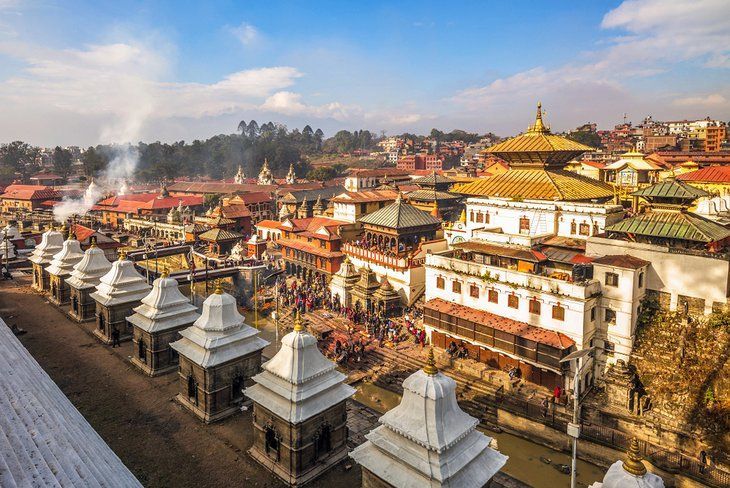
Maha Shivaratri, in Falgun, does not close the country but transforms one place completely. The complex at Pashupatinath receives pilgrims from across Nepal and northern India, sadhus camp along the river, and access is queue-managed all day and night. Losar, celebrated on different dates by Tamang, Gurung and Sherpa communities between Poush and Falgun, closes Buddhist neighbourhoods and monastery towns rather than the whole economy. The stupa at Boudhanath is the obvious place to see it in Kathmandu.
Festivals worth planning a trip around
Some festivals reward being scheduled for. Indra Jatra in Bhadra brings masked dance and the chariot of the living goddess through Kathmandu Durbar Square over eight days. Bisket Jatra in Baisakh pulls heavy chariots through the narrow streets of Bhaktapur and is the most physical festival in the valley. Janai Purnima in Shrawan sends thousands of pilgrims up to the sacred lake at Gosaikunda, which is a genuine high-altitude trek undertaken in the middle of the monsoon.
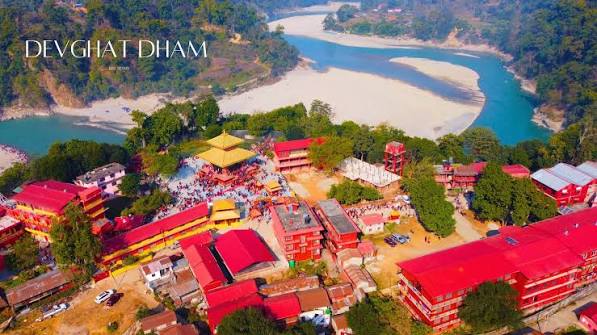
Maghe Sankranti in Magh is the best entry point for anyone interested in river pilgrimage. Bathing crowds gather at confluence sites nationwide, and the largest of them is at Devghat, where the Kali Gandaki and Trishuli meet. It is a cold, early, unglamorous ritual and it is one of the most authentic mornings in the Nepali year.
Regional festivals that are not national
A national calendar hides how much of Nepal celebrates on its own schedule. Chhath is enormous in the Terai and Madhes and barely visible in the northern hills. Maghi is the new year for the Tharu community and a working day for most of Kathmandu. Sakela is the major Kirat festival of the eastern hills, danced twice a year at Ubhauli and Udhauli. The Karnali districts of the far west keep their own cycle of Masta and Badimalika observances that never appear on the national holiday list at all.
The practical lesson is to ask locally. A district can be entirely shut for something the national calendar does not mark, and a national holiday can pass unnoticed in a village that observes a different set of gods.
How to plan a trip around the Nepali calendar
Two rules cover most cases. First, do not schedule internal travel during the four days around Vijaya Dashami or Bhai Tika unless it is already booked. Second, remember that the best trekking weather, in Kartik and Mangsir, overlaps with the two biggest festivals of the year, so trails and lodges are busy for reasons that have nothing to do with the weather.
If a festival is the reason for the trip, build in slack. Lunar dates get confirmed against the official Nepali calendar rather than predicted years ahead, and processions run late by design.
FAQ
How many festivals does Nepal have?
There is no fixed number. The government publishes a public holiday list each year, and beyond that every ethnic and religious community keeps its own observances. A commonly repeated line is that Nepal has more festivals than days in the year, which is an exaggeration but not by much.
What is the biggest festival in Nepal?
Dashain, by every measure: length, participation and economic impact. It runs for fifteen days in Ashwin, which falls in September or October.
Why do Nepali festival dates change every year?
Most are fixed to lunar positions in the Bikram Sambat calendar rather than to solar dates. Because the lunar cycle does not align with the solar year, the Gregorian date shifts by roughly two weeks in either direction from one year to the next.
What is the best month to visit Nepal for festivals?
Ashwin and Kartik, covering mid-September to mid-November, hold Dashain, Tihar and Chhath along with the clearest skies of the year. The trade-off is crowding and heavy demand on transport and accommodation.
Do shops and banks close during Nepali festivals?
During Dashain, yes, for several days, and services can be thin for a week either side. Tihar closes businesses for two to three days. Most other festivals are single public holidays with normal service resuming the next morning.