
Once a year in the Kathmandu Valley, a family that has buried someone in the previous twelve months sends a child into the street dressed as a cow. Neighbours applaud. Drummers fall in behind. Somewhere in the same procession a man in a borrowed sari is making a joke about the government. This is Gai Jatra, and it is the least solemn funeral rite you are ever likely to attend.
Gai Jatra and Bisket Jatra sit at opposite ends of the Newar year and at opposite ends of the emotional register. One converts private mourning into public comedy. The other hauls a multi-tonne chariot through brick lanes barely wider than the chariot itself. Both are Newar in origin, both are still working community events rather than staged spectacle, and both are considerably stranger than the tourism-board summary suggests.
What is Gai Jatra and why do cows lead the procession?
Gai Jatra falls in the Nepali month of Bhadra, which in the Gregorian calendar means late August or early September. Every Newar household in the valley that has lost a member since the last Gai Jatra takes part. The family leads a cow through the streets, or more commonly now dresses a boy of the house in a cow mask, a cloth tail and the ochre robes of a miniature ascetic. Relatives walk behind carrying a photograph of the person who died, handing out fruit, beaten rice and small coins to onlookers along the route.
The cow matters because in Hindu belief she guides the departed across Vaitarani, the river that divides the living from the world of the dead. The soul holds her tail and crosses. Parading her in public is the family announcing to the town that the crossing has been completed, and that the formal period of grief now has an end date. None of this is private. Being seen is the whole point of the ritual.
What disorients most first-time visitors is the tone. Behind the bereaved families come masked dancers, drum troupes, men in wigs and saris, boys on stilts, and groups carrying placards that mock whoever currently holds office. In Bhaktapur the days around Gai Jatra are given over to Ghintang Ghisi, a stick dance performed in rotating circles to a two-beat drum pattern you can hear three streets before you see it.
The Malla legend behind the parade
The story told most often credits the seventeenth-century Kathmandu king Pratap Malla. His son died, his queen would not stop grieving, and no courtier could reach her. The king finally proclaimed that every family in the city which had lost a member that year should walk past the palace in procession. The queen watched the line go by, saw how long it was, and understood that her loss was not a singular injustice but the ordinary condition of being alive. Historians generally treat the legend as a later gloss laid over a much older death rite, and the cow procession itself almost certainly predates the Malla court.
Why the satire is the point, not the decoration
The comic licence attached to Gai Jatra is structural rather than incidental. For the length of the festival, ridicule of the powerful is customary and expected, and that convention has outlived every regime that tried to manage it. Nepali comedians, cartoonists and satirical publications still time their sharpest material to the festival, and Gai Jatra comedy shows remain a fixture of the season. A day set aside for the bereaved doubles as a day set aside for saying out loud what is normally left unsaid.
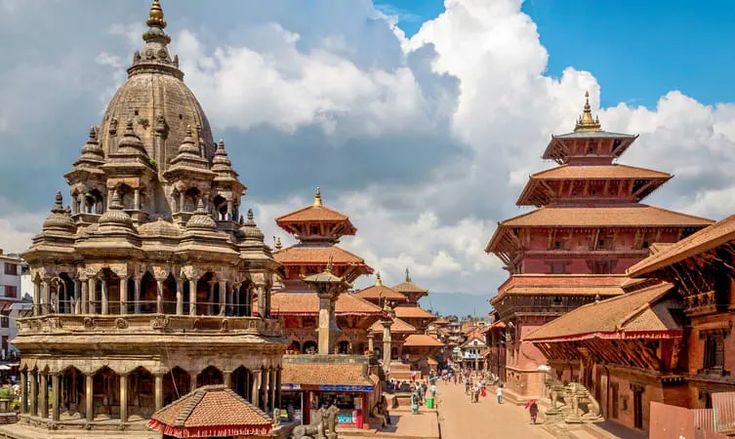
Patan keeps its own version of the day, and the route threads between the temples of Patan Durbar Square before spilling into the surrounding neighbourhoods. Kathmandu, Bhaktapur, Kirtipur and the smaller Newar settlements each run separate processions with their own music and their own order of march.
Bisket Jatra: the chariot festival that opens the Nepali new year
Bisket Jatra runs across the turn of the Bikram Sambat year, which lands in the second week of April every year. Bhaktapur builds two chariots for it. The larger carries Bhairava, the fierce form of Shiva; the smaller carries the goddess Bhadrakali. Both are assembled from stored timber, rebuilt annually, and moved entirely by human effort.
There is no engine and no rail. Hundreds of men take hold of two enormous ropes and pull. Bhaktapur is divided into an upper town and a lower town, and at Taumadhi Square the two halves haul in opposite directions in a tug of war that decides which side claims the coming year. The chariot lurches, catches on corners, and has damaged buildings more than once. People get hurt most years. This is a working festival with real stakes, not a re-enactment.
The pole, the serpents and the fall
The second act is the pole. On the eve of the new year a lingo, a tall wooden mast cut and carried down from the forest, is raised at the open ground in the lower town, with two long banners hung from a crossbar near the top. Raising it takes hours and a great deal of shouting. At the appointed hour on new year day the ropes are reversed and the pole is brought down. The direction of the fall is read as an omen for the year ahead, which is why the crowd scatters and then immediately closes back in.
The banners are explained by a story about a princess of Bhaktapur whose husbands kept dying on the wedding night. A prince eventually stayed awake, saw two serpents emerge from the sleeping bride, and cut them down. One common reading of the festival name is the festival that follows the death of the serpents, and the two banners on the pole are said to represent them.
Sindoor Jatra at Thimi and the tongue piercing at Bode
The same days bring two neighbouring events that are often better than the main chariot pull. At Thimi, a short ride west of Bhaktapur, dozens of palanquins carrying local deities converge on the central square at dawn and the crowd throws orange vermilion powder over everything and everyone. In the nearby settlement of Bode, a volunteer has an iron spike driven through his tongue and then walks a circuit of the village carrying a bamboo rack of oil torches on his shoulders. By tradition he fasts beforehand, the spike is drawn out at the end of the circuit, and the wound is treated with mustard oil.
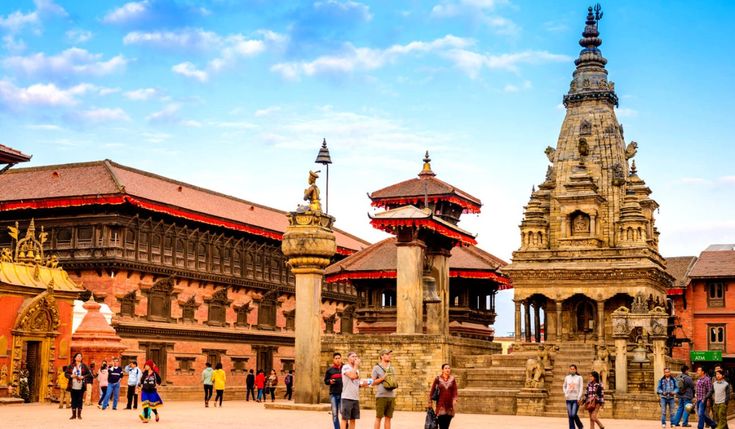
Bhaktapur is the practical base for all three. The old town around Bhaktapur Durbar Square closes to vehicles during the festival, so staying inside the walls is worth more than a better room outside them.
When do the main Kathmandu Valley festivals happen?
Newar festival dates come from two different calendars. Bisket Jatra is fixed to the solar new year and therefore lands in the same April window every year. Gai Jatra follows the lunar calendar and drifts by two or three weeks. The table below gives the usual timing rather than exact dates, which should always be confirmed against a current Nepali almanac.
| Festival | Where | Nepali month | Usual window | Signature sight |
|---|---|---|---|---|
| Bisket Jatra | Bhaktapur | Chaitra to Baisakh | Second week of April | Chariot tug of war and the falling pole |
| Sindoor Jatra | Thimi | Baisakh | Second week of April | Vermilion powder thrown over the square at dawn |
| Tongue piercing festival | Bode | Baisakh | Second week of April | Spike bearer walking the village with torches |
| Rato Machhindranath | Patan and Bungamati | Baisakh to Jestha | April to June | The longest chariot procession in the valley |
| Gai Jatra | Kathmandu, Patan, Bhaktapur, Kirtipur | Bhadra | Late August to early September | Cow processions, stick dance, political satire |
| Indra Jatra | Kathmandu | Bhadra to Ashwin | September | Living goddess chariot and Lakhey masked dance |
What these festivals say about Newar culture
Neither festival would survive without the guthi. A guthi is a Newar trust, usually landholding, whose income and obligations pass down through families and whose job is to keep a specific duty alive: maintaining a temple, funding a feast, conducting funerals, or rebuilding a chariot every single year whether or not anyone feels like it. The chariot exists because a guthi is bound to build it. Land reform and urban pressure have eroded many of these trusts, and where a guthi weakens the festival attached to it thins out within a generation.
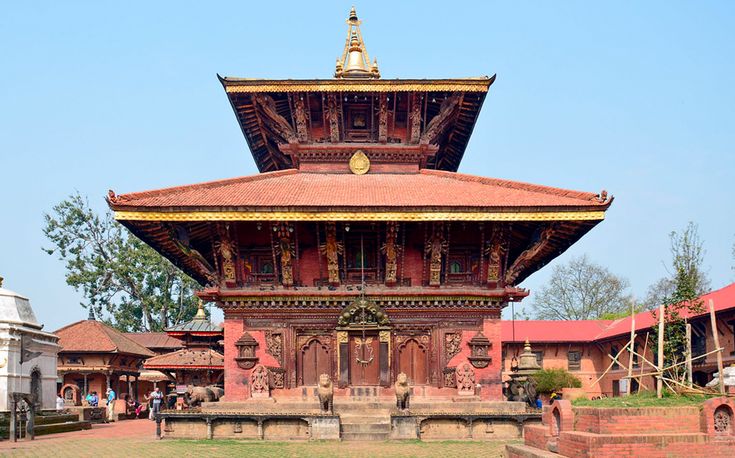
That is the useful frame for a visitor. The Kathmandu Valley is usually sold as an inventory of monuments, and the monuments are genuinely extraordinary. But the temples were never the point on their own. They are the fixed infrastructure of a calendar that runs almost continuously, and the festival is the software. Standing in an empty courtyard at Changu Narayan on an ordinary Tuesday gives you the architecture. Standing in the same courtyard on a festival morning gives you the reason it was built.
Western Nepal keeps a parallel calendar of its own, built around Deuda song circles, Masto shrines and the harvest, and it is worth reading alongside the valley cycle. Our month-by-month guide to Karnali festivals covers that side of the country.
Practical information for travellers
Plan around the window rather than the date. Bisket Jatra is safe to book against because it always falls in the same April week. Gai Jatra moves, so confirm with your hotel or a local contact a fortnight ahead rather than trusting a listing written three years ago. Both festivals run over several days, and the busiest day is rarely the first.
Bhaktapur charges foreign visitors an entry fee for the old town, collected at the gates and revised from time to time, so carry cash and keep the ticket. During Bisket Jatra the inner lanes close to traffic entirely. A rooftop or an upper-floor balcony is the single best vantage point for the chariot pull, and most guesthouses inside the walls will let guests use theirs.
Keep well clear of the hauling ropes. When a chariot changes direction it does so without warning, and the safe distance is larger than it looks from a photograph. At Thimi, assume that anything you carry into the square will come out stained orange, including camera bodies and phone cases. A sealed bag solves it.
During Gai Jatra, remember what the procession actually is. The families walking behind the cow are burying someone. Photographing the dancers and the satire troupes is expected and welcomed. Photographing a mourner holding a portrait is not, unless you ask first and get a clear yes.
FAQ
When is Gai Jatra in Nepal?
Gai Jatra falls in the Nepali month of Bhadra, which puts it in late August or early September. Because it follows the lunar calendar the date shifts each year, so check a current Nepali almanac rather than assuming last year’s date.
Is Bisket Jatra the same as Nepali new year?
Bisket Jatra spans the turn of the Bikram Sambat solar year, so it overlaps with new year day in the second week of April. The festival itself runs for several days on either side of it, and the pole is pulled down on new year day.
Can foreign visitors watch these festivals?
Yes. Both are public street festivals and visitors are welcome to watch, follow the processions and photograph the performers. Some temple interiors remain closed to non-Hindus, and the ritual acts themselves are performed by designated community members.
Where is the best place to see Gai Jatra?
Bhaktapur is the strongest single choice because the stick dance runs alongside the cow procession for several days. Kathmandu around the old durbar square gives you the sharpest political satire, and Patan is the quietest of the three.
Is it safe to stand near the Bisket Jatra chariot?
Not close to it. The chariot is moved by rope and momentum in narrow lanes and it swings without warning. Watch from a rooftop, a balcony or a side lane, and never stand between the chariot and a wall.