
Three towns sit within an hour of each other in the Kathmandu Valley, and each one has a palace square packed with temples that would be the centrepiece of any national capital. That is not planning. It is competition. From the fifteenth century the valley was split among three rival Malla kingdoms whose kings tried to outbuild one another for roughly three hundred years. The architecture visitors photograph today is the residue of that contest.
Who Were the Mallas?
Malla rule over the Kathmandu Valley began in the early thirteenth century and lasted until the Gorkhali conquest of 1768 and 1769. The name means wrestler, and the early dynasty emerged out of the murky transitional centuries that followed the Licchavi period. Their court culture was Newar, their religious patronage covered both Hindu and Buddhist institutions without much friction, and their economic base was the same trans-Himalayan trade corridor the Licchavis had exploited.
The early Malla centuries were not smooth. The valley suffered a devastating raid from the south in the fourteenth century and repeated earthquakes across the period. Rebuilding after disaster is a recurring theme in valley architecture, and many buildings that look medieval are in fact careful reconstructions of medieval originals, some of them rebuilt again after the 2015 earthquake.
Jayasthiti Malla and the Reordering of Valley Society
Jayasthiti Malla, ruling in the late fourteenth century, is the figure Nepali histories credit with imposing order. He is associated with codified law, standardised weights and measures, and a formal ordering of occupational groups within Newar society. The last of these had consequences that outlasted the dynasty by centuries, structuring who did which work and who lived in which quarter of which town.
His grandson Yaksha Malla ruled a valley that was unified, prosperous and expanding, and by most accounts the Malla realm reached its greatest extent under him. Then he died, and the arrangement that followed his death defined the next three centuries.
Why the Kathmandu Valley Split Into Three Kingdoms
On Yaksha Malla’s death in the later fifteenth century the realm was divided among his heirs, producing separate kingdoms centred on Kathmandu, Patan and Bhaktapur. Small kingdoms with adjacent borders and shared religious geography, ruled by relatives, is a formula for permanent friction. The three states fought, allied, intermarried, disputed trade rights and competed for prestige almost continuously.
The competition had one very fortunate side effect. Prestige in the valley was expressed through building, festival sponsorship and craftsmanship. Each king wanted a taller temple, a finer palace window, a more spectacular chariot procession. Three courts commissioning simultaneously for three centuries created a density of art and architecture out of all proportion to the size of the territory, and it left three of the seven monument zones that make up the Kathmandu Valley World Heritage Site.
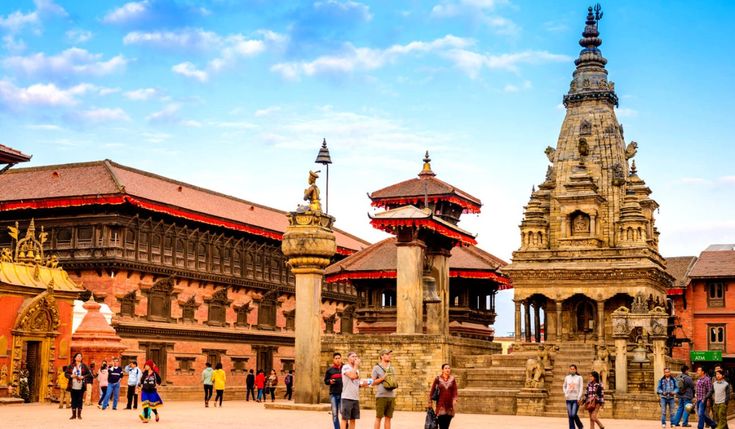
Kathmandu, Patan and Bhaktapur Compared
Each of the three had a distinct character, and it survives. Kathmandu was the trade and political hub, Patan the Buddhist and metalworking centre, Bhaktapur the agricultural and most self-contained of the three. The table below is a quick orientation before you walk them.
| Town | Palace complex | Signature monument | Festival most associated |
|---|---|---|---|
| Kathmandu | Hanuman Dhoka Durbar Square | Kasthamandap and the Taleju temple | Indra Jatra, with the Kumari chariot procession |
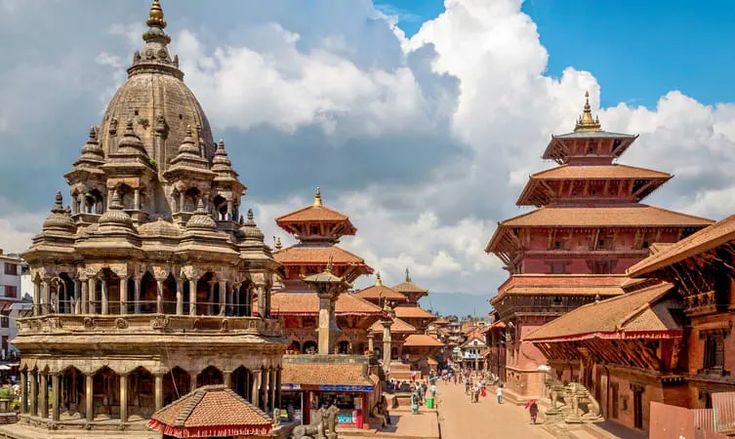
| Patan | Patan Durbar Square | The stone Krishna Mandir on the palace side | Rato Machhindranath Jatra |
| Bhaktapur | Bhaktapur Durbar Square | The five-tiered Nyatapola temple in Taumadhi | Bisket Jatra at Nepali new year |
| Kirtipur | Fortified hill town, no palace | Bagh Bhairab temple | Local Bhairab observances |
| Thimi | Market town between Kathmandu and Bhaktapur | Balkumari temple | Sindoor Jatra, at new year |
The Art and Architecture the Rivalry Produced
The Malla style is what most people picture when they picture Nepal: tiered pagoda roofs on brick temples, deeply carved timber struts, latticed windows, gilded finials and stone guardian animals climbing plinth steps in pairs. Nearly all of it is Newar craftsmanship, produced by hereditary artisan communities whose skills passed down within families.
Two buildings show the ambition. Nyatapola in Bhaktapur, raised in the early eighteenth century by Bhupatindra Malla, stands five tiers high on a stepped plinth guarded by paired figures ascending in strength, and it has survived earthquakes that flattened lower structures around it. The Krishna Mandir in Patan, built in the seventeenth century under Siddhi Narsingh Malla, breaks with the brick and timber tradition entirely: it is carved stone, tier upon tier of pavilions, closer to north Indian temple architecture than anything else in the valley.
Metalwork deserves its own mention. Patan produced repoussé work, cast bronze images and gilt copper temple facings of extraordinary refinement, and the workshops around Patan Durbar Square are still producing today. Buying directly from a workshop in Patan is one of the few souvenir transactions in Nepal with a genuinely unbroken lineage behind it.
Festivals the Mallas Left Behind
The Malla kings did not only build. They institutionalised and sponsored the festival calendar that still runs the valley. Indra Jatra in Kathmandu, with masked dances and the chariot procession of the living goddess Kumari, is the most publicly royal of them. Rato Machhindranath Jatra in Patan hauls an enormous wheeled chariot through narrow streets over weeks and is tied to rain and agricultural fortune. Bisket Jatra in Bhaktapur marks the new year with chariot tug-of-war between town quarters and a ceremonial pole raising.
Gai Jatra, the cow procession that lets families who have lost someone in the past year mark that loss publicly and with humour, is traditionally traced to Malla-era Kathmandu. Whatever the exact origin, the point stands: these are not revivals staged for visitors. They are continuous civic institutions that predate the country in its current form.
Not to Be Confused: The Khas Mallas of Western Nepal
A second dynasty also used the Malla name, and mixing the two up is the most common error in popular writing about Nepali history. The Khas Malla kingdom ruled western Nepal from Sinja in what is now Karnali Province, roughly between the twelfth and fourteenth centuries, and its language became modern Nepali. It was a separate polity in a different part of the country, and it is covered in our guide to the Khas Malla kingdom of west Nepal.
How Malla Rule Ended
Three small rival kingdoms sharing one valley were dangerously easy to pick apart. When Prithvi Narayan Shah of Gorkha began his campaign in the mid eighteenth century, the three Malla kings never mounted a genuinely unified defence. Kathmandu fell in 1768 during Indra Jatra, Patan shortly after, and Bhaktapur in 1769. The Gorkhali victory ended Malla rule but preserved most of what it had built, and the new dynasty adopted the valley as its capital rather than sacking it.
Seeing the Three Kingdoms in One Trip
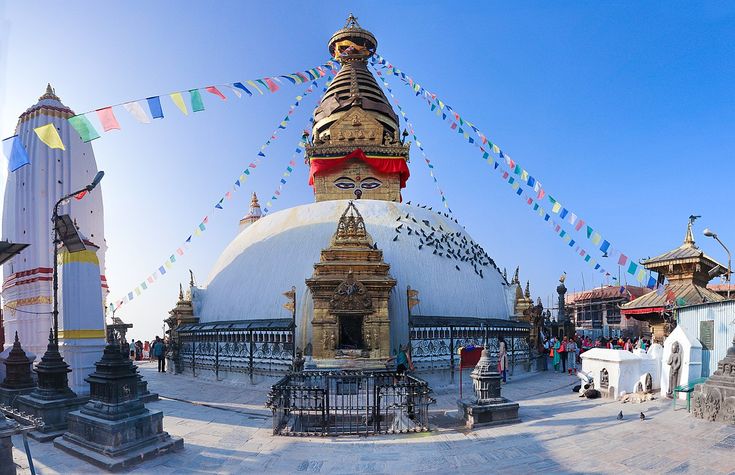
All three durbar squares can be done in two full days, and they should not be rushed into one. Bhaktapur rewards an overnight stay more than the other two, because the crowds thin dramatically after the day tour buses leave and the town becomes residential again. Patan is best walked slowly in the morning, ducking into courtyards off the main square. Kathmandu Durbar Square is the busiest and the most affected by the 2015 earthquake, with reconstruction still visible.
Entry fees apply at each of the three squares and are collected separately. Guides are widely available and genuinely worth it here, because the interpretive value of a carved strut or a shrine platform is not obvious from looking. For the wider sequence of Nepali history, see our complete timeline of Nepali history, and for site details start with the guides to Bhaktapur Durbar Square and Patan Durbar Square.
FAQ
Who were the Malla kings of Nepal?
The Malla dynasty ruled the Kathmandu Valley from the early thirteenth century until 1769. After the death of Yaksha Malla in the fifteenth century the realm split into three rival kingdoms based in Kathmandu, Patan and Bhaktapur.
Why are there three durbar squares in the Kathmandu Valley?
Because there were three separate Malla kingdoms, each with its own royal palace and its own temples. Their rivalry drove three centuries of competitive building within a very small area.
What is the difference between the Malla dynasty and the Khas Malla kingdom?
They are unrelated. The Mallas of the Kathmandu Valley were a Newar court dynasty ruling from the thirteenth century. The Khas Mallas ruled western Nepal from Sinja in Karnali between roughly the twelfth and fourteenth centuries.
What ended Malla rule?
The Gorkha conquest under Prithvi Narayan Shah. Kathmandu fell in 1768, Patan shortly afterwards, and Bhaktapur in 1769, after which the valley became the capital of the new Shah kingdom.
Which durbar square is the best to visit?
Bhaktapur is the most intact and the most rewarding for an overnight stay. Patan is the strongest for craftsmanship and quiet courtyards. Ideally see all three over two days and compare them directly.