
Dashain is the longest festival in Nepal and the only one that visibly stops the country. It runs for fifteen days in the Nepali month of Ashwin, which falls in September or October, and it ends on a full moon. Offices close, shops shutter, buses fill, and for about a week the road network exists mainly to move people from the cities back to the villages their families come from.
The festival marks the victory of the goddess Durga over the buffalo demon Mahishasura, a triumph of good over evil retold across South Asia in different forms. In Nepal it is also the year’s single largest family gathering. Both things are true at once, and the second one is what a traveller notices first.
When does Dashain fall?
Dashain is set by the lunar calendar, so its Gregorian dates move each year by roughly two weeks in either direction. It always begins on Ghatasthapana, the first day of the bright fortnight of Ashwin, and always peaks on the tenth day, Vijaya Dashami. The final day is Kojagrat Purnima, the full moon.
The season matters as much as the date. Dashain arrives just as the monsoon withdraws. The air clears, the rice is nearly ready, and the first genuinely blue skies of the year appear. That is not a coincidence of scheduling. The festival sits where the agricultural year takes a breath.
The fifteen days of Dashain explained
Not every day carries a ritual. Five or six do, and the rest are the space between them, filled with visiting, cooking, card games and travel.
| Day | Name | What happens | Visible to a visitor? |
|---|---|---|---|
| 1 | Ghatasthapana | A sacred water vessel is installed and barley seed is sown in a dark room to grow the jamara shoots | Rarely, this is a household ritual |
| 7 | Phulpati | Flowers, banana stems and sugarcane are carried in procession, historically from Gorkha to the old palace in Kathmandu | Yes, in Kathmandu Durbar Square |
| 8 | Maha Ashtami | The night of Kalratri. Offerings and animal sacrifice at temples of the goddess | Yes, at Durga temples and old palace courtyards |
| 9 | Maha Navami | Tools, vehicles and workshops are blessed. The Taleju temple in Kathmandu opens to the public for this one day | Yes, and it is the most striking day |
| 10 | Vijaya Dashami | Elders apply red tika and jamara to younger family members and give blessings | Partly, this happens indoors and by family |
| 15 | Kojagrat Purnima | Full moon, dedicated to Laxmi. Families stay awake into the night | Rarely |
The rhythm is slow at the start and dense at the end. If you have one day to spend inside the festival, make it Maha Navami or Vijaya Dashami.
What jamara and tika actually mean
On Ghatasthapana, barley or maize is sown in a container of river sand kept in a dimly lit room. Over the following nine days it grows into pale yellow shoots called jamara. On the tenth day those shoots are cut and given out with tika, a paste of rice, yogurt and red vermilion, pressed onto the forehead of every family member younger than the giver.
The order is strict and it is the whole point. You receive tika from everyone older than you and give it to everyone younger, which means a full Dashain requires visiting the houses of every senior relative in a rough hierarchy of age. Families with many branches spend three or four days doing nothing else. Gifts of money, called dakshina, usually travel downward with the blessing.
Where to see Dashain if you are not part of a family
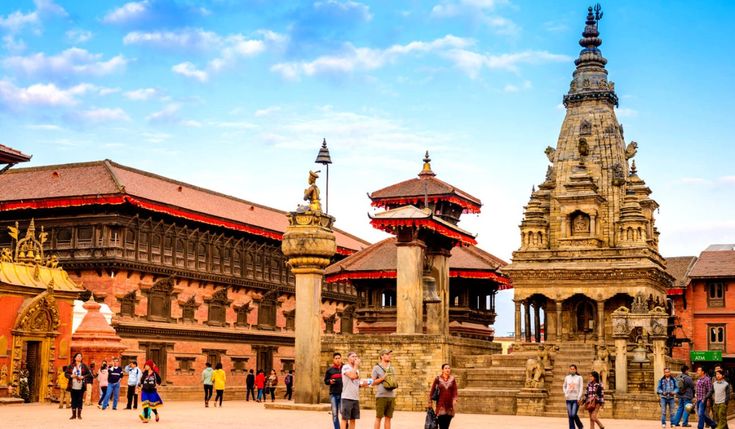
Most of Dashain happens behind doors. The exceptions are the old royal squares and the goddess temples attached to them. At Bhaktapur Durbar Square the ritual calendar is dense and the crowd is local rather than curated. In Kathmandu the Phulpati procession and the Maha Navami opening of Taleju are the two public set pieces. Patan keeps a quieter version of the same sequence.
Outside the valley, hill towns show the domestic side better. In a place like Bandipur the streets fill with returning families, bamboo swings appear on the edge of town, and the whole settlement runs at the pace of a long lunch. That is Dashain as most Nepalis actually experience it.
Animal sacrifice and the argument about it
Sacrifice is the part of Dashain most visitors ask about. Goats, buffalo, ducks and chickens are offered at temples of the goddess, concentrated on Maha Ashtami and Maha Navami, and the meat is then eaten by the household. It is not hidden and it is not performed for spectacle.
It is also contested inside Nepal. A growing number of families now offer a coconut, a pumpkin or a cucumber in place of an animal, and several temples have moved toward or fully adopted bloodless offerings. If you would rather not encounter it, avoid temple precincts on the eighth and ninth days and stay away from the courtyards behind the old palaces early in the morning. Nobody will find the request strange.
Kites, swings and card games
Three secular traditions run alongside the religion. Kite flying peaks in the weeks before and during Dashain, when the post-monsoon wind is reliable and the sky over any town is full of paper. Tall bamboo swings called ping are built on village edges, traditionally taken down after Tihar. And card games, played for small stakes among relatives, occupy most of the afternoons the rituals leave free.
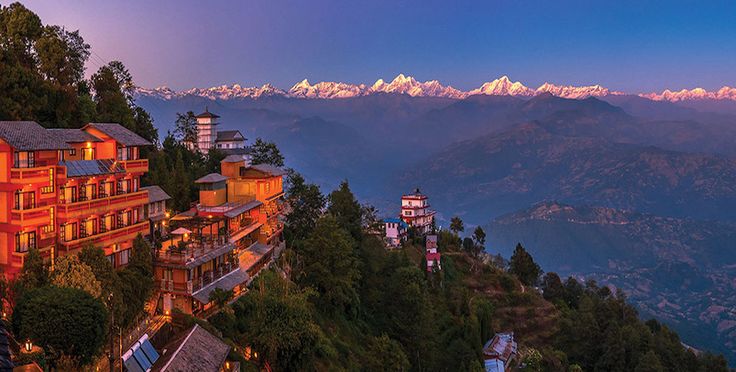
The clear autumn air that makes kite season possible is the same air that makes this the best mountain-viewing period of the year. Ridge viewpoints such as Nagarkot are at their sharpest in exactly these weeks, which is worth knowing if the festival crowds in the valley become too much.
Travelling in Nepal during Dashain
Plan around it rather than through it. Long-distance buses sell out one to three weeks ahead, and domestic flights follow the same pattern. Highways are busy and accident rates rise. Banks, government offices and many restaurants close for several days around Vijaya Dashami, and small shops in residential areas may stay shut for a week.
What stays open is tourism infrastructure. Trekking lodges, hotels and airport services run normally, and trekking routes are unaffected apart from being popular. If your itinerary is a trek, Dashain costs you almost nothing. If your itinerary depends on public buses, city services or shopping, it costs you a lot.
FAQ
How long is Dashain?
Fifteen days, from Ghatasthapana on the first day of the bright fortnight of Ashwin to Kojagrat Purnima on the full moon. Public holidays cover only part of that, usually clustered around days eight to eleven.
What month is Dashain in?
The Nepali month of Ashwin, which falls in September or October. The exact dates are lunar and shift every year, so check a current Nepali calendar rather than assuming last year’s dates.
Is it a bad time to visit Nepal?
Not for trekking or mountain viewing, which are at their best. It is a difficult time for city sightseeing, shopping and any travel on public buses. Book internal transport well in advance and expect closures.
Can foreigners take part in Dashain?
Yes, if invited. Receiving tika and jamara from an elder in a Nepali household is normal hospitality and the invitation is usually offered readily. Wear something reasonably formal and expect to be fed a great deal.
What is the difference between Dashain and Dussehra?
They share the same source story and the same lunar timing. The Nepali observance runs longer, centres on family tika and jamara, and lacks the effigy burning that defines Dussehra in much of northern India.