Several of Nepal's high lakes are active pilgrimage sites rather than viewpoints. Gosaikunda at 4,380 m in Rasuwa is the best known, drawing tens of thousands of pilgrims on Janai Purnima, the full moon of the month of Shrawan in July or August. Panch Pokhari in Sindhupalchok, Budhinanda below the Badimalika temple in Bajura, and the Tribeni confluence at Khaptad all fill on the same day for the same reason.
Understanding that changes how you plan. These are not quiet mountain lakes that happen to have a shrine. On the right day they are crowded, loud, and running on ritual rather than on trekking logistics, and the walk in is shared with families, sadhus and shopkeepers rather than with other trekkers.
What Janai Purnima is
Janai Purnima falls on the full moon of Shrawan, which places it in late July or August depending on the year. Brahmin and Chhetri men replace the janai, the sacred thread worn over the left shoulder, after ritual bathing. Across the country the same day is marked as Raksha Bandhan, when a protective thread is tied around the wrist, and in the Kathmandu valley the Newar celebration of Gunhu Punhi involves eating a nine-bean soup.
The connection to lakes is the bathing. Immersion in a sacred water body on that day is what makes the ritual complete, and the high lakes carry the strongest associations, which is why people who have never trekked in their lives walk to 4,380 m in the monsoon to do it.
Gosaikunda
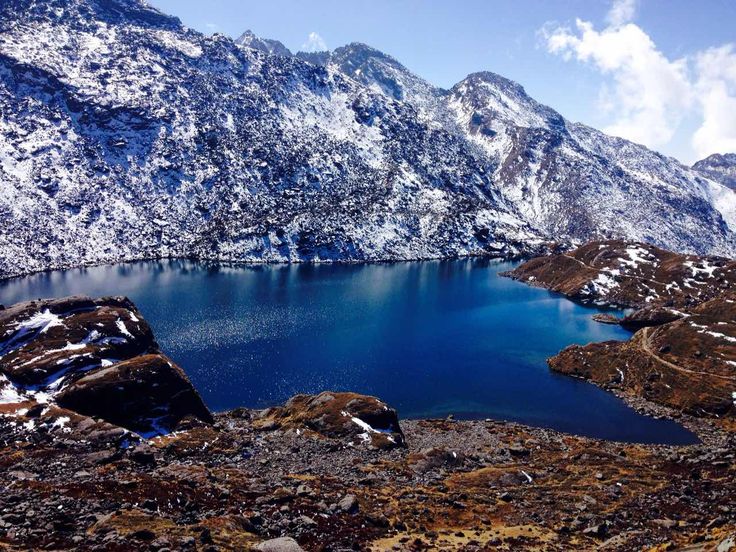
Gosaikunda sits at 4,380 m in Langtang National Park, in Rasuwa district north of Kathmandu. In the Shaivite tradition the lake was created when Shiva struck the mountain with his trident to produce water after swallowing the poison churned from the ocean, and the story is why the site is Shiva's rather than any other deity's.
The lake is one of a group. Gosaikunda and its associated lakes were designated a Ramsar site in 2007, covering more than a hundred small water bodies on the same high shelf, of which Saraswati Kunda and Bhairav Kunda are the ones pilgrims also visit.
The usual route walks in from Dhunche, reached by road from Kathmandu in six to eight hours, and climbs through Sing Gompa or Chandanbari to the lakes in two to three days. In August that path carries an enormous volume of people, temporary tea shops appear along it, and the lodges at Lauribina are full. The rest of the year it is a quiet short trek, and it can be extended over the Lauribina La to Helambu. Our Gosaikunda guide has the route detail.
Panch Pokhari
Panch Pokhari means five ponds, and the site in Sindhupalchok sits at around 4,100 m on a ridge north of the Indrawati valley. It is a Janai Purnima pilgrimage site with the same Shaivite associations as Gosaikunda and a small fraction of the visitors.
The trek in takes four to five days from a road head reachable in a long day from Kathmandu, and there is a scatter of basic lodges plus pilgrim shelters at the lakes. Outside the festival there is very little on the route, so it works better as a camping trip or with a guide who knows which houses will feed you. For anyone who wants the Gosaikunda experience without the Gosaikunda crowd, this is the closest equivalent.
Budhinanda and Badimalika
In Bajura district in the far west, the Badimalika temple sits at around 4,200 m on an open ridge, and it is one of the most important shrines to the goddess in western Nepal. Pilgrims bathe in the Budhinanda lake below the temple before making the final ascent, and the main mela falls on Janai Purnima.
This is a hard pilgrimage. The walk in takes two to three days from the nearest road head, the ground above 3,500 m is exposed with no shelter, and the weather in Shrawan is monsoon weather: cloud, rain and cold on an open ridge at 4,200 m. People walk it barefoot. Deaths from exposure have happened.
Outside the festival the site is empty and the walking is superb, with the whole Api and Saipal skyline to the north on a clear day. Our Badimalika temple pilgrimage guide covers the routes and the timing in detail.
Khaptad and the Tribeni
Khaptad National Park, established in 1984 and covering 225 square kilometres across Bajhang, Bajura, Doti and Achham districts, is a rolling grassland plateau at around 3,000 m rather than a mountain landscape. Its religious centre is the Tribeni, the confluence of three small streams at the northern edge of the plateau, next to the Sahasra Linga.
Two festivals fill it. Ganga Dashahara falls in late May or June, and Janai Purnima brings the second gathering in August, with pilgrims bathing at the confluence. The ashram of Khaptad Baba, the ascetic whose residence made the plateau a place of pilgrimage in the twentieth century, is on the plateau and remains a focus for visitors.
Khaptad Daha, a small lake a few kilometres from the park headquarters, is the other water body here and is visited on the same trips. The plateau itself is the reason to come: open grassland, patches of oak and rhododendron, and an enormous quantity of medicinal plants, described in our Khaptad National Park biodiversity guide.
Tilicho and Damodar Kunda
Two more high lakes carry religious weight without the same mass pilgrimage.
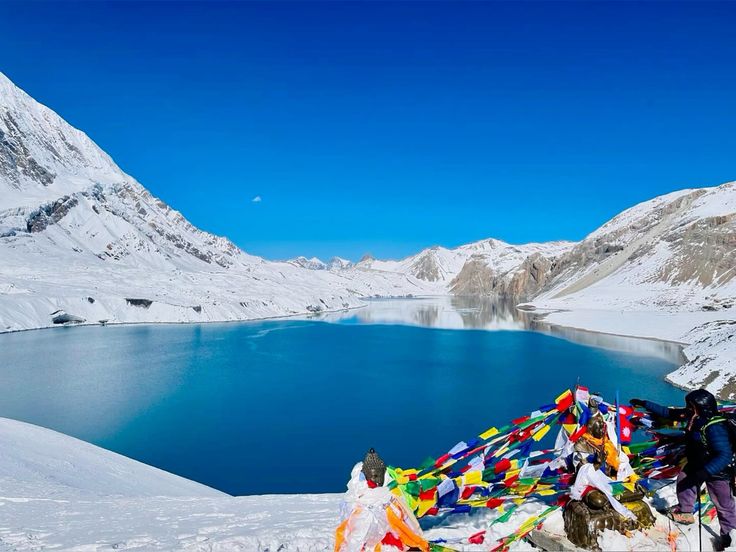
Tilicho, at 4,919 m in Manang inside the Annapurna Conservation Area, is usually visited as a side trip from the Annapurna Circuit and is often described as one of the highest lakes of its size in the world. Some traditions identify it with Kak Bhusundi, a lake mentioned in the Ramayana, though that identification is a claim rather than a settled matter. It is a trekking destination first and a sacred one second.
Damodar Kunda, at around 4,890 m in upper Mustang, is the opposite: a genuine and demanding pilgrimage to a group of high lakes behind the main Himalayan chain, undertaken by relatively few people because upper Mustang is a restricted area with the permit costs that implies.
The sacred lakes compared
| Lake or site | District | Elevation | Main pilgrimage | Walk in |
|---|---|---|---|---|
| Gosaikunda | Rasuwa | 4,380 m | Janai Purnima | 2 to 3 days from Dhunche |
| Panch Pokhari | Sindhupalchok | about 4,100 m | Janai Purnima | 4 to 5 days |
| Budhinanda and Badimalika | Bajura | about 4,200 m | Janai Purnima | 2 to 3 days |
| Khaptad Tribeni | Doti and Bajhang | about 3,000 m | Ganga Dashahara and Janai Purnima | 1 to 2 days |
| Tilicho | Manang | 4,919 m | No mass pilgrimage | Side trip from the Annapurna Circuit |
| Damodar Kunda | Mustang | about 4,890 m | Restricted-area pilgrimage | Several days beyond Lo Manthang |
What the mela is actually like
If you go on the day, expect something closer to a market than a mountain walk. Temporary tea shops and food stalls appear along the last two days of trail and disappear within a week. Groups walk through the night to reach the water by dawn. There is singing, there are drums, and there are people carrying children and elderly relatives up ground that would give a fit trekker pause.
The composition of the crowd is worth understanding too. Alongside the Hindu pilgrims are shamans, the jhankri, who come to these lakes in numbers on Janai Purnima, drumming and dancing at the shore. Gosaikunda in particular draws them from across the central hills, and it is one of the few occasions when that tradition is publicly visible on any scale.
Visiting respectfully, and safely
Do not bathe in these lakes. Whatever you have read about swimming in Nepal, immersion at these sites is a ritual act performed by pilgrims, and a tourist swimming in Gosaikunda reads exactly as badly as it sounds. Walk around shrines clockwise, remove footwear where indicated, ask before photographing people mid-ritual, and do not take leather into a temple precinct.
The safety point is separate and more serious. Janai Purnima falls in the monsoon, which means these walks happen in the worst weather of the year, on wet ground, at altitude. Most pilgrims are not equipped for it and many ascend far faster than any acclimatisation guidance would allow. Altitude sickness on the Gosaikunda and Badimalika routes during the mela is common and occasionally fatal.
If you are going for the festival, take your own shelter and warm layers, allow an extra day on the ascent, and accept that lodges will be full and the trail will be crowded. If you want the lakes rather than the ritual, go in October or November instead, when the same routes are clear, cold, empty and considerably safer. The Annapurna Conservation Area guide covers the Tilicho side of this, and Nepal's Ramsar wetland sites explains the protection status that Gosaikunda carries.
Frequently Asked Questions
What is Janai Purnima?
The full moon of the month of Shrawan, in July or August, when Brahmin and Chhetri men replace the sacred thread worn over the left shoulder after ritual bathing. The same day is Raksha Bandhan across South Asia and Gunhu Punhi among the Newars of the Kathmandu valley.
How high is Gosaikunda?
4,380 m, in Langtang National Park in Rasuwa district. It is part of the Gosaikunda and Associated Lakes Ramsar site, designated in 2007, which covers more than a hundred small water bodies on the same shelf.
How long is the trek to Gosaikunda?
Two to three days up from Dhunche, which is six to eight hours by road from Kathmandu. It can be extended over the Lauribina La into Helambu, or done as a short return trip.
Can tourists visit Gosaikunda during Janai Purnima?
Yes, and it is an extraordinary thing to see, but expect full lodges, a crowded trail and monsoon weather. Do not bathe in the lake, which is a ritual act for pilgrims. Going in October or November instead gives you the same place, clear and almost empty.
Where is the Badimalika temple?
On an open ridge at around 4,200 m in Bajura district, far western Nepal. Pilgrims bathe in the Budhinanda lake below it before the final ascent, and the main gathering falls on Janai Purnima.
What is the Tribeni at Khaptad?
The confluence of three small streams at the northern edge of the Khaptad plateau, beside the Sahasra Linga. It is the religious focus of Khaptad National Park and fills with pilgrims at Ganga Dashahara in late May or June and again at Janai Purnima.
Is Tilicho Lake a pilgrimage site?
Not in the way Gosaikunda is. Some traditions identify it with Kak Bhusundi from the Ramayana, but that identification is contested and there is no mass pilgrimage. Tilicho is visited overwhelmingly as a trekking side trip from the Annapurna Circuit.
Is altitude sickness a risk on these pilgrimages?
Yes, and a serious one. The routes to Gosaikunda and Badimalika gain a great deal of height quickly, the festival falls during the monsoon, and most pilgrims carry no warm gear and take no acclimatisation days. Cases are common during the mela and deaths do occur. Build in an extra day and carry your own shelter.