
Koshi Tappu Wildlife Reserve protects about 175 square kilometres of river island, marsh and tall grassland on the Sapta Koshi floodplain in south-east Nepal. It was gazetted in 1976 and designated as Nepal’s first Ramsar wetland of international importance in 1987. Its bird list runs to more than 480 recorded species, the highest total for any single protected area in the country, and it is the only site in Nepal that reliably produces Bengal florican, swamp francolin, Indian skimmer and mid-winter concentrations of ducks and waders in the thousands.
Why is Koshi Tappu the best birding site in Nepal?
The answer is hydrology. The Sapta Koshi drains a vast slice of the eastern Himalaya, including the Everest and Kanchenjunga catchments, and it leaves the hills in a single gorge before spreading across the plain in a shifting braid of channels, sandbars and shallow lagoons. The reserve sits on that braid at an elevation of roughly 75 to 100 metres. Within a few kilometres of the headquarters at Kushaha a birder can work open water, exposed silt, seasonally flooded short grass, three-metre elephant grass, tamarisk thickets and the remnant khair and sissoo riverine woodland that survives on the higher islands.
That habitat mosaic sits directly under the Central Asian Flyway. Wildfowl and waders that breed on the Tibetan plateau and in Siberia funnel down the Himalayan river valleys and hit the plain here. The result is a species turnover that no forest site in Nepal can match. A dedicated three-day visit in January frequently produces 150 to 200 species without any great effort, and the daily list changes markedly between the first and last morning as passage birds move through.
Koshi Tappu is also compact enough to work properly on foot. Much of the productive ground lies along the eastern embankment and the adjacent silt flats, which means a birder with a telescope can cover a great deal from a single raised vantage point rather than spending the day in a vehicle. Compare that with Chitwan National Park, where good birds are spread across a much larger forest block and access is more tightly controlled.
Which birds should be on a Koshi Tappu target list?
The reserve is best understood as four overlapping specialities: grassland birds that are close to extinct elsewhere in Nepal, large waterbirds, wintering wildfowl, and river-channel species tied to sandbars. The table below sets out the species most birders travel for, where inside the reserve to look, and when.
| Species | Group | Where to look | Best months |
|---|---|---|---|
| Bengal florican | Bustard | Short and mid-height grassland on the western islands | Late March to early June, at dawn |
| Swamp francolin | Gamebird | Wet grassland edges near the embankment | All winter, calling most at dawn |
| Indian skimmer | Skimmer | Sandbars and open channels near the barrage | November to March |
| Black-bellied tern | Tern | Mid-river bars and shallow braids | November to March |
| Pallas fish eagle | Raptor | Tall trees overlooking lagoons and the main channel | November to February |
| Lesser adjutant | Stork | Marsh margins and wet stubble fields | Year-round, easier in winter |
| Bristled grassbird and Jerdon babbler | Grassland passerines | Uncut elephant grass and reed edges | March to May, when singing |
Beyond the headline species, winter counts routinely include bar-headed goose, ruddy shelduck, northern pintail, gadwall, ferruginous duck, common pochard and tufted duck on the open water, with black-tailed godwit, Temminck stint, little ringed plover, small pratincole and river lapwing on the silt. Asian openbill, woolly-necked stork and black stork all occur. Brown-headed gull and Pallas gull work the barrage pool. Striated grassbird, chestnut-capped babbler and rufous-vented grass babbler hold the reeds.
When is the best time to visit Koshi Tappu for birds?
November to February is the core season. Water levels have dropped, silt bars are exposed, the wintering wildfowl are in, and the mornings are cool with mist that usually burns off by nine. February into mid-March adds northbound passage waders and the first singing grassland passerines. Late March to early June is the window for displaying male Bengal florican, which spring vertically out of the grass at first light, but the heat by then is severe and the grass is high.
The monsoon from June to September floods the islands, closes most of the interior and makes the reserve impractical for general birding. October is a transition month: the water is still high and the grass is at its tallest, but raptor passage begins and the first ducks arrive. The reserve buffer zone was declared in 2004, and much of the community-managed land outside the boundary is worth birding in its own right when the interior is wet.
How do you get to Koshi Tappu and what does a birding day look like?
The fastest approach is a flight from Kathmandu to Biratnagar, which takes about 45 minutes, followed by a road transfer of roughly two hours west along the Mahendra Highway to Kushaha, where the reserve headquarters and the small cluster of birding lodges sit. Overland from Kathmandu is a long day of driving. From the eastern hills, Ilam and the tea country make a natural pairing on the same trip.
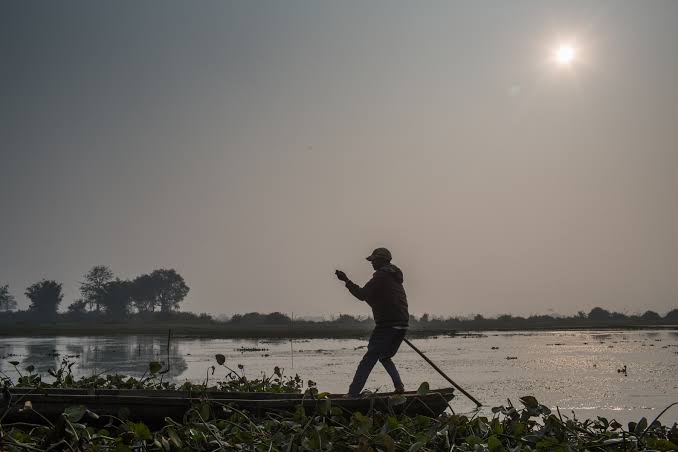
A typical day starts before dawn on the eastern embankment for grassland birds and raptors coming off roost, moves to the lagoons and silt flats mid-morning, breaks through the hot middle of the day, then works the barrage and the Koshi barrage wetlands in late afternoon for skimmers, terns, gulls and roosting storks. Some lodges run a dugout or raft drift down a side channel, which is the most efficient way to see river-bar species without disturbing them. A telescope is close to essential; distances across the braid are long and heat haze builds fast after ten. A reserve entry permit and a licensed local guide are required, and both are arranged at the headquarters gate.
How does Koshi compare with Chitwan and Bardiya for birding?
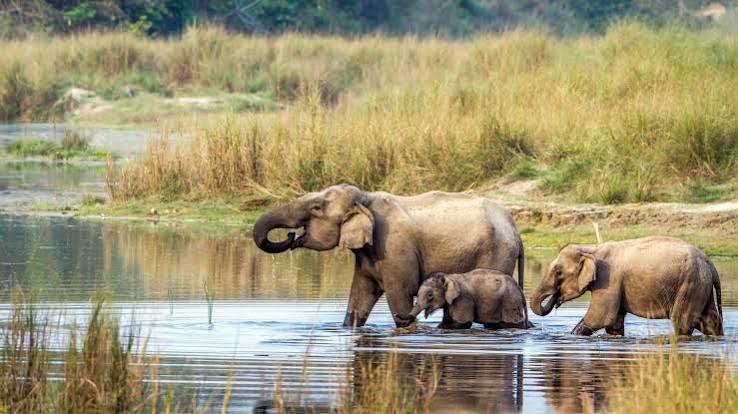
Chitwan, gazetted in 1973 as Nepal’s first national park and a UNESCO World Heritage Site, is the better site for sal forest species, for the riverine forest specialities of the Rapti and Narayani, and for combining birds with rhino and tiger. Bardiya National Park in the west offers a quieter version of the same forest and grassland mix with the Karnali as its western boundary and a genuinely wild feel. Neither of them competes with Koshi on waterbirds, and neither has anything like the same wader and wildfowl turnover.
The practical answer for a birder with two weeks is to do both. Koshi delivers the wetland and grassland list in three days. A Terai forest park delivers the woodpeckers, hornbills, trogons and owls that Koshi cannot. Adding one hill site on the way back covers the temperate forest guild and turns a Terai trip into a genuine national list.
What conservation pressures does the wetland face?
The Koshi is one of the most heavily engineered rivers in the region. The barrage regulates flow, embankments confine the channel, and the sediment load from the eastern Himalaya is enormous, so the bed aggrades and the braid shifts. Invasive water hyacinth and mikania choke lagoon margins in places. Grazing pressure from village livestock, fishing inside the reserve, and the timing of grass cutting all affect the grassland birds directly. Bengal florican and the grass babblers depend on patches that are neither burnt nor cut in the wrong month.
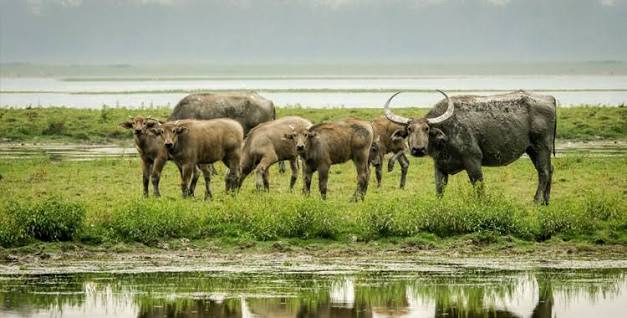
The wild water buffalo population, the last in Nepal, is the reserve’s flagship mammal and the reason it was gazetted, but the grassland it depends on is the same habitat that holds the rarest birds. Community forestry and buffer-zone management have improved matters since the early 2000s. The direction of travel for birders is clear enough: go now, go with a local guide who knows which islands are cut, and record what you see.
FAQ
How many bird species have been recorded at Koshi Tappu?
More than 480 species have been recorded in and around the reserve, which is the highest site total in Nepal. Nepal as a whole has roughly 880 to 900 recorded species, so a single small wetland accounts for over half the national list. A serious three-day winter visit with a good local guide commonly yields between 150 and 200 species.
How many days do you need at Koshi Tappu?
Three full days is the sensible minimum for a birder. That allows two dawns on the grassland, one full session at the barrage, and a boat drift. Two days will get most of the waterbirds. If Bengal florican is the target, budget more mornings, because the display window is narrow and the birds are scarce.
Is a guide compulsory inside Koshi Tappu?
Yes. Entry requires a permit and visitors must be accompanied by a licensed guide, arranged at the reserve headquarters at Kushaha. This is worth doing on merit rather than obligation, since local guides track which islands have been cut and where the florican and skimmers are currently holding.
What is the best month to see Indian skimmer at Koshi?
November through March, when the water is low and sandbars are exposed near the barrage. Skimmer numbers vary from year to year with channel conditions, so no site guarantees them. Late afternoon light on the barrage pool gives the best chance of seeing them feeding along the surface.
Can you combine Koshi Tappu with other birding sites?
Yes, and most birders do. The classic eastern circuit adds the tea-garden hills of Ilam and the forests around Hile or Basantapur for temperate species. Travellers heading west often pair Koshi with Chitwan or Bardiya to pick up the sal forest and riverine forest birds that a wetland reserve cannot provide.