
The three best birding sites within an hour of Kathmandu are Phulchowki, the highest hill on the valley rim at 2,782 metres; the Godavari forest and botanical garden at its foot at around 1,500 metres; and Shivapuri Nagarjun National Park on the northern rim, gazetted in 2002 and covering about 159 square kilometres. Between them they run continuously from subtropical broadleaf forest to upper temperate oak and rhododendron, and more than 250 species have been recorded on Phulchowki alone. All three can be birded on a day trip from the city without an internal flight or an overnight stop.
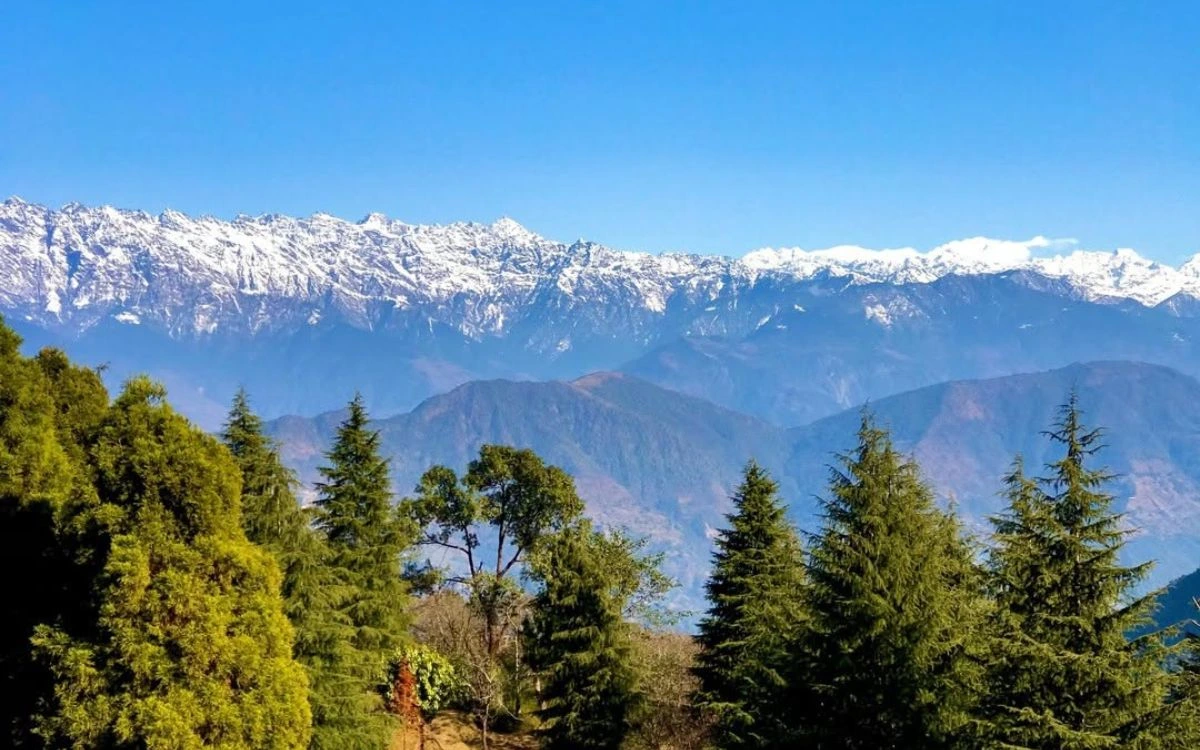
Where do you go birding near Kathmandu without leaving for a week?
The Kathmandu valley floor sits at about 1,300 metres, and the rim rises to nearly 2,800 metres. That 1,500-metre band, compressed into a ring road-and-a-half of driving, holds the full subtropical to temperate forest sequence. Sites divide neatly by aspect and elevation. Godavari and the lower Phulchowki road cover the subtropical broadleaf and lower temperate zones. The upper half of the Phulchowki road covers oak, laurel and rhododendron. Shivapuri and the Nagarjun forest block add north-facing temperate forest and a good chance of the birds that avoid the drier southern slopes.
| Site | Elevation | Habitat | Drive from central Kathmandu | Signature birds |
|---|---|---|---|---|
| Godavari forest and garden | About 1,500 m | Subtropical broadleaf, garden edge, streams | Around 1 hour | Spiny babbler, blue-throated barbet, spotted forktail |
| Phulchowki lower road | 1,500 to 2,100 m | Lower temperate broadleaf, bamboo | Around 1 hour to the gate | Golden-throated barbet, chestnut-headed tesia, minivets |
| Phulchowki summit ridge | 2,100 to 2,782 m | Oak, laurel and rhododendron | 1.5 to 2 hours | Hoary-throated barwing, cutia, black-faced warbler |
| Shivapuri, Nagi Gompa trail | 1,400 to 2,200 m | Pine and temperate broadleaf, scrub edge | 45 minutes to the gate | Spiny babbler, kalij pheasant, white-throated laughingthrush |
| Nagarjun forest block | 1,350 to 2,128 m | Dense temperate broadleaf | 30 minutes | Hill partridge, bay woodpecker, maroon oriole |
| Taudaha lake | About 1,320 m | Small still-water lake | 30 minutes | Wintering pochard, tufted duck, little grebe |
What can you see on Phulchowki?
Phulchowki is the single most productive day of birding available from Kathmandu, and it is done as a slow ascent by road with frequent stops rather than as a walk. The lower section, from the marble quarry up to roughly 2,000 metres, is the zone for golden-throated barbet, blue-winged minla, grey-hooded warbler, rufous-bellied niltava, small niltava, chestnut-headed tesia and slaty-bellied tesia in the stream gullies, and mixed flocks containing scarlet minivet and long-tailed minivet.
Above about 2,200 metres the forest changes to oak and rhododendron and the flock composition changes with it. This is the zone for hoary-throated barwing, cutia, whiskered yuhina, stripe-throated yuhina, white-tailed nuthatch, black-faced warbler, rufous-gorgeted flycatcher and, with luck and patience, one of the Himalayan shortwings in the undergrowth. Darjeeling woodpecker and bay woodpecker both occur. Mountain hawk-eagle and crested serpent eagle work the ridges. The summit itself, crowned with aerials and a small shrine, gives a clear view north to the Himalaya on a good winter morning.
Bird activity on Phulchowki is strongly flock-driven. You can walk 400 metres of empty road and then meet a mixed feeding party that contains 15 species in three minutes. The tactic is to move slowly, stop at every bend where the canopy is at eye level, and stay with a flock once you find one rather than chasing the next call.
What makes Godavari worth a half day on its own?
The botanical garden and the surrounding forest at Godavari sit at the base of Phulchowki and hold the subtropical guild that drops out higher up. The garden itself, with its stream, mixed planting and open lawns, concentrates birds in a small area and is easy walking. Grey-winged blackbird, blue whistling thrush, spotted forktail, plumbeous water redstart and white-capped redstart use the water. Blue-throated barbet, great barbet and the barbet chorus in spring are constant background.
Godavari and the scrubby lower slopes around it are also one of the accessible sites for Nepal’s only endemic bird, the Spiny Babbler. It is a skulker in dense secondary scrub and is far easier to locate in the spring singing season from March to May than at any other time. The same is true on the lower Nagi Gompa trail in Shivapuri.
Which birds does Shivapuri Nagarjun National Park add?
Shivapuri Nagarjun was declared a national park in 2002 and later extended to include the Nagarjun forest block on the north-west side of the valley. It protects the catchment that supplies much of the city’s water, which is why the forest survived. The birding here is done on foot along old trails rather than from a road, so it is slower but quieter than Phulchowki. The Shivapuri Nagarjun National Park trails from Budhanilkantha up to Nagi Gompa and on towards the Shivapuri peak at 2,732 metres pass through pine, scrub and temperate broadleaf in sequence.
Kalij pheasant crosses the trail at dawn. Hill partridge calls from the slopes and is heard far more often than seen. Chestnut-crowned laughingthrush, white-throated laughingthrush, grey-sided bush warbler, green-tailed sunbird and fire-breasted flowerpecker are all regular. Raptor passage over the valley rim in October and November is worth an hour of ridge-watching, with steppe eagle and other migrating raptors using the thermals along the northern hills.
When should you go and how do you plan the day?
The best months are March to early May and October to December. Spring gives you song, breeding activity and the best chance of the skulkers, but also haze. Late autumn gives clean air, Himalayan views and wintering species that have dropped down from higher elevations. December and January are cold at dawn on Phulchowki, sometimes with frost on the upper road, and the flocks are lower down the hill. The monsoon from June to September brings leeches to the forest floor and low cloud on the summit.
Start early. A vehicle leaving central Kathmandu at 5am reaches the Godavari junction before the traffic and is on the lower Phulchowki road for first light. Take layers, since the summit can be ten degrees colder than the valley floor, and take food, because there is nothing on the mountain. The road surface deteriorates in places and a high-clearance vehicle is worth arranging. Permits apply for national park entry at Shivapuri and Nagarjun gates.
What about the valley lakes, rivers and the eastern rim?
Taudaha, a small lake south of Kirtipur, is the only reliable still water inside the valley and holds wintering common pochard, tufted duck, ferruginous duck and little grebe from November to February. It takes half an hour and pairs well with a Phulchowki morning. The Manohara and Bagmati riverbeds still produce wagtails, pipits, river lapwing and the occasional ibisbill in cold winters, though habitat quality has fallen sharply with sand extraction and construction.
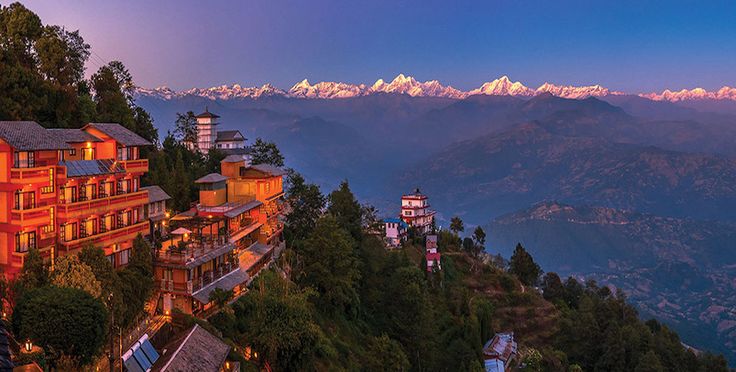
On the eastern rim, Nagarkot is better known for its Himalayan sunrise than for birds, but the ridge and the forest below it are a serviceable autumn raptor watchpoint and an easy overnight from the city. The pine and oak forest on the walk down towards Sankhu or Changu Narayan is worth a morning.
How do you extend a valley trip into the high mountains?
The natural extension north is the Langtang region, which is the closest genuine high-altitude birding to Kathmandu. The drive to Syabrubesi and the climb into Langtang valley or up to Gosaikunda adds the subalpine and alpine guild: blood pheasant, snow pigeon, grandala, alpine accentor, red-billed chough, Himalayan monal and, above the treeline, lammergeier and Himalayan vulture. Gosaikunda sits at about 4,054 metres and is itself a Ramsar site.
The sequencing that works best is valley rim first, mountains second. Two days on Phulchowki, Godavari and Shivapuri gives you the temperate forest list and lets you acclimatise mentally to Nepali birding before you commit to altitude. It also means that if weather closes the mountains, you have already banked the birds that made the trip worth taking.
FAQ
How high is Phulchowki and how long does the drive take?
Phulchowki reaches 2,782 metres and is the highest point on the Kathmandu valley rim. The drive from central Kathmandu to the Godavari junction takes about an hour in light traffic. From there to the summit is a further one to two hours depending on how often you stop, and birders normally take the whole morning over the ascent.
Can you see the Spiny Babbler near Kathmandu?
Yes. The scrub and secondary growth around Godavari and along the lower Nagi Gompa trail in Shivapuri are among the most accessible sites in the country for Nepal’s only endemic bird. It is a skulker, so the realistic approach is to go in the spring singing season between March and May and locate it by voice.
Do you need a permit to bird Shivapuri or Nagarjun?
Yes. Both are inside Shivapuri Nagarjun National Park and entry fees are collected at the gates, with different rates for Nepali citizens, SAARC nationals and other foreign visitors. Phulchowki and the Godavari botanical garden are outside the national park, though the garden charges its own separate entry.
What is the best season for birdwatching near Kathmandu?
March to early May and October to December. Spring brings song and breeding behaviour, which makes skulking species far easier to find. Late autumn brings clear air, mountain views and altitudinal migrants that have moved down from higher forest. The monsoon months from June to September are wet, leech-heavy and generally poor value.
Is one day enough for Phulchowki?
One long day covers the mountain adequately if you start before dawn and work slowly upward. Two days is better, because it lets you split the lower subtropical zone and the upper oak and rhododendron zone into separate mornings and gives you a second chance at the flock-dependent species near the summit.