
Shivapuri Nagarjun National Park protects about 159 square kilometres of forested ridge on the northern and western rim of the Kathmandu Valley, within sight of the city. Declared a national park in 2002 and enlarged in 2009 when the Nagarjun forest was added, it rises from roughly 1,000 metres to the summit of Shivapuri at 2,732 metres. It is the only national park in Nepal whose boundary touches the capital, and it supplies a substantial share of the water Kathmandu drinks.
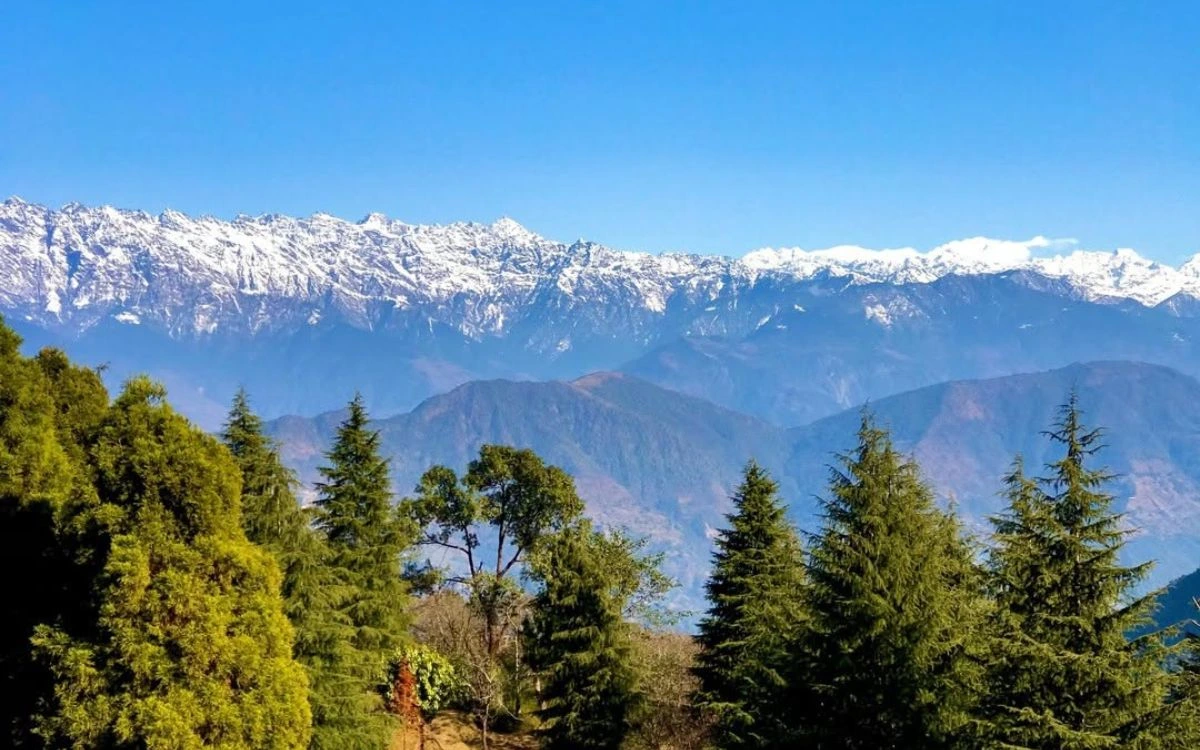
Why is there a national park on the edge of Kathmandu?
Water, first and foremost. The Bagmati and Bishnumati rivers, along with several smaller streams that feed the valley, rise inside this forest. The Sundarijal catchment on the eastern side of the park has supplied piped water to Kathmandu since the early twentieth century, and the reservoir there is still a working part of the municipal system. Protecting the forest protects the aquifer, the stream flow and the reservoir from siltation.
The area was managed as a protected watershed long before it became a park. Formal national park status arrived in 2002, when the area was gazetted as Shivapuri National Park, the ninth national park declared in Nepal. In 2009 the Nagarjun forest, an older royal reserve on the western rim above Balaju, was added and the combined area renamed Shivapuri Nagarjun National Park. Recreation and biodiversity are genuine benefits, but hydrology is the reason the boundary exists.
What wildlife lives this close to a city?
More than most residents expect. Common leopard is resident throughout the park and occasionally moves into the settlements along the boundary, which is the usual trigger for the leopard stories that appear in Kathmandu newspapers. Himalayan black bear is present in the higher forest, and jungle cat, civet, mongoose, yellow-throated marten and jackal are all recorded.
The regular ungulates are barking deer and wild boar, with goral on steeper ground. Rhesus macaque and Hanuman langur are common and highly visible, particularly near the temple sites and gates where people feed them, a practice that does the animals no favours. Pangolin occurs and is heavily threatened by trafficking. Clouded leopard has been reported from the park, though sightings are exceptional.
What makes this remarkable is proximity. A park boundary a short drive from a metropolitan area of millions still holding a resident large carnivore is unusual anywhere in Asia. It survives because the ridge is steep, the forest is continuous, and enforcement has kept firewood cutting and encroachment in check.
Is Shivapuri Nagarjun good for birdwatching?
It is the single best birding site within reach of central Kathmandu, and one of the most convenient in the country. Species lists for the park run to around three hundred, helped by the elevation spread from subtropical forest at the gates to temperate oak and rhododendron near the summit ridge.
Regulars include Kalij pheasant on quiet forest trails, spiny babbler, which is the only bird species endemic to Nepal and is found on scrubby slopes here, plus laughingthrushes, minivets, sunbirds, flycatchers, warblers, barbets, woodpeckers and several owl species. Winter brings altitudinal migrants down from the higher hills. Raptors including crested serpent eagle, mountain hawk-eagle and steppe eagle on passage use the ridge thermals. Serious birders who work the eastern lowlands at Koshi Tappu commonly pair it with a day or two on this ridge for the hill species.
| Entrance | Access from Kathmandu | Main destination | Approximate high point |
|---|---|---|---|
| Sundarijal | Northeast of the city, road to the reservoir | Chisapani, Helambu trail, Sundarijal waterfall | 2,300 m at Chisapani |
| Panimuhan, above Budhanilkantha | Directly north, short drive from Budhanilkantha temple | Shivapuri peak and Bagdwar, the Bagmati source | 2,732 m at Shivapuri peak |
| Tokha and Mulkharka side | North of Ring Road | Ridge forest trails and army camp route | Around 2,100 m |
| Nagarjun, at Balaju | Northwest, on the Trishuli road out of the city | Jamacho stupa and viewpoint | 2,128 m at Jamacho |
| Kakani side | Northwest, off the Trishuli road | Western ridge forest and Himalaya viewpoints | Around 2,000 m |
What are the best walks in the park?
Four routes cover most of what visitors want. The Shivapuri peak climb from the Panimuhan gate above Budhanilkantha is the hardest of the standard day walks, gaining well over a thousand metres to the 2,732-metre summit through oak and rhododendron, usually five to seven hours return. Bagdwar, the traditional source of the Bagmati river, sits on the same flank and can be combined with it.
The Jamacho circuit from the Nagarjun gate at Balaju is shorter, roughly three to four hours return to a stupa at 2,128 metres with a valley panorama and, on clear winter mornings, the Ganesh and Langtang ranges on the skyline. The Sundarijal to Chisapani walk crosses the eastern end of the park and is the classic first day of the Helambu circuit. The Sundarijal waterfall and reservoir walk is the easy option, suitable for families and short on climbing.
Entry permits are bought at the gate. Rates differ for Nepali citizens, SAARC nationals and other foreign visitors, so check the board on arrival rather than relying on figures published online. The park closes at dusk and overnight stays inside require prior arrangement.
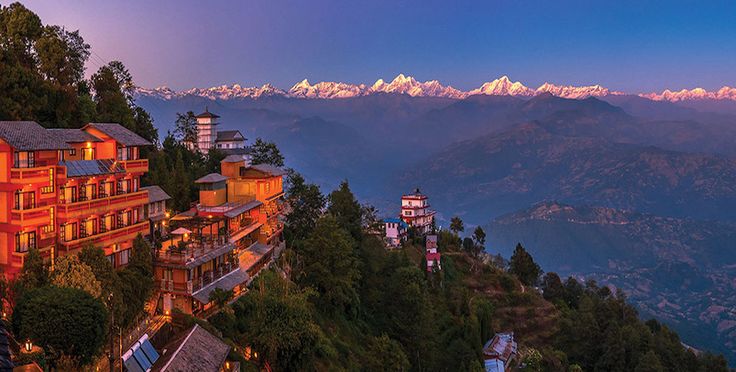
How does the park connect to longer treks?
Sundarijal is the traditional start of the Helambu circuit and of the longer walk north toward Gosaikunda and the Langtang valley. Walkers leave the road at the reservoir, climb through park forest to Chisapani at around 2,300 metres on the first afternoon, and are outside the park boundary by the following morning. That makes Shivapuri Nagarjun both a destination and a doorway.
It also functions as an acclimatisation and fitness site. Anyone with a big trek starting in a week can use the Shivapuri summit trail as a realistic test of load, boots and legs, at an altitude high enough to be useful without needing to leave the valley. Guides in Kathmandu routinely use it for exactly that.
When is the best time to visit Shivapuri Nagarjun National Park?
October to April is the broad season. October and November give the clearest air of the year and the best chance of a Himalayan skyline from the ridge. December to February is cold at dawn, occasionally frosty on the summit, but excellent for birding as altitudinal migrants arrive. March and April bring rhododendron flower on the upper slopes and rising bird activity ahead of the breeding season.
The monsoon from June to September turns the trails to mud, brings leeches into the forest, and hides the mountains behind cloud, though the forest itself is at its most alive and the waterfalls are full. Start early in any season. Cloud builds over the valley rim through the morning, and by midday the view has usually gone.
FAQ
How far is Shivapuri Nagarjun National Park from Kathmandu?
The nearest gates are on the city edge. Nagarjun at Balaju and Panimuhan above Budhanilkantha are both reachable in thirty to forty-five minutes from central Kathmandu outside peak traffic, and Sundarijal takes roughly an hour. No overnight stay is needed for any of the standard day walks.
How high is Shivapuri peak?
Shivapuri peak stands at 2,732 metres and is the highest point in the park, on the northern rim of the Kathmandu Valley. Jamacho, the high point of the Nagarjun section on the western side, is 2,128 metres.
Are there leopards in Shivapuri Nagarjun National Park?
Yes. Common leopard is resident and occasionally strays into settlements on the park boundary. Sightings by day hikers are very rare. Sensible practice is to walk in daylight, stay on marked trails, avoid walking alone at dusk and keep dogs out of the forest, since a free-roaming dog is a far more likely target than a person.
Do you need a permit to enter the park?
Yes, an entry permit is purchased at whichever gate you use, with different rates for Nepali, SAARC and other foreign visitors. Carry identification. Cycling is allowed on designated tracks and also requires a ticket, and drone flying inside the park requires separate authorisation.
Can you trek to Langtang from Shivapuri Nagarjun?
Not directly into the Langtang valley, but the Sundarijal gate is the standard starting point for the Helambu circuit and for the longer route north over Gosaikunda that joins the Langtang trekking region. Most walkers spend only the first afternoon inside the park before crossing the boundary at Chisapani.