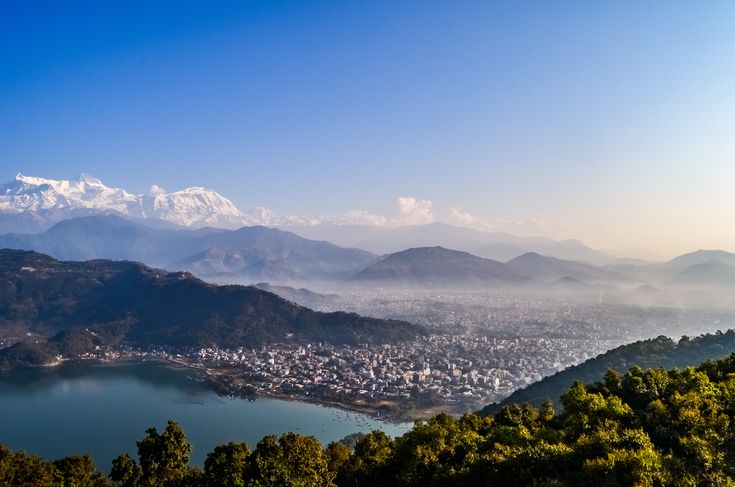
In 1957 Wilfrid Noyce and David Cox climbed to within about fifty metres of the summit of Machhapuchhre and stopped. Bad snow gave them a reason to turn around, but the expedition had also given an undertaking that nobody would set foot on the top. Nepal closed the mountain afterwards, and it has stayed closed. Machhapuchhre, at 6,993 m, is one of the most photographed mountains on earth, visible from every rooftop in Pokhara, and nobody has stood on it.
Nepal contains eight of the fourteen peaks above 8,000 m and well over a thousand summits above 6,000 m, of which only a few hundred have ever been opened to climbing permits. A handful of the rest are closed on purpose, because a community regards them as the residence of a deity. Many more are simply unvisited, sitting in districts that are hard to reach and have never attracted an expedition. Both categories are interesting, and they are not the same thing.
Why some mountains in Nepal are off limits
Across the Himalaya, high peaks are widely understood as the seats of deities rather than as objects. In Hindu tradition the mountains are associated with Shiva and Parvati and with the abode of the gods generally. In Tibetan Buddhist and Bon practice each valley has a yul lha, a territorial deity that resides in a specific summit and whose goodwill governs the weather, the harvest and the health of the livestock. Climbing that summit is not a neutral act. It is trespass.
Nepal handles this administratively. The Department of Tourism controls which peaks are open for expedition permits, the Nepal Mountaineering Association manages a separate list of smaller so-called trekking peaks, and mountains that are not on either list cannot legally be climbed. Machhapuchhre is the famous case, but it is not the only one. When new peaks are opened, which happens periodically, local consultation is part of the process precisely because opening a mountain over community objection creates problems that no permit fee resolves.
Machhapuchhre, the mountain nobody finished climbing
Machhapuchhre means fish tail, from the twin-summit profile visible from the east that collapses into a single spire when seen from Pokhara. It is sacred to Shiva, and the local Gurung communities of the Annapurna foothills regard it as inviolable. The 1957 British expedition, led by Jimmy Roberts, remains the only sanctioned attempt.
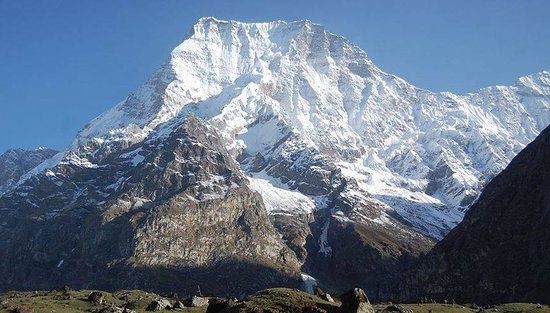
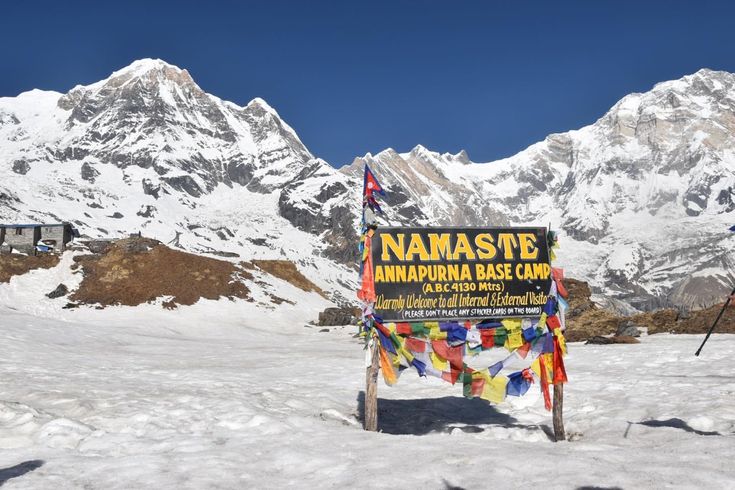
Trekkers get remarkably close to it without going near the summit. The Annapurna Base Camp trail runs up the Modi Khola directly beneath its walls and passes through Machhapuchhre Base Camp, a lodge settlement rather than a climbing camp. The sanctuary that the trail enters was itself traditionally treated as a sacred enclosure with restrictions on what could be carried in, and some of those conventions still hold in local practice.
Kanchenjunga and the last few metres
Kanchenjunga, at 8,586 m, is the third highest mountain in the world and the highest in Nepal after Everest. Its name is usually glossed as the five treasuries of the great snow, referring to its five summits, and it is deeply sacred in Sikkim on the Indian side.
When Joe Brown and George Band made the first ascent in 1955 they stopped a short distance below the true top, honouring an undertaking given to the Chogyal of Sikkim that the summit itself would remain untrodden. Remarkably, the convention has largely survived. Most expeditions since have observed it, which makes Kanchenjunga a strange hybrid: a fully climbed mountain with an unclimbed summit, and the clearest demonstration that mountaineering culture can accommodate a religious restriction when it decides to. The approach through the Kanchenjunga base camps in Taplejung is now a well-established trek in its own right.
The mountain gods of Khumbu and Solu
Khumbila, properly Khumbi Yul Lha, is the protector deity of the Khumbu and the mountain it inhabits, a 5,761 m peak above Khumjung that every Everest trekker walks past without noticing. It is closed, has never been climbed, and Sherpa residents are clear that it should not be. By local reckoning it outranks Everest in importance, whatever the altimeter says. Everest itself carries the name Chomolungma, the goddess mother, on the Tibetan side and Sagarmatha in Nepali, and pujas at base camp are addressed to the mountain as a being that grants or withholds passage.
Solu has its own equivalent in Numbur, known locally as Shorong Yul Lha, the protector of the Solu valleys. Gaurishankar, at 7,134 m on the Dolakha and Tibet frontier, is named for Shiva and Parvati and was long thought unclimbable as well as forbidden; it was eventually climbed in 1979, and access has remained tightly restricted since.
| Peak | Height | Region | Climbing status | Association |
|---|---|---|---|---|
| Machhapuchhre | 6,993 m | Annapurna, Kaski | Closed, never summited | Sacred to Shiva |
| Khumbila | 5,761 m | Khumbu, Solukhumbu | Closed, never climbed | Protector deity of the Khumbu |
| Kanchenjunga | 8,586 m | Taplejung | Climbed 1955, summit left untrodden by custom | Five treasuries of the great snow |
| Gaurishankar | 7,134 m | Dolakha | Climbed 1979, access heavily restricted | Shiva and Parvati |
| Numbur | 6,957 m | Solu, Solukhumbu | Rarely attempted | Protector deity of Solu |
| Api | 7,132 m | Darchula, Sudurpashchim | Climbed in 1960, seldom visited since | Local mountain deity of the far west |
The unclimbed peaks nobody has heard of
Beyond the sacred summits sits a much larger category: mountains that are unclimbed for no reason other than obscurity. The far west and the northern belt of Karnali Province hold hundreds of peaks between 6,000 and 7,000 m that have never had an expedition on them, in Dolpa, Mugu, Humla, Bajura and Darchula. Some have no agreed name. Access is the limiting factor. Getting a team and its equipment to a base camp in upper Dolpa or Humla can take longer than the climb itself, restricted-area permits add cost and paperwork, and there is no rescue infrastructure to speak of.
The far western massifs of Api and Saipal are the exception that shows what is there. Api Base Camp in Darchula sits under a genuinely serious 7,000 m mountain that sees a fraction of the traffic of an equivalent peak in the Khumbu, and the ridges around it hold objectives that would be famous if they were in the east of the country. Our guide to the Api and Saipal Himalaya covers the approaches in more detail.
Practical information for climbers and trekkers
Three things are worth knowing before planning anything. First, check the list. A peak that is not on the government expedition list or the trekking peak list is not climbable, and attempting it produces legal trouble and lasting damage to relations with the community below. Second, restricted areas including Upper Dolpa, Humla, Upper Mustang and Manaslu require permits arranged through a registered agency, and solo travel in them is not permitted. Third, expedition peaks come with liaison officer requirements, waste deposit rules and insurance obligations for all staff, which are conditions rather than suggestions.
Trekkers do not need any of that to see these mountains, and the viewing is often better from below than from a neighbouring col. Machhapuchhre from Pokhara at dawn, Khumbila from Khumjung, Gaurishankar from the Kalinchowk ridge and Api from the Darchula approaches are all straightforward. When you get to a village below a sacred peak, the useful behaviour is minimal: walk clockwise around chortens and mani walls, ask before flying a drone, and do not treat a mountain that a community regards as a deity as a personal objective simply because the ridge looks feasible.
FAQ
Which mountains in Nepal are unclimbed?
Machhapuchhre and Khumbila are the best known closed and unclimbed peaks. Beyond them, hundreds of summits between 6,000 and 7,000 m in Dolpa, Mugu, Humla and the far west have never been attempted, mostly because they are hard to reach.
Why is Machhapuchhre closed to climbers?
It is sacred to Shiva and to the Gurung communities around the Annapurna foothills. After the 1957 expedition stopped short of the summit, the Nepali government closed the mountain to climbing and has kept it closed.
Has anyone stood on the summit of Kanchenjunga?
By convention, no. The 1955 first ascent team stopped a few metres below the top out of respect for Sikkimese religious belief, and most expeditions since have followed that practice.
Can I get a permit for a peak that is not on the official list?
No. Only peaks opened by the Department of Tourism or listed by the Nepal Mountaineering Association can be climbed legally. New peaks are added periodically, usually after consultation with the communities below them.
Where can I see these sacred peaks without climbing?
Pokhara and the Annapurna Sanctuary trail for Machhapuchhre, Khumjung and Namche for Khumbila, the Kanchenjunga trek in Taplejung for the eastern giants, and the Darchula approaches for Api in the far west.