
Parsa National Park protects roughly 627 square kilometres of Churia hill forest in central Nepal, directly east of Chitwan, and was upgraded from wildlife reserve to full national park status in 2017 after 33 years as the largest wildlife reserve in the country. It holds one of the most reliable wild Asian elephant populations in central Nepal and counted 41 tigers in the 2022 national survey, more than double the 18 recorded in 2018. Almost nobody visits it, which for a certain kind of traveller is the entire attraction.
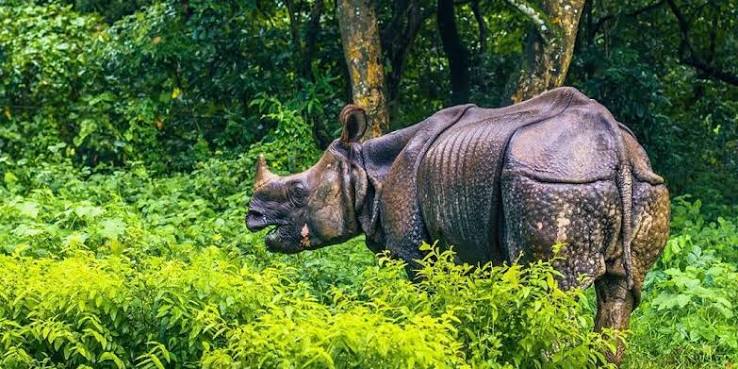
Where is Parsa National Park?
The park spans parts of Parsa, Bara and Makwanpur districts, straddling the boundary of Madhesh and Bagmati provinces. It sits on the Churia range, the outermost and youngest fold of the Himalaya, with elevations running from about 435 metres on the southern plain to around 950 metres on the ridge tops. The western boundary meets Chitwan National Park, and to the south the Indian border brings it within the same forest block as Valmiki Tiger Reserve in Bihar.
Parsa was gazetted in 1984 as a wildlife reserve covering 499 square kilometres. An extension of about 128 square kilometres was added in 2015, taking the total to roughly 627 square kilometres, and national park status followed in 2017. A buffer zone of a further 285 square kilometres surrounds the core, where communities hold managed use rights and receive a share of park income.
What defines the park ecologically is water, or the lack of it. The Churia here is porous conglomerate and sandstone. Monsoon rain sinks straight through, so most streams inside Parsa are seasonal and the dry months leave animals dependent on a limited number of pools and managed water holes. That single fact shapes where wildlife is found from March onwards.
How is Parsa different from Chitwan?
The two parks share a boundary and a tiger population, but they are not the same kind of place. Chitwan is a floodplain park of tall grass and slow rivers. Parsa is a hill forest park. The table below sets the differences out plainly.
| Feature | Parsa National Park | Chitwan National Park |
|---|---|---|
| First protected | 1984, as a wildlife reserve | 1973, as the first national park in Nepal |
| Current status | National park since 2017 | National park and UNESCO World Heritage Site since 1984 |
| Core area | About 627 square kilometres | About 952 square kilometres |
| Tigers in the 2022 survey | 41 | 128 |
| Dominant terrain | Churia hills, sal forest, seasonal streams | Alluvial floodplain, tall grassland, riverine forest |
| Visitor pressure | Very low | The busiest park in Nepal |
The practical consequence is that Parsa is harder to watch wildlife in. Forest cover is thicker, sightlines are shorter and there is no wide grassland where a tiger can be picked up at three hundred metres. What Parsa gives you instead is solitude, better forest birding and a far higher chance of encountering wild elephants without a crowd of jeeps arriving behind you. If you want the classic Terai safari, go and read the Chitwan National Park guide first, then decide.
What animals live in Parsa National Park?
Tiger and leopard are both resident, with the tiger count rising sharply between the last two national surveys. Sloth bear are unusually common here and Parsa has long been considered one of the better places in Nepal to see one, particularly in the early morning where termite mounds cluster on open slopes. Dhole, the Asiatic wild dog, hold on in small packs. Striped hyena, jungle cat, leopard cat and civets fill out the carnivore list.
Herbivores include spotted deer, sambar, barking deer, four-horned antelope, nilgai, wild boar and gaur, the last of these an enormous forest bovid that is genuinely uncommon and worth the trip on its own. Rhesus macaque and grey langur are everywhere along the tracks.
Bird life is strong and under-recorded, with well over 300 species logged inside the park. Giant hornbill, several species of woodpecker and the paradise flycatcher are among the birds people come for, and the Churia ridges carry a good spring raptor passage. Because so few birders work Parsa compared with Chitwan or Koshi, any careful list you make here has genuine value.
Why does Parsa matter for wild elephants?
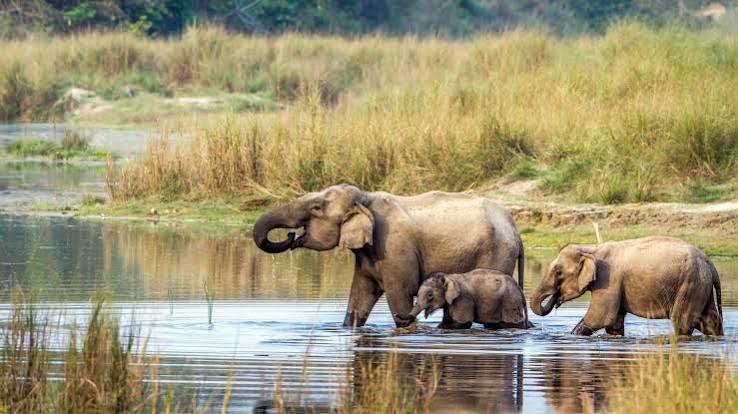
Parsa is one of the few places in central Nepal with a regular wild elephant presence rather than an occasional one. Herds and bull groups move between the park, Chitwan to the west and Valmiki Tiger Reserve across the Indian border to the south, using forest links that are steadily being squeezed by settlement, road building and cultivation along the Churia foothills.
That movement is the reason the park exists in its current form and also the source of its hardest problem. Elephants leaving forest for ripening maize and paddy in Bara and Parsa districts cause severe crop damage, and human deaths from elephant encounters are a recurring tragedy across this belt of the Terai. Electric fencing, watchtowers and community response teams are all in use in the buffer zone, with mixed results. A visitor here is looking at a live conservation problem, not a settled one.
When is the best time to visit Parsa?
The window is October to May, and the two halves of it behave very differently. From October to February the weather is cool and pleasant, the forest is green, birding is at its best and driving conditions are easy. Mornings can be foggy on the plain in December and January, which delays starts but makes for atmospheric forest.
March to May is hot and increasingly uncomfortable, but it is the serious wildlife season. As seasonal streams dry out, animals concentrate on the remaining water and predictable viewing becomes possible at waterholes for the first time all year. April is the month most guides would pick for a sloth bear or a tiger. The monsoon from June to September closes tracks, floods the southern approaches and effectively ends the season.
How do you get to Parsa National Park?
The park headquarters is at Adhabhar, on the highway between Hetauda and Birgunj, which makes access unusually easy for a park this quiet. Birgunj, the main border town with India, is a short drive to the south. Simara airport, close to the park in Bara district, takes short daily flights from Kathmandu that last around twenty minutes and cut out the long descent from the hills.
By road from Kathmandu the drive takes roughly five to six hours via Hetauda. From Chitwan it is a comfortable two to three hours east, which is why the two parks combine so naturally. Entry permits are issued at the park office, a licensed guide is required, and jeep safaris and guided walks are the main way visitors move inside the park. Fees are revised periodically, so check the current rate rather than trusting an older figure online.
Is Parsa worth visiting if you have already done Chitwan?
Yes, if you enjoy forest rather than spectacle. Parsa rewards people who like walking, birding and the odds of a genuinely unexpected animal. It frustrates people who want a checklist filled by lunchtime. Accommodation is limited to a handful of buffer-zone lodges and homestays plus hotels in Birgunj and Hetauda, so book ahead and keep expectations modest.
The strongest case for Parsa is as the second stop on a wider eastern loop. Pair it with Chitwan for contrast, or run east along the highway towards the wetlands and birding of Koshi Tappu Wildlife Reserve for a trip that covers hill forest, floodplain and river island habitats in a single week.
FAQ
Is Parsa National Park part of Chitwan?
No. They are separate protected areas with separate administrations, although they share a boundary and function as one ecological unit for tigers and elephants. Parsa was managed as a wildlife reserve from 1984 and became a national park in its own right in 2017.
Can you see tigers in Parsa National Park?
Tigers are present and increasing, with 41 counted in the 2022 national survey against 18 in 2018. Sightings remain difficult because the habitat is closed hill forest rather than open grassland. Your realistic chances improve sharply in April and May when animals are tied to shrinking water sources.
How do you get to Parsa from Kathmandu?
Drive south through Hetauda in roughly five to six hours, or take a short flight to Simara airport in Bara district and continue by road. The park headquarters at Adhabhar sits on the Hetauda to Birgunj highway, so the final approach is straightforward in any vehicle.
Are there elephant-back safaris in Parsa?
Jeep safaris and guided walks are the standard way to see the park. Nepali parks and most responsible operators have moved away from elephant-back tourism over the past decade on welfare grounds, and you should not expect or request it here.
Do you need a guide to enter Parsa National Park?
Yes. Entry requires a permit and a licensed guide, and this is not a formality. The park holds sloth bear, gaur and wild elephants in thick cover where visibility can drop to a few metres, and walking unaccompanied would be dangerous as well as against the rules.