Nepal holds eight of the world’s fourteen 8,000-metre mountains and, behind them, dozens of summits between 7,000 and 8,000 metres. The highest of these are Annapurna II at 7,937 metres, Himalchuli at 7,893 metres and Nuptse at 7,861 metres, each of them taller than any mountain outside Asia. This is the quietest band in Himalayan climbing: several of these peaks have had fewer total ascents than Everest receives in a single morning.
How many 7,000-metre peaks does Nepal have?
There is no single agreed number, and anyone quoting one precisely is glossing over a real problem. The difficulty is that Himalayan massifs throw off subsidiary summits, and whether a given high point counts as a separate mountain depends on the prominence threshold you apply. Annapurna alone produces four summits over 7,400 metres. Dhaulagiri produces five. Under a strict prominence rule the count is modest; under a loose one it runs into the hundreds.
What is not in dispute is the scale of the resource. Nepal has more independent 7,000-metre summits than any country except China, they are distributed the entire length of the country from Kanchenjunga in the east to Api and Saipal in the far west, and a substantial number have been climbed only a handful of times. A meaningful fraction remain closed or effectively unvisited because access is hard and there is no commercial demand.
Which are the highest 7,000-metre peaks in Nepal?
The table below lists the significant independent summits in the band, with the massif each belongs to and the first ascent where it is well documented. Heights follow the values in general use; several are still debated to within a few metres and a human editor should verify them against the Nepal survey figures before publication.
| Peak | Height | Massif or range | First ascent | Note |
|---|---|---|---|---|
| Annapurna II | 7,937 m | Annapurna Himal | 1960, British and Nepali team led by Jimmy Roberts | Highest 7,000er in Nepal, rarely repeated |
| Himalchuli | 7,893 m | Mansiri Himal, near Manaslu | 1960, Japanese expedition | Huge and complex, very few ascents |
| Ngadi Chuli | 7,871 m | Mansiri Himal | Contested, long known as Peak 29 | One of the least-climbed high peaks on earth |
| Nuptse | 7,861 m | Khumbu, Everest massif | 1961, British expedition | Forms the south wall of the Western Cwm |
| Dhaulagiri II | 7,751 m | Dhaulagiri Himal | 1971, Austrian expedition | First of a chain of Dhaulagiri satellites |
| Kumbhakarna (Jannu) | 7,710 m | Kanchenjunga Himal | 1962, French expedition led by Lionel Terray | The north face is a landmark hard route |
| Annapurna III | 7,555 m | Annapurna Himal | 1961, Indian expedition | The unclimbed southeast ridge is a famous problem |
| Ganesh Himal I | 7,422 m | Ganesh Himal | 1955, Franco-Swiss party | Dominates the skyline north of Kathmandu |
| Langtang Lirung | 7,227 m | Langtang Himal | 1978, Japanese expedition | The peak that towers over the Langtang valley |
| Pumori | 7,161 m | Khumbu | 1962, German and Swiss party | Named by George Mallory, visible from Kala Patthar |
| Api | 7,132 m | Gurans Himal, far west | 1960, Japanese expedition | Highest peak in Sudurpashchim Province |
| Baruntse | 7,129 m | Mahalangur, near Makalu | 1954, New Zealand expedition | The most commercially climbed 7,000er in Nepal |
Which 7,000-metre peaks do climbers actually attempt?
A short list carries almost all the traffic. Baruntse, 7,129 metres, sits between Makalu and Everest and was first climbed in 1954 by a New Zealand party on the expedition Edmund Hillary led that year. Its southeast ridge is a reasonable snow and ice route with no serious rock, which makes it the standard commercial 7,000er and the usual next step for climbers coming off Mera Peak. Himlung Himal, 7,126 metres, on the Nepal side of the border north of Manang, opened to climbing in the early 1990s and has become the other reliable commercial objective, valued for a relatively safe route and a genuinely remote setting.
Putha Hiunchuli, 7,246 metres, the western end of the Dhaulagiri chain, was first climbed in 1954 by J. O. M. Roberts and Ang Nyima and remains one of the more approachable big peaks in the country. Pumori, 7,161 metres, is climbed regularly from the Khumbu, though avalanche conditions on the south face have made it far less popular than it once was. Beyond these, the traffic thins fast. Ngadi Chuli, Himalchuli and Annapurna II see attempts measured in single figures per decade.
What is in the far west?
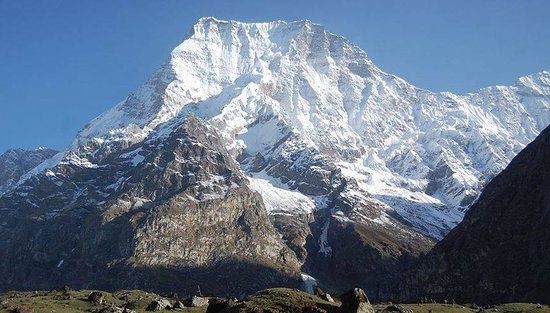
Far-western Nepal holds two major peaks that almost no visitor sees. Api, 7,132 metres, in Darchula District close to the Indian and Tibetan borders, was first climbed in 1960 by a Japanese expedition. Saipal, 7,031 metres, stands to its east in Bajhang District. Together they form the Gurans Himal, the westernmost significant range in Nepal, and both are effectively invisible in the national climbing conversation because the approach is long and the infrastructure is thin.
That is changing slowly. The Api Base Camp trek has emerged as one of the most rewarding walks in the country for anyone willing to trade tea-house comfort for solitude, passing through Byas and Chhangru country and ending under a face that few outsiders have photographed. If you want a Himalayan basecamp with no other parties on it, this is where to go.
Which 7,000-metre peaks can you see without climbing?
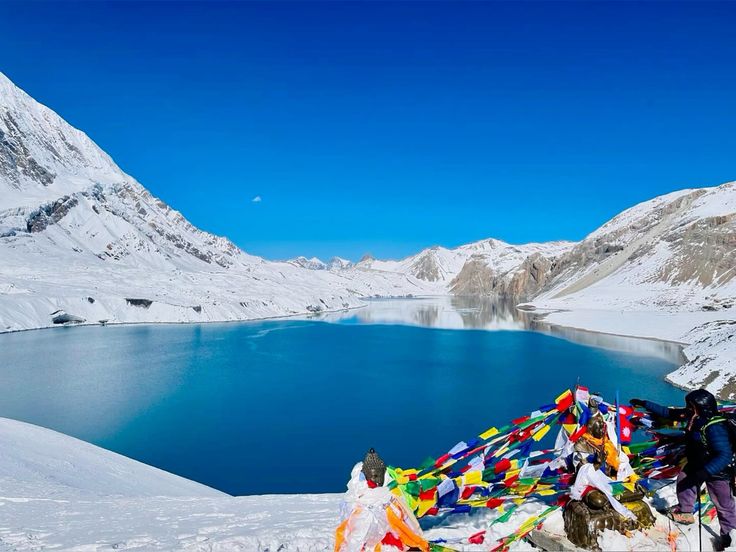
Several of the best are trailside. Langtang Lirung, 7,227 metres, hangs directly over the Langtang valley and is arguably the most dramatic single mountain-to-trail relationship in Nepal, visible for days on a trek that starts within a morning of Kathmandu. Tilicho Peak, 7,134 metres, forms the wall behind Tilicho Lake, one of the highest large lakes in the world at around 4,900 metres.
The Annapurna Circuit is the single best 7,000-metre viewing corridor in the country. Walking from Manang toward Thorong La you look across at Annapurna II, Annapurna III, Annapurna IV at 7,525 metres and Gangapurna at 7,455 metres in one sweep, and Chulu and Pisang stand behind you. Nowhere else puts so many mountains of this size within a single day of walking.
Why is Machhapuchhre still unclimbed?
Machhapuchhre, 6,993 metres, falls just short of the 7,000-metre line but belongs in any discussion of Nepali peaks that matter more than their height. In 1957 a British expedition reached a point close below the summit and stopped, honouring an undertaking not to set foot on the top. The mountain has been closed to climbing ever since, and the closure has held. It is sacred to Shiva in local tradition, and the fish-tail profile above Pokhara is the most recognisable mountain silhouette in Nepal precisely because nobody has ever stood on it.
What does it take to climb a 7,000-metre peak?
More than a trekking peak and less than an 8,000-metre mountain, but closer to the latter than most people assume. These are expedition peaks: the permit comes from the Department of Tourism, a royalty applies, and the trip is run as an expedition with base camp, two or three higher camps and a multi-week weather window rather than as a summit day bolted onto a trek. Budget four to five weeks for Baruntse or Himlung Himal.
The physiological demand is the real gate. Above 7,000 metres you are in the zone where acclimatisation stops improving and slow deterioration begins, which is why summit pushes from a camp near 6,800 metres are long and unforgiving. Most parties climb these peaks without supplementary oxygen, so genuine altitude experience at 6,000 metres or above is the honest prerequisite. Fixed-line technique, crevasse rescue, competence in a storm and the willingness to turn round are all non-negotiable. Royalty and permit rules change between seasons; confirm current requirements with the Department of Tourism before committing to a budget.
Why do these mountains stay empty?
Commercially, the 7,000-metre band is caught in the middle. It is far too hard for the trekking market and carries none of the prestige that sells 8,000-metre permits, so operators have little reason to develop routes on it and climbers have little reason to ask for them. The result is a strange inversion: mountains bigger than anything in the Andes, Alaska or the Caucasus sit unclimbed for years at a time while queues form on the standard routes a valley away.
For anyone who cares about the experience rather than the summit list, that is the opportunity. A first or second ascent of a route is still available in Nepal at a scale that no longer exists anywhere else, and the trekking approaches to these peaks pass through country that has never been shaped by tourism.
FAQ
What is the highest 7,000-metre peak in Nepal?
Annapurna II at 7,937 metres, part of the Annapurna Himal in central Nepal, first climbed in 1960 by a British and Nepali team led by Jimmy Roberts. It falls only about 60 metres short of the 8,000-metre threshold and is climbed far less often than any of the eight 8,000-metre peaks in Nepal.
Which 7,000-metre peak in Nepal is easiest to climb?
Baruntse at 7,129 metres and Himlung Himal at 7,126 metres are the two most commonly offered commercially, both on snow and ice routes without sustained technical rock. Easiest is relative: both are full expeditions of four to five weeks requiring prior experience above 6,000 metres.
Is a 7,000-metre peak harder than an 8,000-metre peak?
Often, technically, yes. Many 7,000-metre peaks have steeper routes, no fixed ropes, no established camps and no rescue infrastructure, whereas the standard 8,000-metre routes are heavily prepared. What the 8,000ers add is the extreme altitude of the death zone, which is a different and more absolute problem.
Can you see 7,000-metre peaks on a normal trek?
Yes. Langtang Lirung at 7,227 metres stands directly over the Langtang valley, Tilicho Peak at 7,134 metres rises above Tilicho Lake, and the Annapurna Circuit between Manang and Thorong La gives close views of Annapurna II, III and IV plus Gangapurna in a single day of walking.
Why has Machhapuchhre never been climbed?
The 1957 British expedition stopped short of the summit by agreement, and the mountain has been closed to climbing since. It is regarded as sacred, and the closure has been maintained, which makes the 6,993-metre fish-tail above Pokhara the most famous untrodden summit in Nepal.