
Halesi Mahadev is a complex of limestone caves in Khotang District in eastern Nepal, worshipped by Hindus as a self-manifested seat of Shiva and by Tibetan Buddhists as Maratika, the cave where Guru Padmasambhava and the princess Mandarava are held to have gained the accomplishment of long life. Three main caverns are cut into a ridge standing above the Dudh Koshi and Sun Koshi rivers at roughly 1,500 metres. The site draws its heaviest crowds at Maha Shivaratri in February or March, at Ram Navami in March or April, and at Bala Chaturdashi in November or December.
Why is Halesi called the Pashupatinath of the East?
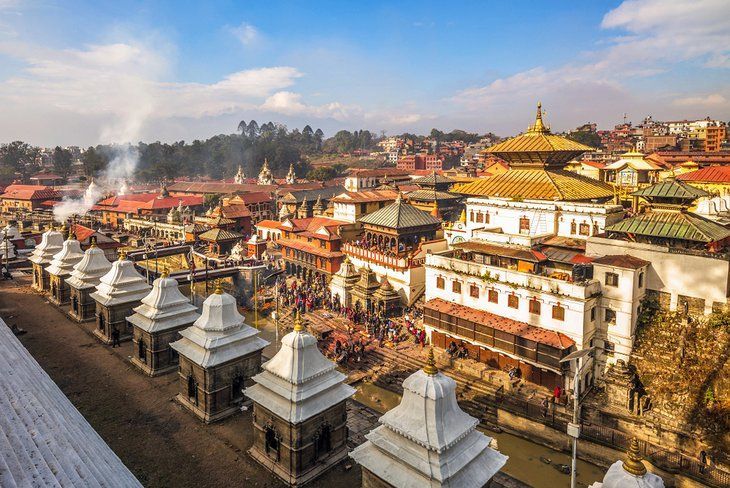
The nickname is a claim about rank, not about architecture. Pashupatinath in Kathmandu is the paramount Shiva shrine of Nepal, a pagoda temple on the Bagmati with a fixed priesthood and a fixed liturgy. Halesi has none of that formality. It is a cave, and the object of worship is the rock itself: a natural stone form inside the main cavern that pilgrims treat as a swayambhu lingam, a Shiva that placed itself rather than one that was carved and installed.
What the two sites share is the belief that Shiva was physically present. The Halesi tradition holds that Shiva took refuge in this hill while fleeing the demon Bhasmasur, who had been granted the power to reduce to ash anyone whose head he touched. The three caves are read as the chambers Shiva passed through. That narrative gives Halesi a status in eastern Nepal that no other shrine east of the Kathmandu Valley approaches, and it is why families from Khotang, Udayapur, Okhaldhunga and the eastern Terai treat a Halesi visit as a duty rather than an excursion.
The comparison is worth resisting once you arrive. Pashupatinath is urban, dense and processional. Halesi is a ridge in the middle hills with terraced fields below it, a small bazaar, a scatter of dharamsalas and a monastery. The experience is quieter, more physical and considerably more remote.
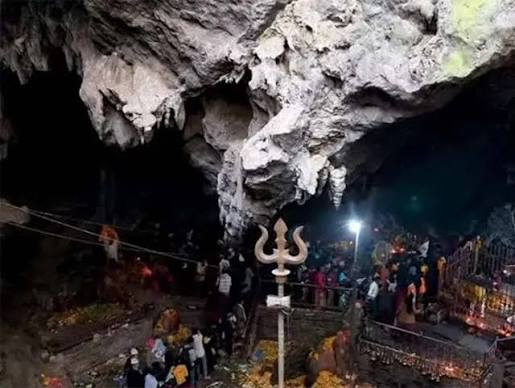
What are the three caves at Halesi Mahadev?
The main cave is the Mahadev cave, entered down a flight of steps cut into the rock. It is a genuine cavern, high enough to stand in and wide enough to hold a substantial crowd on a festival night, lit by butter lamps and by whatever daylight reaches the mouth. The stone lingam sits toward the rear. Pilgrims pour water and milk, offer bel leaves, and touch the rock directly, which is rare at major Nepali shrines and is one of the reasons Halesi feels different.
Two narrow openings in the roof of the main cave carry the names that everyone repeats: one is described as the gate of heaven and the other as the gate of hell. The tradition is that anyone free of serious wrongdoing can squeeze through the first. The passages are tight, the rock is polished by centuries of shoulders and the crawl is not for anyone with a bad back or a fear of enclosed spaces. Nobody is obliged to attempt it.
The second cavern is the Basaha or Nandi cave, associated with the bull that serves as the vehicle and gatekeeper of Shiva. The third is the Basundhara cave, linked to the earth goddess and to prosperity. All three are close together on the same rock outcrop, and a complete circuit on an ordinary day takes an hour or two at an unhurried pace. On Shivaratri it can take much longer, because the queue for the main cave becomes the whole event.
Why do Buddhists call Halesi Maratika?
To Tibetan, Sherpa and Nepali Buddhists the same caves are Maratika, one of the most important pilgrimage sites in the Himalaya outside Tibet. The tradition holds that Guru Padmasambhava, the eighth-century master credited with establishing Buddhism in Tibet, practised here with his consort Mandarava and received the blessing of Amitayus, the Buddha of boundless life. Maratika is therefore the long-life cave, and practitioners come specifically for long-life empowerments and for retreat.
A monastery stands beside the caves and Buddhist visitors circumambulate, hang prayer flags and leave khata scarves where Hindu pilgrims leave vermilion and bel leaves. The two devotional systems run in parallel on the same rock without much friction, which is normal in Nepal but still striking to see at close quarters. The Kirat Rai communities of the surrounding hills, whose ancestral territory this is, hold the site sacred on their own terms as well.
If you have already visited Boudhanath in Kathmandu you will recognise the practice culture immediately: the same clockwise walking, the same mantra, the same rhythm of prostration. What you will not find is Boudhanath scale. Maratika is small, and much of the year it is nearly empty.
When is the best time to visit Halesi Mahadev?
October to April is the practical window. The monsoon, from mid June to mid September, makes the approach roads unreliable and the ridge is often in cloud. If your interest is the atmosphere of mass pilgrimage, go for a festival and accept the crowds. If your interest is the caves themselves, go on an ordinary weekday between October and December, when the air is clear enough to see the Himalayan skyline north of the ridge.
| Occasion | Nepali month | Usual Gregorian window | What happens at Halesi | Crowd level |
|---|---|---|---|---|
| Maha Shivaratri | Falgun | Late February to early March | Night-long vigil, continuous queues into the Mahadev cave, fasting, bel leaf and milk offerings | Heaviest of the year |
| Ram Navami | Chaitra | Late March to mid April | Multi-day fair on the ridge with music, stalls and pilgrims camping in the open | Very heavy |
| Bala Chaturdashi | Mangsir | Late November to early December | Night vigil and the scattering of satbij, seven kinds of seed, on behalf of the dead | Heavy |
| Mondays in Shrawan | Shrawan | Mid July to mid August | Weekly Shiva worship, almost entirely Nepali pilgrims, monsoon conditions on the roads | Moderate |
| Teej | Bhadra | Late August to September | Women fasting and singing for Shiva, red saris across the whole site | Moderate |
| Buddhist retreat season | Magh to Falgun | January to March | Tibetan and Sherpa practitioners at Maratika, long-life empowerments and group retreats | Light to moderate |
How do you get to Halesi from Kathmandu?
Halesi sits in Halesi Mahadev Municipality in Khotang District, in Koshi Province. The standard approach is by road and it is a long day. Most vehicles leave Kathmandu on the B. P. Highway through Dhulikhel and Sindhuli, drop to the Sun Koshi valley and then climb the ridge to the shrine. Allow ten to twelve hours in a private vehicle and longer on a public bus, with an overnight stop a reasonable option if you are travelling with elderly relatives.
A second route runs east along the Mahendra Highway across the Terai and then turns north into the hills, which suits travellers already in the eastern lowlands after a wildlife trip. There are small airstrips in the region, including Lamidanda in Khotang and Rumjatar in Okhaldhunga, but scheduled services to these fields are irregular and weather dependent. Do not build an itinerary around them without confirming that flights are actually operating.
Accommodation on the ridge is basic: pilgrim lodges, dharamsalas and a handful of simple guesthouses in the bazaar. Rooms disappear entirely during Shivaratri and Ram Navami, when many pilgrims sleep outdoors. Book ahead for festival dates or plan to stay lower down and travel up for the day.
What should you know before you go?
Remove your shoes before entering the caves and carry a pair of socks if the stone is cold. Leather items are unwelcome at the shrine, as at most Shiva temples in Nepal. Dress modestly, cover your shoulders and knees, and expect to be asked to leave bags outside the narrow passages. Photography rules vary by cave and by day, so ask rather than assume, and never photograph inside during active worship without permission.
Bring a torch. The caves are lit unevenly and the floor is wet and slippery in places, particularly after rain. Carry small denomination notes for offerings and for the priests who perform puja, take your own water, and plan on very limited mobile signal on the descent to the river. If you plan to attempt the roof passages, do it early in the day when the queue is short, and do not attempt them at all if you are claustrophobic.
Halesi combines naturally with a wider eastern circuit. Many Nepali families link it with Devghat or with a Kathmandu Valley temple round, and trekkers heading toward the Solu hills sometimes add it at the start or the end of a walking itinerary.
Is Halesi worth the journey for a non-pilgrim?
Yes, with a caveat about expectations. There is no great architecture at Halesi and no museum framing. What there is instead is one of the clearest examples anywhere in Nepal of a single natural feature carrying two complete religious traditions at once, in active use, with no partition between them. For anyone interested in how Himalayan religion actually works rather than how it is presented in guidebooks, that is a stronger subject than another courtyard of carved struts.
The setting helps. The ridge looks north across a deep river landscape toward the snow line, the middle-hill farmland around it is beautiful in the post-monsoon months, and the walk between the caves is genuinely pleasant. Give the site a full day. Arriving at midday after twelve hours in a vehicle and leaving at three in the afternoon wastes the effort of getting there.
FAQ
How long does it take to reach Halesi Mahadev from Kathmandu?
Allow ten to twelve hours by private vehicle on the B. P. Highway route through Sindhuli, and longer by public bus. Many pilgrims break the drive with an overnight stop. Small airstrips exist at Lamidanda and Rumjatar, but scheduled services are irregular and should never be the only plan.
Can non-Hindus enter the caves at Halesi?
Yes. Unlike the inner sanctum at Pashupatinath, the Halesi caves are open to visitors of any faith, which is part of why the site is shared so completely with Buddhist practitioners. Standard temple etiquette applies: no shoes, no leather, modest dress and no interruption of an ongoing puja.
What is the difference between Halesi and Maratika?
They are the same place under two names. Halesi Mahadev is the Hindu name, referring to the Shiva shrine in the main cave. Maratika is the Buddhist name, referring to the cave where Guru Padmasambhava and Mandarava are said to have received the long-life blessing of Amitayus.
When is the busiest time at Halesi Mahadev?
Maha Shivaratri, in late February or early March, is the single heaviest occasion, followed by the Ram Navami fair in late March or April. Both fill every lodge on the ridge and produce long queues into the main cave. Visit on an ordinary weekday between October and December for a quiet experience.
Is Halesi suitable for elderly visitors?
The approach to the main cave is by stone steps and the floor inside is uneven and often wet, so a companion and a torch are sensible. The narrow roof passages are optional and should be skipped by anyone with limited mobility or claustrophobia. The rest of the site can be visited slowly without difficulty.