Dhorpatan Hunting Reserve is the only protected area in Nepal where licensed hunting is permitted, covering 1,325 square kilometres of high country across Baglung, Myagdi and Eastern Rukum districts. It was established in 1983 and formally gazetted as a hunting reserve in 1987, and it is managed for two game species above all, blue sheep and Himalayan tahr, on the principle that fee-paying hunters fund conservation of the wider landscape. Whether that principle works in practice is genuinely contested, and this article sets out both the model and the objections to it.
What is Dhorpatan Hunting Reserve?
Dhorpatan sits south of the Dhaulagiri massif in western Nepal, in a band of country most travellers pass by entirely. Elevations start around 2,850 metres in the main valley and climb to 7,246 metres at the summit of Putha Hiunchuli on the northern skyline. Between those two extremes the reserve carries blue pine, fir, birch, hemlock and rhododendron forest, then open alpine pasture above the treeline.
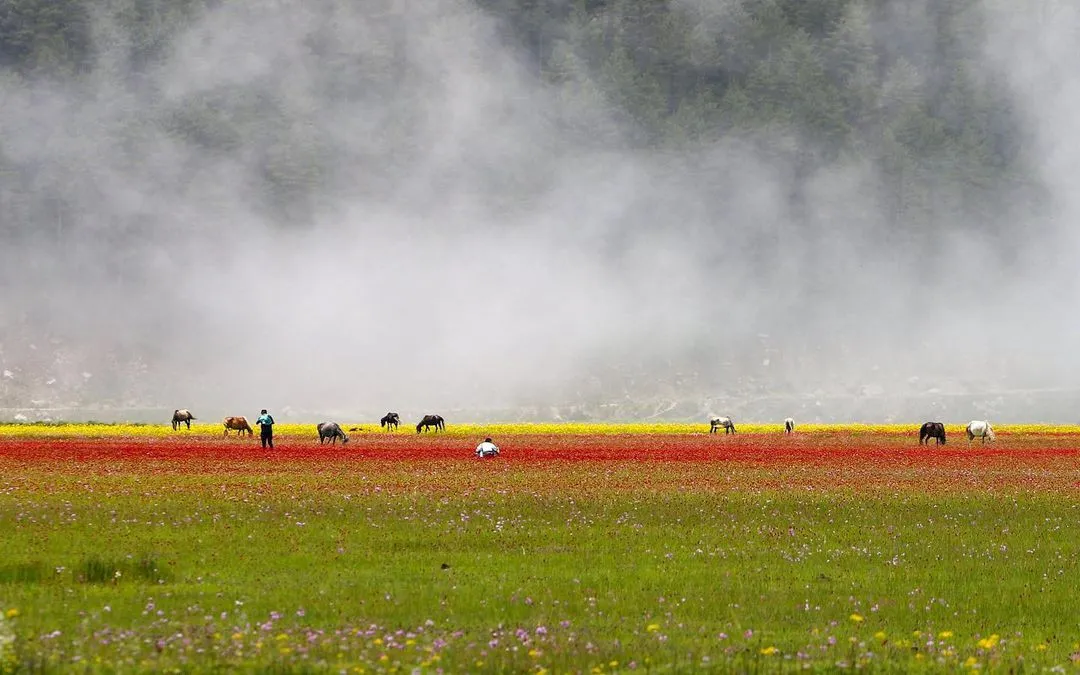
The reserve is divided into seven hunting blocks, which are worked on a rotation so that individual blocks are rested between seasons. The Dhorpatan valley itself is a broad flat pasture used for centuries as summer grazing by Kham Magar herding communities, and it also holds a Tibetan refugee settlement established in the 1960s. This is not empty wilderness. It is a working landscape with permanent human interests in it, which is central to everything that follows.
Wildlife in the reserve goes well beyond the game species. Snow leopard, Himalayan black bear, musk deer, red panda, wolf, leopard and Himalayan monal, the national bird of Nepal, all occur here. Several of these are strictly protected and may not be hunted under any licence.
How is regulated hunting supposed to work in Dhorpatan?
The stated logic is straightforward. A limited number of hunters pay substantial sums for the privilege of taking a designated game animal. That money funds reserve staff, anti-poaching patrols, population monitoring and a share for local development. Because the animals are worth more alive as a renewable resource than dead as poached meat, local people gain a reason to protect them, and the wider ecosystem, including species that are never hunted, benefits from the funded protection.
That is the theory. The table below places each element of the model against the criticism most often made of it. Note that no figures for quotas, fees or licence costs appear anywhere in this article by design. They are set by regulation, they are revised, and any number you read on a third-party website may be years out of date.
| Element of the model | How it is meant to work | The criticism |
|---|---|---|
| Licensed hunting | A limited number of permits are sold for designated game species in designated blocks and seasons | Setting a defensible number requires current population data, which critics say has often been thin or out of date |
| Revenue for conservation | Permit and trophy income funds reserve staff, patrols and monitoring | The income is small and irregular against the cost of policing 1,325 square kilometres of remote high country |
| Community benefit sharing | A share of reserve income is returned to local development and buffer communities | Residents and researchers have repeatedly questioned how much actually reaches households, and how visibly |
| Block rotation | Seven blocks are hunted on rotation so each is rested between seasons | Rotation only helps if both the rest period and the offtake are enforced on the ground across difficult terrain |
| Selective offtake | Older male animals past breeding prime are supposed to be the target, leaving breeding stock intact | Blue sheep are the principal prey of the snow leopard, so removing large animals is argued to affect a protected predator |
| Supervision | Hunts are accompanied by reserve staff and licensed outfitters | Compliance in remote blocks is hard to verify, and poaching of protected species remains a documented problem |
Which animals may be hunted and which are strictly protected?
Blue sheep, known locally as naur, and Himalayan tahr are the designated game species. Blue sheep occupy the open alpine pasture and scree above the treeline, while tahr favour steep broken ground on the forest edge. Certain game birds have also been included in the licensing framework at various times.
Everything else is off limits. Snow leopard, musk deer, red panda and the Himalayan monal are protected species and may not be taken under any circumstances. Killing them is a wildlife crime whether or not the person holds a hunting licence for something else.
The species list, the seasons, the blocks opened in any given year and the entire licensing framework are set by the Department of National Parks and Wildlife Conservation and revised from time to time. Anyone contemplating a legal hunt must confirm the current rules directly with the department rather than relying on any secondary source, including this one.
What is the criticism of the Dhorpatan model?
The objections fall into three groups, and they are not the same argument.
The first is technical. Sustainable offtake depends on knowing how many animals there are, how they are distributed and how fast they recruit. Researchers have argued for years that census work in Dhorpatan has been intermittent and methodologically uneven, which makes any quota difficult to defend on evidence. Add the practical difficulty of policing seven blocks spread across 1,325 square kilometres of steep country with limited staff, and the gap between the model on paper and the model on the mountain becomes the central issue.
The second is ecological. Blue sheep are the main wild prey of the snow leopard across its Nepali range. Critics argue that removing mature animals from a prey population that a protected predator depends on is difficult to square with the reserve also being snow leopard habitat, and that livestock grazing pressure in the same pastures compounds the problem by competing with wild ungulates for forage.
The third is ethical and social. Some object to trophy hunting in principle and consider it incompatible with a national conservation system that bans hunting everywhere else. Others accept the principle but question the distribution, arguing that the benefits flow to outfitters and the state while the costs, in the form of grazing restrictions and living alongside predators, fall on Kham Magar herding households. Fires, poaching and unregulated grazing are recurring problems in the reserve regardless of which position you take.
A fair summary is that the regulated hunting model is defensible in theory and contested in execution. Nepal has not extended it to any second reserve in nearly four decades, which tells you something about how confident the system is in it.
Can you visit Dhorpatan without hunting?
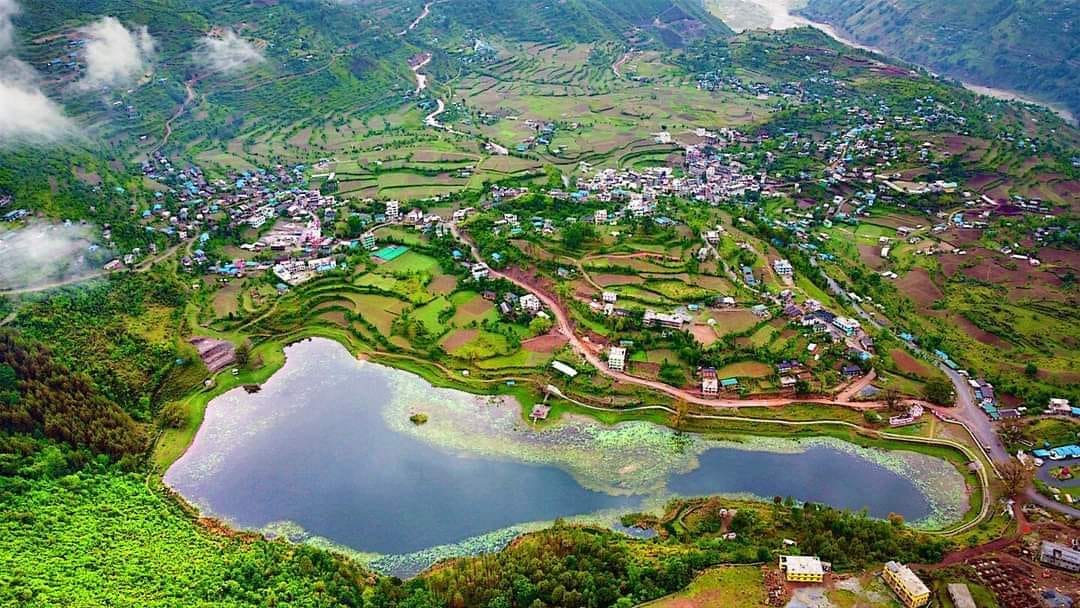
Yes, and most people who go there do exactly that. The reserve is open to trekkers, and the Dhorpatan valley sits on old trading and herding routes that link Baglung to Dolpa. The Guerrilla Trek, which traverses the mid-western hills through Rukum and Rolpa, passes through this country, and routes north from Dhorpatan connect towards the Dhaulagiri region and eventually to Dolpa.
What you get is high pasture, dense mid-hill forest, herding settlements, pheasants on the forest edge and the near certainty of walking for days without meeting another foreign trekker. Wildlife viewing is genuine but hard-earned. Blue sheep are watchable with patience on the open slopes. Snow leopard sign turns up on ridge trails; the animal itself almost never does.
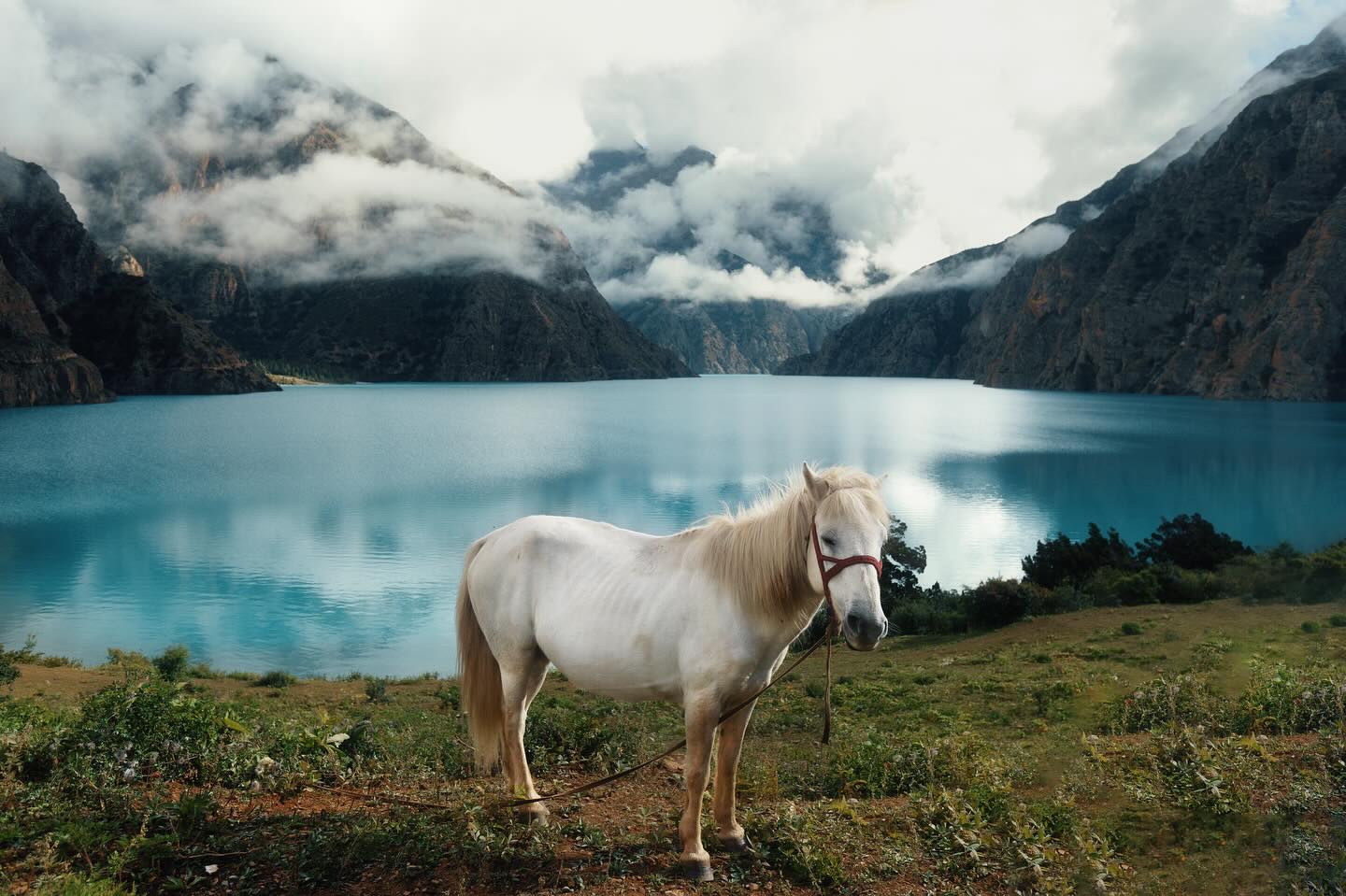
If a remote western trek is what you actually want, Dhorpatan pairs naturally with the country further north, and the walk in towards Phoksundo Lake in Dolpa or a circuit around Rara Lake extends the same kind of journey into Karnali.
When is the best time to go to Dhorpatan?
April to early June and late September to November. Spring brings rhododendron colour through the forest belt and manageable snow on the higher pastures. Autumn gives the clearest air and the most reliable weather for the passes. Winter closes the high ground with snow and empties the valley as herders descend, and the monsoon between late June and early September makes the trails slow, wet and leech-ridden.
Those same spring and autumn windows are when licensed hunting takes place, so trekkers should expect the possibility of overlap and be aware of block closures. Ask the reserve office about which blocks are active before setting a route.
How do you reach Dhorpatan Hunting Reserve?
The usual approach is from Pokhara through Beni in Myagdi, or via Baglung to Burtibang, from where a rough jeep track continues in the dry season and a walk of two to three days brings you into the Dhorpatan valley. Road building has shortened that walk considerably over the past decade, but the tracks are seasonal and monsoon damage is normal, so build in spare days.
Entry permits are issued through the reserve administration. Trekkers need a permit, a guide is strongly advised on account of the navigation rather than the wildlife, and supplies should be carried in because resupply beyond Burtibang is limited. This is a self-sufficient trek in a place where the nearest hospital is a long way behind you.
FAQ
Is hunting legal anywhere else in Nepal?
No. Dhorpatan is the only protected area in the country where licensed hunting is permitted, and hunting outside it is prohibited. Even inside the reserve it is restricted to designated game species, in designated blocks, in designated seasons, under a licence issued by the Department of National Parks and Wildlife Conservation.
How much does a hunting licence for Dhorpatan cost?
Fees and quotas are set by regulation and are revised periodically, so no figure is quoted here. Numbers circulating on travel and outfitter websites are frequently out of date. Anyone pursuing a legal hunt must confirm current fees, quotas and conditions directly with the department before making any arrangement.
Can you trek in Dhorpatan without taking part in a hunt?
Yes. The great majority of visitors are trekkers rather than hunters. You need an entry permit, and it is worth checking with the reserve office which blocks are active during your dates so that your route avoids them.
Which animals are protected inside the reserve?
Snow leopard, musk deer, red panda and the Himalayan monal are among the species that are fully protected and may never be hunted. Blue sheep and Himalayan tahr are the designated game species. Killing a protected animal is a wildlife offence regardless of what licence the person is holding.
Does hunting revenue reach local communities?
The model provides for a share of reserve income to be returned to local development, and that provision is real. How much reaches households, how it is spent and whether it offsets the costs local people carry are among the most persistent disputes about Dhorpatan, and independent assessments have reached different conclusions.