Manakamana Temple stands at about 1,302 metres on a ridge in Gorkha district, roughly 105 kilometres west of Kathmandu, on the hillside above the point where the Trishuli and Marsyangdi rivers meet. It is dedicated to Bhagwati Manakamana, a form of the goddess Parvati whose name joins mana, meaning heart, and kamana, meaning wish, and who is believed to grant what devotees ask for. Since November 1998 most pilgrims reach the ridge by cable car from Cheres on the Prithvi Highway, a ride of about ten minutes that lifts passengers roughly 1,000 vertical metres.
Who is the goddess of Manakamana and what is the wish?
Manakamana is worshipped as a wish-granting form of Parvati, and the arrangement between goddess and devotee is explicit. A pilgrim arrives, states a request, and makes a vow, called a bhakal, to return with a named offering if the request is granted. This is why the temple is busy on ordinary weekdays and not only at festivals. A large share of the people climbing the steps are not asking for anything; they are settling a debt from an earlier visit.
The requests themselves are ordinary and human. Couples ask for children. Families bring a newly bought vehicle to be blessed before it goes into service, and the lane below the upper station is often lined with jeeps and trucks draped in marigold. Students come before examinations, migrant workers come before flying out to the Gulf or Malaysia, and shopkeepers come at the start of the Nepali financial year. Manakamana is a national shrine for Nepali pilgrims far more than a foreign tourist attraction, and that is precisely what makes it worth an unhurried morning.
Temple tradition ties the shrine to the seventeenth-century court of Gorkha and to the reign of Ram Shah, an ancestor of the dynasty that later unified Nepal. In the traditional account the queen was recognised as an incarnation of the goddess by a single devotee, a Magar named Lakhan Thapa, and the shrine was established on this ridge after her death. The hereditary priests at Manakamana are still drawn from that Magar lineage, which is unusual among the major Hindu shrines of Nepal and is one of the details worth noticing while you wait in the queue. Written documentation for the early centuries is thin, so treat the narrative as living tradition rather than settled history.
How do you get to Manakamana Temple from Kathmandu or Pokhara?
Manakamana sits almost exactly halfway along the Prithvi Highway between Kathmandu and Pokhara, which is why it works so well as a break in a long drive rather than a dedicated trip. The cable car base station is at Cheres, near Kurintar, on the north bank of the Trishuli. Every long-distance bus running between the two cities passes the turning, and most tourist buses will stop there on request. The table below sets out the realistic options, with times that assume normal highway traffic rather than a festival weekend.
| Option | Start point | Distance or length | Typical time | Notes |
|---|---|---|---|---|
| Cable car | Cheres station, Kurintar | About 2.8 km of cable, roughly 1,000 m of climb | About 10 minutes each way | Separate ticket tiers for Nepali, SAARC and other foreign visitors; check for scheduled maintenance days |
| Private vehicle from Kathmandu | Kathmandu | About 105 km | 3.5 to 4.5 hours | Prithvi Highway; leave by 6am to beat the Naubise climb |
| Private vehicle from Pokhara | Pokhara | About 100 km | 3 to 4 hours | Easy add-on when returning east |
| Public bus | Gongabu or Kalanki, Kathmandu | About 105 km | 4 to 5 hours | Any Pokhara or Chitwan bus can drop you at Kurintar |
| Walk the old pilgrim trail | Abu Khaireni, Prithvi Highway | Steep stone-stepped ridge route | 3 to 5 hours uphill | The route everybody used before 1998; start early and carry water |
| Walk from the valley floor | Near the cable car base | Direct ridge climb | 3 to 4 hours uphill | Hot and exposed from March to June |
What is the Manakamana cable car ride actually like?
The system was built by the Austrian ropeway manufacturer Doppelmayr and opened in November 1998, the first passenger cable car of its kind in Nepal. The line runs about 2.8 kilometres up the hillside and gains around 1,000 metres, so the ride takes roughly ten minutes and replaces what used to be a half-day climb. Alongside the enclosed passenger cabins there are dedicated cargo cabins, and these carry everything the ridge-top settlement needs, including sacks of rice, construction material and the goats brought up for offerings.
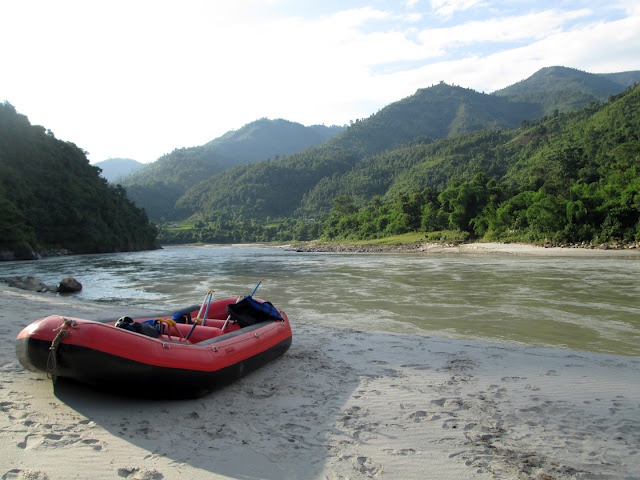
The views make the queue worthwhile. The cabin lifts away from the highway and the braided channels of the Trishuli, the same river that carries the raft trips running down towards Chitwan, and the terraced hillsides open out beneath you. On a clear morning between October and February the upper station gives long sightlines north to Manaslu and the Ganesh Himal. If you want the mountains, take the first cars of the day; by mid-morning haze usually closes the view, and from June to September cloud often removes it altogether.
What happens at the temple when you arrive?
From the upper station a paved lane climbs for five to ten minutes to the temple courtyard, lined the whole way with stalls selling offering plates, red powder, coconuts, garlands, bangles and tea. Buy the offering here rather than carrying one from the city. The temple itself is a tiered pagoda on a raised plinth in a flagstone courtyard, ringed by bells that devotees ring as they pass, with a large sacred tree beside it and a small settlement of tea houses and guesthouses behind.
The queue moves along one side of the courtyard to the shrine door, where a priest receives the offering, returns part of it as prasad and applies a tika. On a quiet Monday or Thursday morning this takes minutes. On a Saturday in Dashain the line can absorb a large part of the day, and the sensible plan is to arrive on the first cable car and be at the shrine before eight. Remove shoes before stepping onto the plinth, ask before photographing people at worship, and do not photograph inside the shrine.
You should also know what happens on the courtyard edge. Devotees fulfilling a vow frequently offer a goat or a pigeon, and the offering is made in a designated area near the temple, mainly on Tuesdays and Saturdays and heavily during Dashain. The meat is taken away by the family and eaten. Other devotees fulfil the same vow with coconuts, flowers, cloth or sweets. Visitors who would rather not see an animal offering should go on a weekday morning outside the festival season, when the courtyard is calm.
When is the best time to visit Manakamana?
October to April gives the most reliable weather, with clear air and comfortable temperatures on the ridge, which sits high enough to be cool in the early morning even in spring. Tuesdays and Saturdays are the traditional days for worship of the goddess and are consistently the busiest. The festival peak is Dashain in September or October, especially the days around Maha Ashtami and Nawami, when the queue extends far down the lane and the cable car runs to capacity from dawn. Chaitra Dashain, the smaller spring festival in March or April, brings a second surge.
The monsoon, from mid-June to mid-September, is the weakest window. Cloud usually removes the mountain view, the trails are slick, and the Prithvi Highway is prone to landslide delays. If that is when you are travelling, treat Manakamana as a ritual visit rather than a viewpoint and keep the schedule flexible. Most people spend two to three hours on the ridge in total; staying overnight in one of the simple guesthouses is only worth it if you want to be first at the shrine on a festival morning.
What should you plan for on the day?
Carry cash in small notes for tickets, offerings and tea, because card payment is unreliable on the ridge. Wear shoes you can slip off easily and clothing that covers the shoulders and knees. Leather items are discouraged inside temple precincts in Nepal, so leave the leather belt and bag in the vehicle. Take a light layer even in warm weather, since the upper station is around a thousand metres above the highway and the wind picks up in the afternoon. Ticket prices are tiered by nationality and change from time to time, so confirm the current fare and the operating hours on the day rather than trusting an old blog post.
If you are pairing Manakamana with a longer journey, allow a minimum of four hours between leaving the highway and rejoining it, including the queue at both cable car stations. Anyone planning to walk up should start before seven in the morning, carry two litres of water and be ready for a continuous climb on stone steps with almost no shade.
What else is worth stopping for nearby?
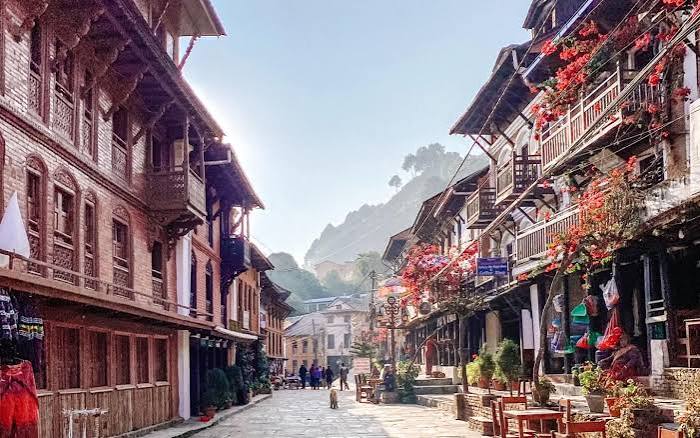
Manakamana is the anchor of a genuinely good middle section of the Kathmandu to Pokhara road. An hour west, the Newar trading town of Bandipur sits on its own ridge with a car-free main street and a long view of the Annapurna and Manaslu ranges; it is the best overnight stop on this stretch by a wide margin. North of Abu Khaireni, the road climbs to Gorkha bazaar and the hilltop Gorkha Durbar, the fortress palace where Prithvi Narayan Shah was born and the campaign to unify Nepal began.
The river below the cable car is the busiest whitewater in the country, and the standard one-day and two-day trips on the Trishuli put in within a short drive of Kurintar. If you are heading back towards Kathmandu on the northern route rather than the highway, the eighteenth-century Nuwakot Durbar makes a strong half-day, and it belongs to the same Shah-era story as Gorkha. Continue west instead and you are in Pokhara Valley by evening.
FAQ
How long does the Manakamana cable car take?
The ride takes about ten minutes in each direction over roughly 2.8 kilometres of cable, climbing around 1,000 metres from Cheres near Kurintar to the ridge below the temple. Add queuing time at both stations, which is short on weekdays and can be substantial on Tuesdays, Saturdays and during Dashain.
Can you walk to Manakamana instead of taking the cable car?
Yes. The traditional pilgrim trail from Abu Khaireni climbs the ridge in roughly three to five hours on stone steps, and there is a shorter but steeper route from near the cable car base. Both are hot and exposed from March to June, so start at first light and carry at least two litres of water.
Is Manakamana Temple open to non-Hindus?
Visitors of any faith can enter the temple courtyard and the surrounding settlement. Only priests enter the inner shrine. Remove your shoes before stepping onto the plinth, dress modestly, avoid leather items and do not photograph the interior of the shrine or people at worship without asking.
What is the best time of year to visit Manakamana?
October to April, with the clearest mountain views from the upper station between October and February. Avoid the monsoon months of mid-June to mid-September, when cloud hides the Himalaya and landslides delay traffic on the Prithvi Highway. For a quiet visit, choose a Monday, Wednesday or Thursday outside the Dashain period.
Can Manakamana be visited as a day trip from Kathmandu?
It can, but it is a long day: roughly four hours of driving each way plus three to four hours on the ridge. It works far better as a stop on the way to or from Pokhara or Chitwan, ideally combined with a night in Bandipur or Gorkha rather than a return to Kathmandu the same evening.