Shey Phoksundo in Dolpa is the lake normally accepted as the deepest in Nepal, with a maximum depth commonly given as around 145 m. Rara in Mugu is the largest by surface area, at roughly 10.8 square kilometres. Rara is also widely listed as the deepest on a figure of 167 m, but that number is disputed and lower depths appear in the survey literature.
That disagreement is the reason this page exists. Search for the deepest lake in Nepal and you will get two confident answers that contradict each other, both quoted to the metre, neither citing a survey. What follows separates the figures that hold up from the ones that get copied from one page to the next.
Which is the deepest lake in Nepal?
The short answer is Shey Phoksundo, and the reason it is the short answer rather than the certain one is that very few Nepali lakes have been bathymetrically surveyed to a standard anyone would publish.
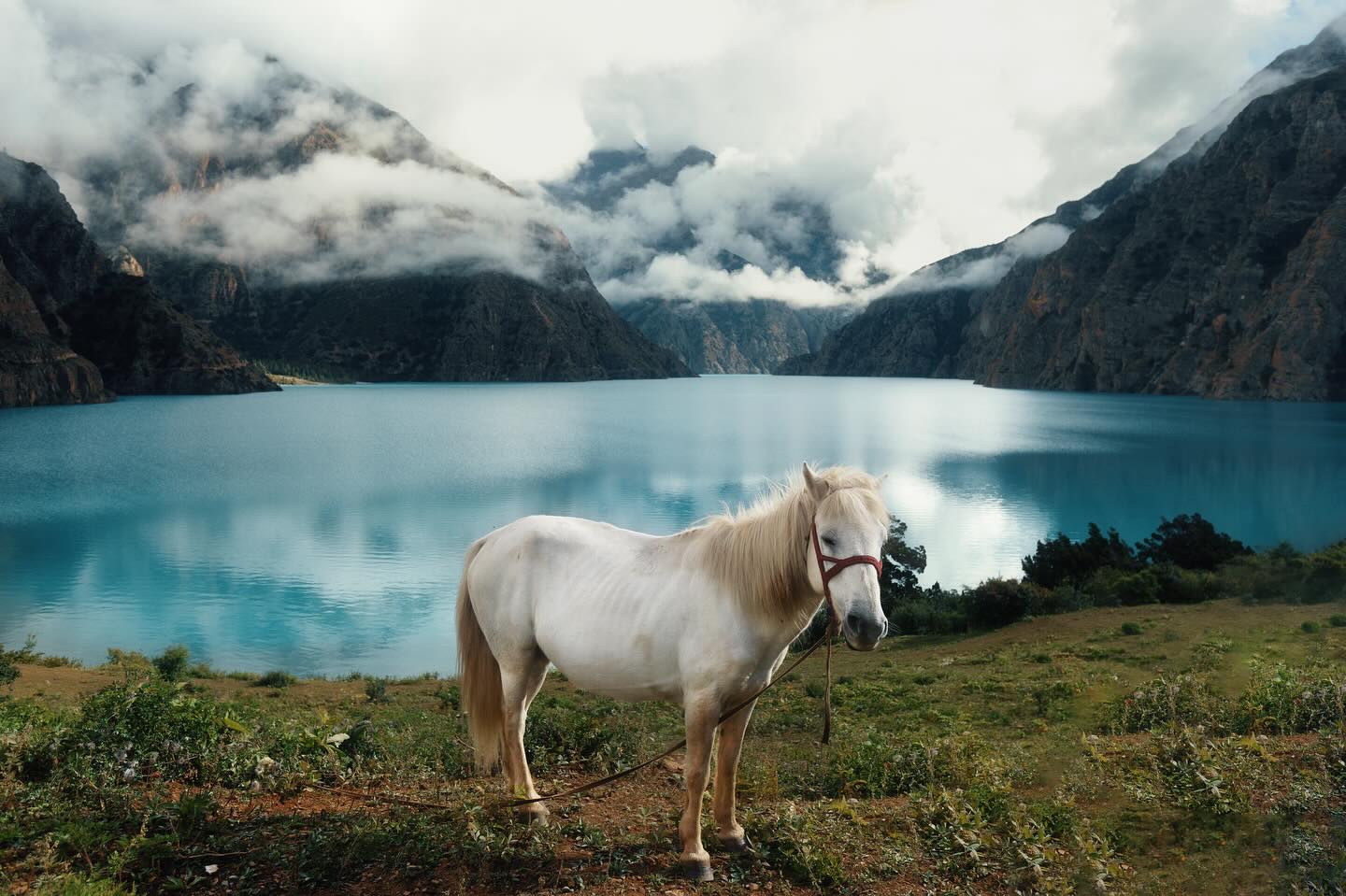
Phoksundo sits at roughly 3,611 m in the Shey Phoksundo National Park, above the village of Ringmo in Dolpa. Its shape explains the depth. The lake fills a glacially scoured trough dammed at its southern end, and the shoreline drops almost vertically in places rather than shelving out, which is why the water reads as such an intense mineral blue from the trail above. Depth of around 145 m is the figure repeated in park literature and in most academic references to the lake, and it is consistent with the basin's form.
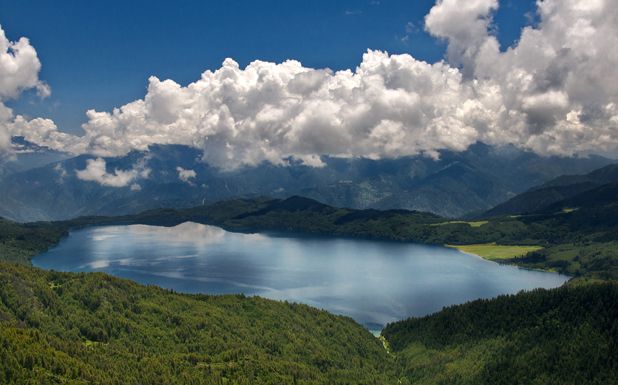
Rara is the complication. The 167 m figure attached to it appears everywhere, including on Nepali government tourism material, and it is old. Later work has reported substantially shallower maxima, and the lake's broad, comparatively open basin at 2,990 m does not obviously suggest a trough half again deeper than Phoksundo's. The honest position is that Rara is deep, that nobody visiting can tell, and that the 167 m number should be quoted as a claim rather than a measurement until somebody publishes a modern survey.
Depth figures, and how much to trust each one
The last column of this table is the point of it. Where a depth has been measured consistently, the number is worth quoting. Where it has not, saying so is more useful than inventing precision.
| Lake | District | Elevation | Maximum depth | How solid is that figure |
|---|---|---|---|---|
| Shey Phoksundo | Dolpa | about 3,611 m | about 145 m | Consistent across park and academic sources |
| Rara | Mugu | about 2,990 m | 167 m commonly quoted | Disputed. Lower figures reported; treat as a claim |
| Phewa | Kaski | about 742 m | about 24 m | Consistent, and repeatedly resurveyed |
| Begnas | Kaski | about 650 m | about 10 m | Consistent |
| Rupa | Kaski | about 600 m | about 6 m | Consistent |
| Tilicho | Manang | 4,919 m | Not reliably surveyed | Figures circulate; no published survey behind them |
| Gosaikunda | Rasuwa | 4,380 m | Not reliably surveyed | Small and steep-sided; depth rarely stated |
| Ghodaghodi | Kailali | about 205 m | Shallow, a few metres | Seasonal. Depth varies with the monsoon |
Two things stand out. The first is that the deep lakes are the high glacial ones, because glaciers cut troughs and nothing else in Nepal does. The second is that the shallow ones are the biologically interesting ones. Ghodaghodi, at a few metres and drying back every spring, supports far more visible life than Phoksundo, which is cold, low in nutrients and close to empty of fish.
The largest lakes by surface area
Area is easier to establish than depth, because a satellite image settles it. The figures still move a little between sources, because most of these lakes change size seasonally and because some counts include marginal marsh and others do not.
| Lake | Approximate area | Setting |
|---|---|---|
| Rara | about 10.8 sq km | Nepal's largest lake, inside its smallest national park |
| Shey Phoksundo | about 4.9 sq km | Trans-Himalayan, above the treeline in Dolpa |
| Phewa | roughly 4.5 to 5.7 sq km | Pokhara valley. The range reflects seasonal variation |
| Begnas | about 3 sq km | Pokhara valley, second largest of the nine |
| Rupa | about 1.35 sq km | Pokhara valley, behind a ridge from Begnas |
Rara being the largest lake in the smallest national park is not a coincidence. Rara National Park was drawn tightly around the lake and its catchment, which is a sensible piece of park design and a large part of why the water is still clear.
Why Nepal's lakes sit where they do
Nepal has thousands of standing water bodies and they fall into four groups, each with a different origin and a completely different character to visit.
Glacial lakes occupy the high country. Some fill rock basins gouged out by ice, like Phoksundo and Gosaikunda. Others are ponded behind moraine, the loose rubble a retreating glacier leaves at its snout, and these are the ones that concern hydrologists, because moraine dams fail. Nepal has a running programme of monitoring and lowering the most dangerous of them.
Tectonic and landslide-dammed lakes exist because the ground here is young and moves. A large enough slope failure blocks a valley, water backs up behind it, and the result can survive for centuries. Several of the mid-hill lakes have that origin, and the sediment cores from them are how palaeoclimatologists read the region's rainfall history.
Valley-floor lakes such as the Pokhara cluster sit in a basin filled with soft sediment washed down from the Annapurnas. They are shallow, warm, productive and heavily used by the people around them, which is why they carry the country's fish farming and most of its lakeside tourism.
Terai oxbows and wetlands are the old channels of rivers that have since wandered. Ghodaghodi in Kailali is the best known, a scatter of connected pools and marsh at around 205 m that fills with the monsoon and shrinks through the dry season, taking in tens of thousands of waterbirds as it does.
Ten lakes that are internationally protected
Nepal has ten wetlands listed under the Ramsar Convention, and lakes make up most of them. The designation is not a park boundary and does not restrict visitors; it commits the country to managing the site and reporting on its condition, which in practice is what puts a wetland on the national radar at all.
Three matter for anyone building a trip around water. Ghodaghodi in Kailali was listed in 2003 and is the most rewarding birding site in the far west. Gosaikunda and its associated lakes in Rasuwa were listed in 2007, covering more than a hundred small water bodies on the same high shelf. The Lake Cluster of Pokhara Valley, listed in 2016, brings nine lakes including Phewa, Begnas and Rupa under one designation. The full list, and what listing actually obliges Nepal to do, is set out in our guide to Nepal's Ramsar wetland sites.
Which lake should you actually go to
Ranking by depth makes a good table and a poor itinerary. What separates these places on the ground is how hard they are to reach and what there is to do when you arrive.
Phoksundo asks for the most and gives the most. It means a flight from Nepalgunj to Juphal, which cancels for weather often enough that you need spare days at both ends, then two to three days walking up the Suli Gad from Dunai. There are lodges at Ringmo. Read the park detail in our Shey Phoksundo National Park guide before committing, because the permit position for Upper Dolpo differs sharply from the lower valley.
Rara is the easier of the two remote lakes, with flights to Talcha airstrip about three hours' walk from the shore, and an improving road from Jumla. It is also the one place in the far west where the walking is genuinely gentle. Our Rara National Park ecology guide covers the forest, the fish endemic to the lake and the seasons.
Gosaikunda is the accessible high lake, reachable on a short trek from Dhunche north of Kathmandu, and it is a live pilgrimage site rather than a scenic one. See the Gosaikunda guide for the route and the Janai Purnima crowds. At the other end of the country and the other end of the altitude scale, Ghodaghodi is a morning's outing from Dhangadhi with a pair of binoculars.
All of these lakes are the visible end of a drainage system that starts on the Tibetan plateau. If the geography is what interests you rather than the water itself, our overview of the Koshi, Gandaki and Karnali systems is the place to start.
Frequently Asked Questions
Which is the deepest lake in Nepal?
Shey Phoksundo in Dolpa, at a maximum depth commonly given as around 145 m. Rara is often listed instead on a figure of 167 m, but that number is disputed and shallower depths have been reported, so Phoksundo is the safer answer.
How deep is Rara Lake really?
Nobody can say precisely from published data. The 167 m figure is repeated widely, including on official tourism material, but it is old and later work reports considerably less. Rara is unambiguously deep; the exact maximum is not settled.
Which is the largest lake in Nepal?
Rara, at roughly 10.8 square kilometres, sitting at about 2,990 m in Mugu district. It lies inside Rara National Park, which is the smallest national park in the country.
What is the highest lake in Nepal?
Among lakes that people visit, Tilicho in Manang at 4,919 m is the one usually named, and it is often described as one of the highest lakes of its size anywhere. Nepal has many smaller glacial ponds higher still, so the title depends entirely on where you set the size threshold.
Are Nepal's lakes safe to swim in?
Physically most are, but several are active pilgrimage sites where bathing by visitors is inappropriate, Gosaikunda and Phoksundo among them. The high lakes are also cold enough year-round to be genuinely dangerous at altitude. Ask locally before entering the water anywhere.
How many Ramsar sites does Nepal have?
Ten, most of them lake or wetland systems. Ghodaghodi in Kailali was listed in 2003, Gosaikunda and its associated lakes in 2007, and the Lake Cluster of Pokhara Valley, covering nine lakes, in 2016.
Which lake in Nepal is easiest to reach?
Phewa in Pokhara, which has a road along one shore and boats for hire. Begnas and Rupa, half an hour further east, are almost as easy and far quieter. In the far west, Ghodaghodi is a short drive from Dhangadhi on the East-West Highway.
Why do lake depth figures for Nepal disagree so much?
Because very few of these lakes have had a modern bathymetric survey. Most published depths trace back to a small number of older measurements, which then get copied between sources without the original caveats. Treat any depth quoted to the metre with suspicion unless it names a survey.