Somewhere above 4,000 m in Dolpa, in late May, a woman is lying face down on a wet alpine meadow with her nose almost touching the turf. She is looking for something roughly the size and colour of a dry grass stem: a thin brown spike, two or three centimetres of it above ground, attached to a mummified caterpillar below. Finding one takes hours. In a good season a household might collect enough to cover a year of expenses. This is yarsagumba, and for a large part of the Nepali Himalaya it is the single most valuable thing the land produces.
The Tibetan name yartsa gunbu translates as summer grass, winter worm, which is a fair description of what people once assumed was happening. The scientific name is Ophiocordyceps sinensis. It is not a plant, not an animal, and not quite either of the two organisms it is made from.
How yarsagumba actually grows
The host is the larva of a ghost moth, a group of insects that spend several years underground eating roots in alpine soil. At some point a fungal spore reaches a larva and germinates inside it. The fungus grows slowly through the body while the caterpillar continues to behave more or less normally, then takes over completely. Before it dies the larva positions itself vertically near the surface, head upward, which is exactly what the fungus needs. Over winter the interior of the caterpillar is entirely replaced by fungal tissue while the outer cuticle holds its shape, producing a hollow, rigid, perfectly caterpillar-shaped object.
In spring, as the snow retreats, a single dark stroma pushes up out of the head of the larva and breaks the surface. That is the visible part, and the window in which it can be found before it withers is short. Collectors dig out the whole structure with a small knife or trowel, keeping the caterpillar body intact, because a broken specimen is worth far less.
The ecology is narrow and unforgiving. The fungus needs cold soil, adequate snowmelt moisture, and a resident population of ghost moth larvae, which in turn need undisturbed alpine grassland. In Nepal that combination occurs in a belt running roughly from 3,500 m to 5,000 m, above the last permanent villages and below the permanent snow. It does not occur in the middle hills. It cannot be farmed at scale in the way ordinary mushrooms can, because the life cycle depends on a wild insect population in a specific soil environment. Laboratory cultivation of the fungus alone is possible; recreating the whole caterpillar-and-fungus object at commercial scale has proved much harder.
Where it grows in Nepal, district by district
The productive districts are, almost without exception, the ones with the least road access and the fewest other sources of cash income. That overlap is the whole story of the highland economy.
| District | Province | Main collection country | Approximate band | Notes |
|---|---|---|---|---|
| Dolpa | Karnali | Upper Dolpo pastures north of Phoksundo | 3,800 to 5,000 m | The district most associated with the harvest |
| Humla | Karnali | Limi and Nyinba grazing grounds | 3,800 to 4,800 m | Trade routes run north to the Tibetan border |
| Mugu | Karnali | Pastures north and east of Rara | 3,700 to 4,700 m | Collectors camp for weeks at a stretch |
| Jumla | Karnali | Patarasi and Sinja headwaters | 3,500 to 4,500 m | Closest producing district to a road head |
| Rukum East | Lumbini | Ridges near the Dhorpatan fringe | 3,500 to 4,300 m | Shared grazing brings recurring boundary disputes |
| Darchula and Bajhang | Sudurpashchim | Api and Saipal approaches | 3,600 to 4,800 m | Far-western pastures, thinly administered |
| Manang and Gorkha | Gandaki | Nar Phu and upper Budhi Gandaki | 3,800 to 4,600 m | Overlaps conservation-area boundaries |
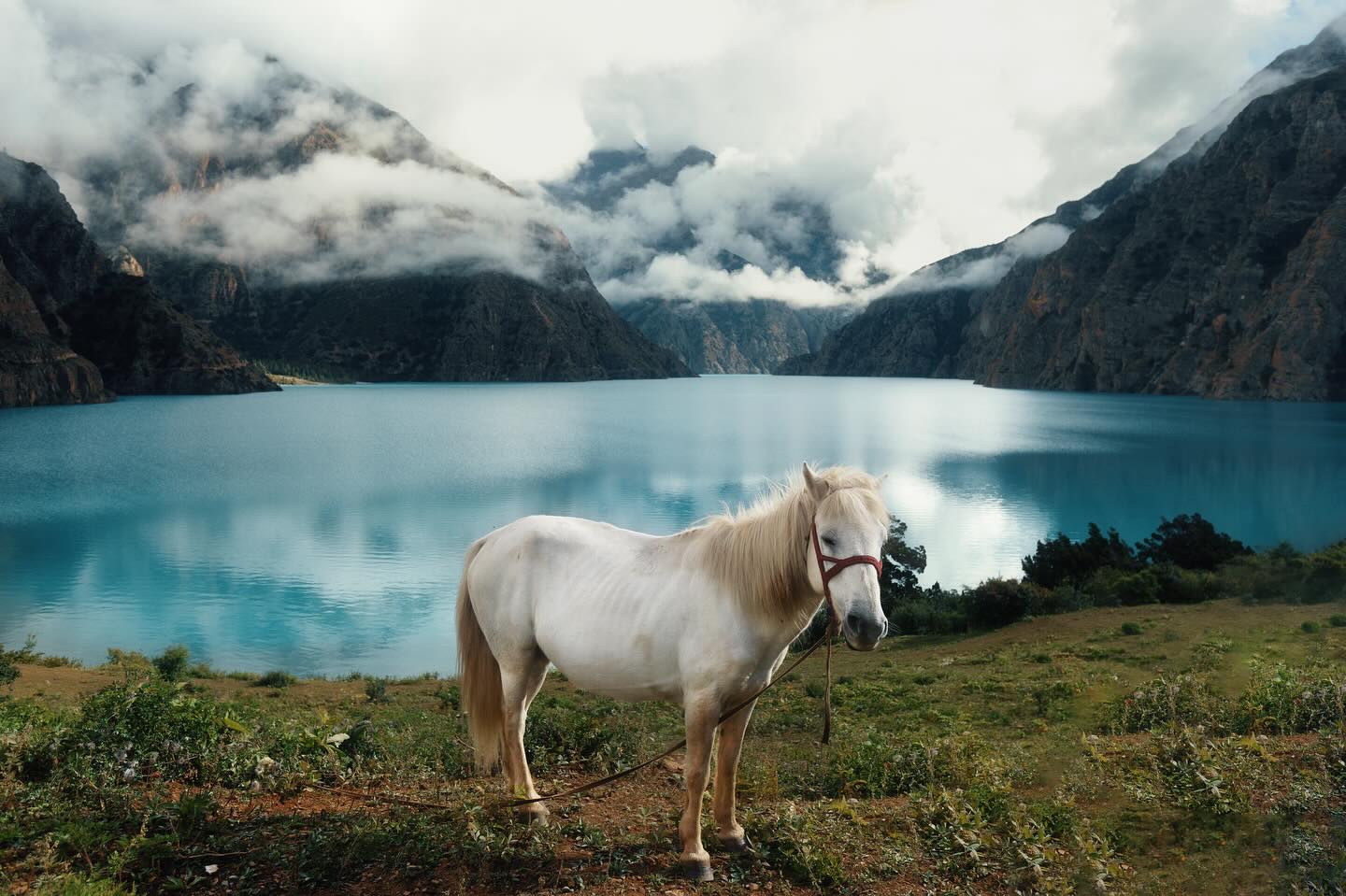
Anyone who has walked the high country of Shey Phoksundo or the pastures beyond Limi Valley in early summer will have seen the evidence: blue tarpaulin camps in places with no permanent structures, and villages downhill that are suddenly, conspicuously empty.
The season, and what it does to a village
The harvest window opens as the snow lifts, generally from late May, and closes by around the end of June or into July depending on elevation and the year. It is short, it is fixed by the weather rather than the calendar, and missing it means waiting twelve months.
What follows is one of the largest seasonal population movements in the Nepali Himalaya. Households close their houses and move to temporary camps at the collection grounds, often several days walk above the village. Livestock go with them. Schools in some highland districts have historically adjusted or effectively suspended their timetable through the season, because children are among the most effective collectors: they are closer to the ground, they have sharp eyes, and finding yarsagumba is a task where patience beats strength.
Access is not open to anyone who turns up. Collection is governed through local government and community forest or pasture user groups, which issue permission to collect within a defined area and levy a royalty. In practice the arrangements vary a great deal between districts, and disputes over who may collect where are a recurring feature of the season, particularly on boundaries between village units and along the edges of protected areas. Outside collectors from lower districts add pressure, since the sums involved are large enough to justify a long walk.
Why it underwrites the highland economy
Almost everything else about the economy of upper Karnali is marginal. Barley, buckwheat, potato and a little apple do not generate cash. Livestock does, slowly. Portering and trade generate some. Against that background a commodity that is light, non-perishable, extremely valuable by weight, and collected with no capital equipment beyond a hand tool is transformative in a way that is difficult to overstate.
The demand sits almost entirely outside Nepal, driven by buyers in China where the material has long been a high-status traditional commodity. Prices fluctuate sharply with the size of the harvest and with the appetite of that market, and they have historically been sensitive to conditions no Nepali collector can see or influence. Value is set largely by size, colour, intactness and dryness, so handling matters as much as finding.
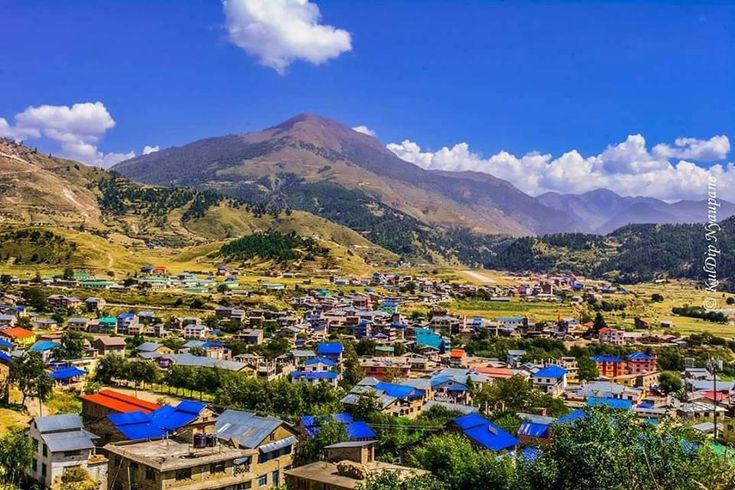
The money moves through a chain: collector, village-level buyer, district trader, exporter. The share captured at the top of the chain is the smallest, and one persistent policy question in Nepal is how much of the final value stays in the districts that produce it. Where it does stay, the effects are visible. Tin roofs replace slate. Children go to school in Nepalgunj or Surkhet. Motorbikes appear at road heads that had none. Households buy their way through the winter rather than rationing.
The risks are equally visible. An economy anchored to one wild organism with one short season is fragile by construction. Collectors report that finds have become harder over the years across parts of the range, which is what harvesting pressure combined with a warming, drying alpine zone would be expected to produce. The organism sits in a narrow thermal band, and that band is moving uphill, where there is progressively less ground available. Add altitude, cold, and the fact that people camp for weeks at elevations where a chest infection is serious, and the human cost of the season is real too.
For travellers, the practical point is simple. If you walk in the high districts of Dolpa or Humla during the harvest window, you are moving through a workplace. Lodges may be shut, porters may be unavailable at any price, and some pastures are closed to outsiders for the duration. Plan around it rather than through it.
FAQ
What exactly is yarsagumba?
It is the fruiting body of the fungus Ophiocordyceps sinensis growing out of the mummified larva of a ghost moth. The fungus infects the caterpillar underground, consumes it over the winter, and pushes a single dark spike above the soil surface in spring.
When is the yarsagumba season in Nepal?
Broadly from late May once the snow has retreated until the end of June or into July, varying with elevation and the year. The window is short and set by snowmelt rather than by any fixed date.
Which districts in Nepal produce the most yarsagumba?
The highland districts of Karnali Province, above all Dolpa, Humla, Mugu and Jumla, along with Rukum East, Darchula, Bajhang, Manang and upper Gorkha. All of them share a wide belt of alpine pasture between roughly 3,500 m and 5,000 m.
Can yarsagumba be farmed instead of collected?
The fungus alone can be cultured in a laboratory, but reproducing the complete caterpillar-and-fungus structure at commercial scale has proved difficult, because it depends on a wild ghost moth population living in a specific alpine soil. Wild collection remains the basis of the trade.
Can trekkers collect yarsagumba?
No. Collection rights are allocated by local governments and pasture user groups to registered collectors, and picking it as a visitor is both illegal and a straightforward way to cause offence in a village whose annual income depends on the harvest.