Nepal has no single holiest temple, and which one comes first depends on the tradition you follow. For Shaivite Hindus it is Pashupatinath on the Bagmati in Kathmandu, the national shrine and part of the Kathmandu Valley UNESCO World Heritage inscription of 1979. For Vaishnavites it is Muktinath at roughly 3,710 metres in Mustang, the only one of the 108 Divya Desams located outside India, while for followers of the Ramayana it is Janaki Mandir in Janakpur, completed in 1910 on the site associated with the birth of Sita.
Which temple is the most important in Nepal?
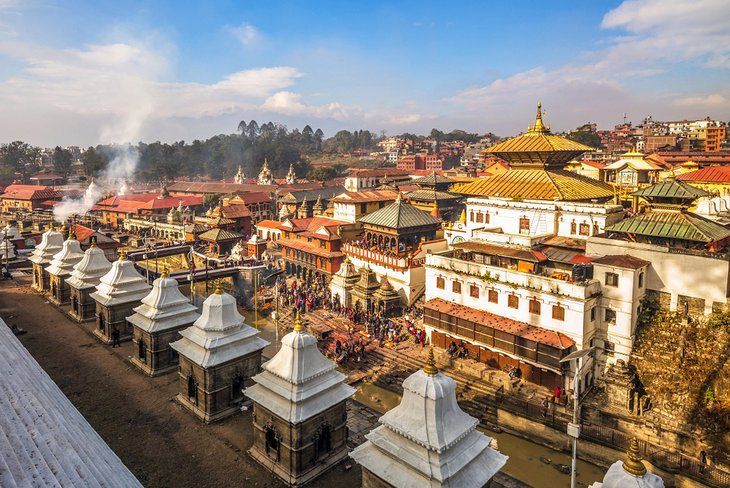
The practical answer is Pashupatinath. It is the seat of Pashupati, Shiva as lord of animals, and it functions as the religious centre of the Nepali state in a way no other site does. Its cremation ghats on the Bagmati are used continuously, its Maha Shivaratri festival draws hundreds of thousands of pilgrims from Nepal and India, and its priesthood follows a tradition that has run for centuries. The current main pagoda dates from the late seventeenth century, though the site itself is very much older.
The important qualification is that Nepal is not a single religious landscape. In the 2021 census about 81 percent of Nepalis identified as Hindu and about 8 percent as Buddhist, but the two traditions overlap constantly at the level of actual practice. The same shrine is regularly understood as a Hindu deity by one visitor and a Buddhist figure by the next, and nobody involved treats that as a contradiction. Muktinath is the clearest example: Hindus worship Vishnu there and Buddhists venerate the same place as Chumig Gyatsa, one of the twenty-four Tantric sites, tended for generations by Buddhist nuns.
Which temples of Nepal should you visit first?
Use the table below to match a temple to your interest, your altitude tolerance and the time of year. Entry conditions are the column most visitors get wrong. Almost every site in Nepal welcomes anyone at the outer complex, but a small number restrict the inner sanctum to Hindus, and at least one restricts it further. Rules are set by the managing trust and can change, so treat the last column as a starting point and check on arrival.
| Temple | Location | Principal deity | Main festival | Who may enter |
|---|---|---|---|---|
| Pashupatinath | Kathmandu, east bank of the Bagmati | Shiva as Pashupati | Maha Shivaratri, February or March | Outer complex and ghats open to all; inner sanctum restricted to Hindus |
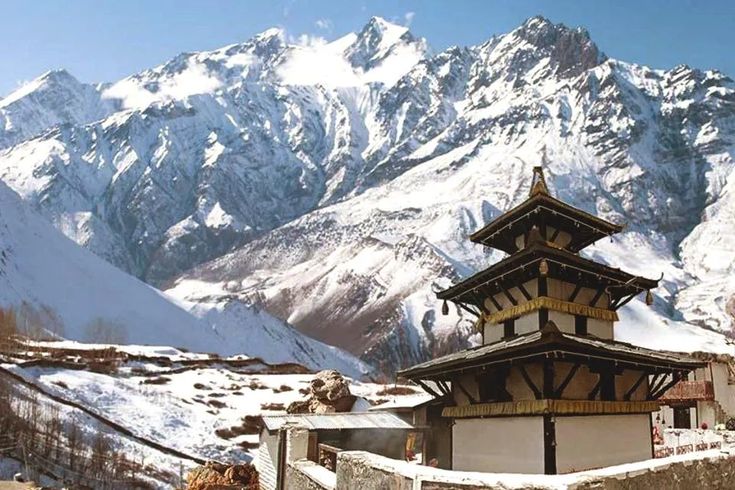
| Muktinath | Mustang, about 3,710 metres | Vishnu as Sri Muktinath; also Avalokiteshvara | Yartung, August or September; busiest May to October | Open to all |
| Janaki Mandir | Janakpurdham, Madhesh Province | Sita, also called Janaki | Vivaha Panchami, November or December | Open to all |
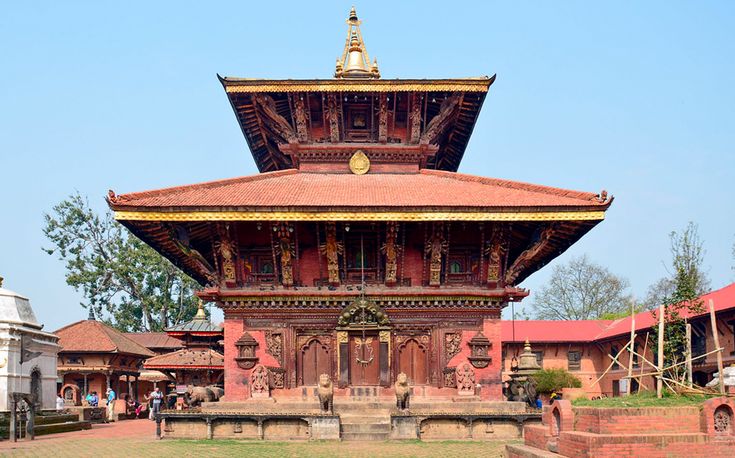
| Changu Narayan | Hill above Bhaktapur | Vishnu as Narayan | Ekadashi days, sacred to Vishnu, through the year | Grounds and sculpture open to all; sanctum restricted to Hindus |
| Swayambhunath | Hilltop west of Kathmandu | Buddhist stupa, Vajrayana tradition | Buddha Jayanti, April or May | Open to all |
| Boudhanath | North-east Kathmandu | Buddhist stupa, Tibetan tradition | Losar, February or March | Open to all |
| Halesi Mahadev | Khotang, eastern hills | Shiva; also revered as a Padmasambhava cave | Maha Shivaratri | Open to all |
| Manakamana | Gorkha, reached by cable car | Bhagwati, a form of Durga | Dashain, September or October | Open to all |
| Badimalika | Bajura, far-western high pasture | Bhagwati | Janai Purnima, July or August | Open to all; multi-day walk required |
| Gosaikunda | Rasuwa, sacred lake at about 4,380 metres | Shiva | Janai Purnima, July or August | Open to all; trekking fitness required |
What are the essential Kathmandu Valley temples?
The Kathmandu Valley concentrates more monumental religious architecture per square kilometre than anywhere else in the Himalaya, which is why UNESCO inscribed seven separate monument zones as a single World Heritage property in 1979. Pashupatinath, Swayambhunath, Boudhanath, Changu Narayan and the three durbar squares of Kathmandu, Patan and Bhaktapur make up that list.
Changu Narayan deserves more attention than it usually gets. It stands on a ridge above Bhaktapur and is generally regarded as the oldest temple still in use in the valley, with a stone pillar inscription dating to the fifth century that is among the earliest dated records in Nepal. The temple courtyard is effectively an open-air museum of Licchavi-period stone sculpture, including a celebrated Vishnu Vishwarupa and a Garuda figure of the same era.
Swayambhunath and Boudhanath give the valley its Buddhist axis. Swayambhunath sits on a hill west of the city and is approached by a long stone stair; Boudhanath is a vast whitewashed dome on the old trade route to Tibet, surrounded by a ring of Tibetan monasteries and circumambulated clockwise all day by pilgrims. Both were damaged in the earthquake of April 2015 and both have been repaired.
Which temples sit high in the mountains?
Nepal’s mountain shrines demand a different kind of visit, because reaching them is part of the observance. Muktinath is the most accessible of them: a jeep road now runs to Ranipauwa, leaving a short uphill walk to the temple, and the complex includes 108 water spouts and a natural gas flame burning above spring water at the Jwala Mai shrine.
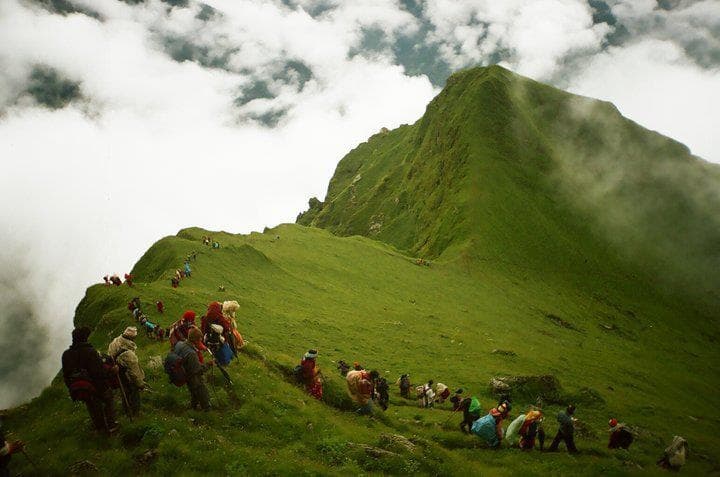
Harder and less visited is Badimalika in Bajura, a far-western Bhagwati shrine set on high pasture that pilgrims reach after several days on foot, converging in large numbers at Janai Purnima. Gosaikunda in Rasuwa follows the same pattern: a high glacial lake at around 4,380 metres associated with Shiva, reached on a trekking route from Dhunche, and thronged during the same full-moon festival. Both are physically demanding and only practical in season.
How do you visit a Nepali temple respectfully?
Remove your shoes before entering any inner courtyard, and remove leather belts and bags at strict Shaivite sites. Cover shoulders and knees. Walk clockwise around stupas, shrines and prayer wheels, which means keeping the monument on your right. Do not step over offerings, do not touch images, and do not sit on plinths with your feet pointing at a deity. Photography is permitted in most outer areas and prohibited in most sanctums; look for the sign, and if there is no sign, ask.
Cremation grounds require particular care. At Pashupatinath the ghats are active, and the families present are attending a funeral, not a spectacle. Photograph the architecture, not the mourners. Similarly, at the riverside pilgrimage site of Devghat, where the Kali Gandaki and Trishuli meet, the elderly residents who have retired there to die are living private lives in a public place.
When are the main temple festivals in Nepal?
Nepali festivals follow lunar calendars, so the Gregorian dates shift every year by up to a few weeks. Maha Shivaratri falls in February or March and is the single biggest day at Pashupatinath. Dashain, the longest festival of the year, falls in September or October and fills the Durga and Bhagwati shrines, Manakamana among them. Tihar follows two weeks later. Janai Purnima in July or August sends pilgrims to the high lakes and to Badimalika. Vivaha Panchami in November or December fills Janakpur for the re-enactment of the marriage of Ram and Sita.
How long do you need for a temple itinerary?
Three days covers the Kathmandu Valley properly: one for Pashupatinath and Boudhanath, one for Swayambhunath and Patan, one for Bhaktapur and Changu Narayan. Adding Muktinath needs four to five more days by road through Pokhara and Jomsom, or two if you fly to Jomsom and the weather cooperates, which in the mountains it frequently does not. Janakpur is a separate trip of two to three days from Kathmandu by air or overnight bus. Attempting all of it inside a week produces a blur of courtyards and nothing else.
Season is the other constraint. October and November give the most reliable weather across the whole country. February and March are almost as good and coincide with Maha Shivaratri. The high shrines of Gosaikunda and Badimalika are effectively summer destinations, tied to their festival dates, and the monsoon months that make them accessible are the same months that make lowland travel awkward.
FAQ
Which is the most sacred temple in Nepal?
Pashupatinath in Kathmandu is generally treated as the most sacred, and it is the national shrine of Nepal. It is dedicated to Shiva in the form of Pashupati and forms part of the Kathmandu Valley UNESCO World Heritage inscription made in 1979. Vaishnavite pilgrims would nominate Muktinath instead.
Can non-Hindus enter Nepali temples?
In almost all cases yes. Most Nepali temples, including Muktinath and Janaki Mandir, are open to everyone. The main exceptions are the inner sanctums of a few strict Shaivite and Vaishnavite shrines, most notably the main temple at Pashupatinath, where entry is restricted to Hindus. The surrounding complex there remains open to all visitors.
What is the largest temple in Nepal?
Janaki Mandir in Janakpur is the largest temple building in Nepal, a three-storey structure completed in 1910 and covering a substantially bigger footprint than any single shrine in the Kathmandu Valley. Pashupatinath is a larger complex overall but its central pagoda is comparatively small.
What should I wear to visit a temple in Nepal?
Cover shoulders and knees, wear shoes that come off easily, and avoid leather at strict Hindu sites, where belts and bags are sometimes refused at the gate. Modest dress matters more at active pilgrimage sites than at monument-zone temples that function partly as museums.
When is the best time of year for a temple tour of Nepal?
October and November offer the clearest weather nationwide and coincide with Dashain and Tihar. February and March are equally comfortable and include Maha Shivaratri at Pashupatinath. High-altitude shrines such as Gosaikunda are effectively restricted to the summer months around their festival dates.