Rara Lake covers roughly ten square kilometres at close to 3,000 m, which makes it the largest lake in Nepal by surface area and one of the very few places in the country where the water, not the mountain, is the reason people come. It sits inside Rara National Park, one of the smallest national parks in Nepal, in the district of Mugu. Almost everything most visitors know about Mugu is that lake. The district is considerably more interesting than that, and considerably harder to travel.
Mugu sits in the north of Karnali Province, sharing a border with Tibet to the north, with Humla to the west, Jumla and Kalikot to the south and Dolpa to the east. It is high, dry, sparsely populated and among the least developed districts in the country by every standard indicator. It is also the kind of place where a three-day walk still ends at a village that has never had a vehicle in it.
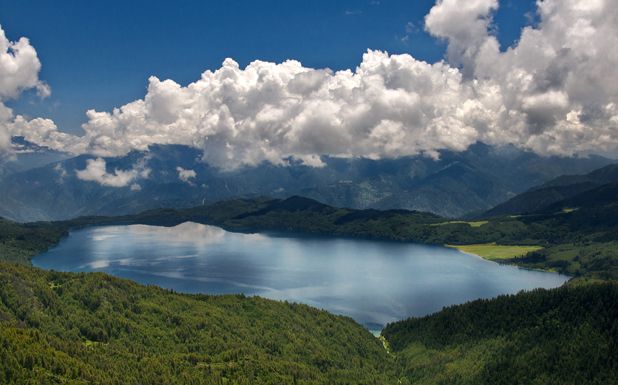
Rara Lake and the national park around it
Rara National Park was gazetted in the mid-1970s specifically to protect the lake and its catchment, and it remains compact: a ring of forested ridge around a single body of water, with a short circuit trail that most walkers complete in a long day. The lake is deep, cold and startlingly blue, held in a basin at about 2,990 m and drained by a short river that eventually joins the Mugu Karnali.
The forest is what makes it feel unlike the rest of Karnali. Blue pine, black juniper, spruce and rhododendron come right down to the shoreline, and the mix produces a landscape that reads more alpine than Himalayan. Wildlife includes Himalayan black bear, musk deer, red panda in the upper forest, and a resident snow trout population in the lake itself. Bird numbers rise sharply in winter when migratory waterfowl arrive.
Creating the park had a human cost that is rarely mentioned on tourism pages. Two villages inside the boundary were relocated when the park was established, and the descendants of those households live outside it now. Walking the shoreline, the old terraces are still legible in places. It is worth knowing, because the emptiness that visitors find so striking is partly administrative rather than natural. The Rara National Park page covers the park itself in more detail.
Gamgadhi, Talcha and the shape of the district
Gamgadhi is the district headquarters, a small hill town south-east of the lake at around 2,000 m, and the place where district offices, the hospital and the main market sit. Talcha, on a ridge above the lake basin, has the airstrip. The two are not the same place and are not adjacent, which trips up a lot of itineraries.
North and east of Gamgadhi the district climbs steeply. Mugu village, which gives the district its name, sits high on the Mugu Karnali toward the Tibetan border and was historically a trading settlement on a route north. Dolphu and the villages beyond it are culturally Tibetan, Buddhist, and organised around yak, barley and cross-border exchange in the same way the upper valleys of Humla and Dolpa are. Between those settlements and the lake lies a wide belt of alpine pasture that empties in summer when households move up for the yarsagumba harvest.
The southern half of the district is Hindu hill country, Nepali-speaking, terraced, and connected by a rough road network that is slowly extending north from Surkhet and Jumla. Mugu therefore contains the same north-south cultural gradient as its neighbours, compressed into a smaller area.
How to get to Mugu and Rara Lake
There are three realistic approaches, and choosing between them is mostly a question of how much time you have and how much you trust the weather.
| Route | From | Mode | Rough duration | Notes |
|---|---|---|---|---|
| Talcha airstrip | Nepalgunj | Flight | Under an hour | Fastest option, highly weather dependent, limited schedule |
| Talcha to the lake | Talcha | Walk | Two to three hours | Downhill through pine forest to the shoreline |
| Jumla to Rara | Jumla | Trek | Three to four days | The classic approach over the Ghurchi ridge, high and beautiful |
| Surkhet to Gamgadhi | Surkhet | Jeep | Two days or more | Karnali Highway then rough road, condition varies by season |
| Gamgadhi to the lake | Gamgadhi | Walk | Half a day | District headquarters is the practical supply point |
The trek in from Jumla is the version worth doing if the calendar allows. It crosses high meadow country, passes through villages that see almost no visitors, and gives the lake a context that a forty-minute flight cannot. Jumla is also the historic centre of the Khas Malla world and a far more interesting town than its size suggests, so an extra day there is never wasted. For travellers approaching the whole region overland, the guide to flights, roads and permits in west Nepal sets out how the gateways connect.
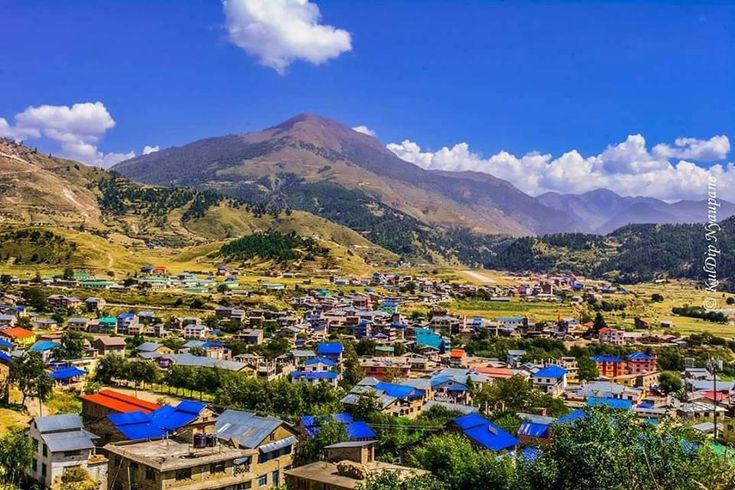
People, culture and the year in Mugu
Mugu has a small population spread very thinly, with a mix of Thakuri, Chhetri, occupational-caste and, in the north, ethnically Tibetan communities. Subsistence agriculture is the base: barley, buckwheat, potato, some wheat and apples in the lower valleys. Almost no household lives on farming alone. Livestock, seasonal labour migration to India, and the summer yarsagumba harvest fill the gap, and the harvest in particular reorganises the entire calendar of the upper villages between late May and July.
The festival year follows the two traditions. Dashain and Tihar dominate the southern villages, alongside local jatra observances and the deuda circle dances of the far west, which are as much a social institution as a performance. In the northern settlements the Buddhist calendar governs, with Losar and monastery festivals drawing people down from scattered herding camps. The rodhighar tradition of communal evening singing, documented across Karnali, is still alive in parts of the district.
Practical information for travellers
Time it carefully. The most reliable windows are roughly April to early June and mid-September to early November. The monsoon makes the roads unusable and the flights unreliable, and winter brings deep snow to the lake basin, which is beautiful and genuinely cold, with lodges closed or minimally staffed. The seasonal detail is set out in the Rara Lake timing guide.
Facilities are thin. Expect basic lodges and homestays around the lake and in Gamgadhi, cash-only transactions, patchy mobile coverage and no reliable resupply beyond staple food. Bring what you need from Nepalgunj or Surkhet. National park entry rules apply around Rara, and camping is restricted to designated areas.
Altitude is moderate rather than extreme at the lake itself, but the Jumla approach crosses ridges well above it, and anyone continuing north into the upper Mugu Karnali is in serious high country where separate permit rules may apply. Check current requirements for the northern belt before committing to a route, and treat any itinerary that pushes toward the border as an expedition rather than a trek.
FAQ
Where is Rara Lake?
In Mugu district, in the north of Karnali Province in western Nepal, at roughly 2,990 m inside Rara National Park. The district headquarters at Gamgadhi and the airstrip at Talcha are the two practical access points.
How do you get to Mugu district?
By flight from Nepalgunj to Talcha, by jeep from Surkhet up the Karnali Highway to Gamgadhi, or on foot from Jumla in three to four days. The flight is fastest, the trek is the most rewarding, and the road is the most variable.
Is Rara Lake the largest lake in Nepal?
Yes, by surface area. It covers roughly ten square kilometres and is also one of the deepest, which is why the water holds its deep blue colour even in flat light.
What is the best time to visit Mugu?
Spring from April to early June and autumn from mid-September to early November. Avoid the monsoon for road and flight reasons, and treat winter as a serious cold-weather trip.
Do I need a permit for Rara?
National park entry rules apply for Rara National Park, and the northern part of the district toward the Tibetan border falls under stricter arrangements. Confirm both with a registered agency or the park office before you travel, since requirements change.