Janaki Mandir stands in the centre of Janakpurdham in Dhanusha district, Madhesh Province, and is the largest temple building in Nepal. It was completed in 1910, built in a Mughal-Rajput style unlike anything in the Kathmandu Valley, and is dedicated to Sita, also called Janaki, the daughter of King Janak of Mithila and the wife of Ram. Local tradition identifies the site as the place where Sita was born, and the temple is open to visitors of every faith.
Why was Janaki Mandir built and who paid for it?
The temple was funded by Vrisha Bhanu Kunwar, the queen of Tikamgarh in what is now Madhya Pradesh in India, and construction ran through the first decade of the twentieth century to completion in 1910. It is popularly known as Nau Lakha Mandir, the nine lakh temple, after the reported cost of nine hundred thousand rupees, a very large sum at the time.
The site was chosen because of what had been found there. A golden image of Sita is said to have been recovered at the spot in the mid-seventeenth century by an ascetic named Shurkishor Das, and a shrine existed there long before the present building. Janakpur itself is identified with Mithila, the kingdom of Janak described in the Ramayana, so the temple gives monumental form to a claim about the landscape that the surrounding region has held for a very long time.
The result is a three-storey structure of white stucco with domes, arched openings, latticework screens and turrets, covering a footprint no other Nepali temple approaches. There are around sixty rooms in the complex, decorated with coloured glass, lattice windows and painted work. Architecturally it belongs to the North Indian plains rather than to Nepal, and the contrast with the tiered timber pagodas of the hills is total.
What is there to see inside the temple?
The central sanctum holds images of Sita with Ram, Lakshman, Bharat and Shatrughna, and it is the golden Sita image recovered from the site that is the object of principal devotion. The interior courtyards are large and open, and the upper storeys carry the arched galleries that give the building its distinctive silhouette from the street.
Immediately beside Janaki Mandir stands the Vivah Mandap, a separate domed pavilion marking the spot where the marriage of Ram and Sita is held to have taken place. It contains sculpted figures of the wedding party and is the focal point of the Vivaha Panchami festival. A short walk away is the Ram Mandir, a smaller pagoda-style temple credited to the Gorkhali commander Amar Singh Thapa and often described as the oldest temple in the town.
Janakpur is also a town of sacred ponds. Dhanush Sagar and Ganga Sagar sit close to the main temple, and dozens more are scattered through the district. Pilgrims bathe in them during festivals, and at Chhath, the sun festival most closely associated with the Terai and Bihar, their banks fill with worshippers standing in the water at sunrise and sunset.
When is the best time to visit Janakpur?
October to March is the comfortable window. The Terai is hot from April through June, with daytime temperatures that make walking between sites unpleasant by mid-morning, and the monsoon from June to September brings heavy rain and waterlogged roads. Winter mornings in Janakpur can be foggy, which delays flights and buses but produces a quiet, atmospheric temple courtyard.
| Period | Months | Weather | Crowds | Notes |
|---|---|---|---|---|
| Cool season | November to February | Mild days, cold and often foggy dawns | Moderate, with a large spike at Vivaha Panchami | The best all-round time to visit |
| Vivaha Panchami | November or December | Cool and dry | Very heavy; accommodation books out | The marriage re-enactment of Ram and Sita |
| Spring | March to April | Warming quickly, dusty | Busy at Ram Navami | Ram Navami marks the birth of Ram |
| Hot season | May to early June | Very hot, frequently above 40 degrees Celsius | Light | Visit at dawn or after dusk only |
| Monsoon | Late June to September | Heavy rain, high humidity | Light | Road and flight disruption is common |
| Chhath | October or November | Pleasant | Heavy at the ponds rather than the temple | Sunrise and sunset worship at the water |
What happens at Vivaha Panchami?
Vivaha Panchami is the defining festival of Janakpur and falls in November or December, on the fifth day of the bright fortnight of Margashirsha. It commemorates the marriage of Ram and Sita, and the town stages it as an actual wedding: a procession representing the groom arrives from Ayodhya in India, and the ceremony is performed over several days with priests, musicians and an enormous crowd of pilgrims from both countries.
It is the single best time to see Janakpur as a living pilgrimage centre rather than a monument, and the single worst time to find a hotel room. Book months ahead or stay in a nearby town and travel in. Ram Navami in March or April, marking the birth of Ram, is the other major date, and Chhath in October or November is the most visually striking of the town festivals even though it centres on the ponds rather than on Janaki Mandir itself.
How do you get to Janakpur?
Janakpur sits in the eastern Terai roughly 120 kilometres south-east of Kathmandu as the crow flies, though the road distance is considerably greater. Domestic flights connect Kathmandu to Janakpur Airport in around half an hour, and they are the sensible choice if the weather is clear. By road, the journey takes most of a day via the Tribhuvan or Kanti highways down to the East-West Highway and then south. Overnight buses run from Kathmandu.
Janakpur also has Nepal’s only passenger rail service, a broad-gauge line running south to Jaynagar across the Indian border, which is how a large share of pilgrims arrive during festivals. The Indian border crossing itself makes Janakpur a natural stop for anyone travelling between Nepal and Bihar, and it is a standard fixture on the Ramayana circuit itineraries that link sites in both countries.
What is Mithila art and where can you see it?
The Mithila region has one of the most distinctive folk painting traditions in South Asia, historically made by women on the mud walls and floors of their homes for weddings and festivals. The style uses strong outlines, dense pattern fill and natural pigments, with recurring motifs drawn from the Ramayana, from fertility symbolism and from the pond and fish imagery of the Terai landscape.
In and around Janakpur the tradition has moved onto paper and cloth through women’s art cooperatives, which sell directly and provide a rare source of independent income in a conservative rural economy. Buying there rather than from a Kathmandu gift shop puts the money in the right place. Look also at the painted house walls in the surrounding villages, which is where the work still functions as it was meant to.
What else can you combine with Janakpur?
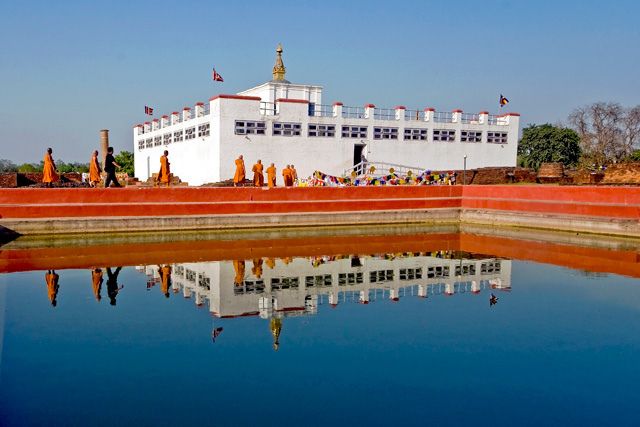
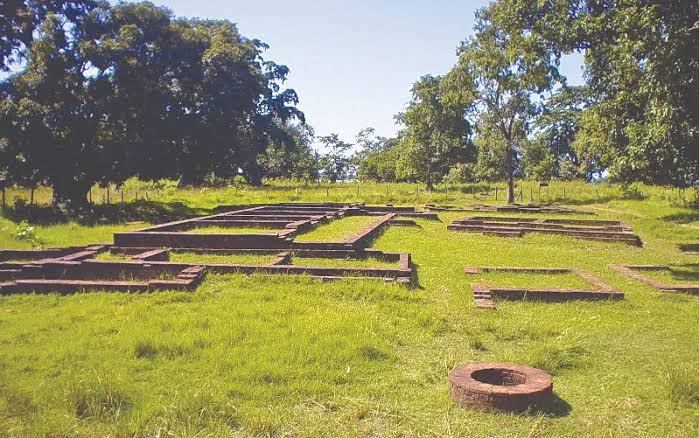
Janakpur pairs naturally with the other great birth site of the Nepali Terai. Lumbini, in the western Terai, is the birthplace of the Buddha and a UNESCO World Heritage Site inscribed in 1997, and the two together make a coherent trip through the religious history of the southern plains. Nearby, Tilaurakot preserves the excavated remains widely identified with Kapilavastu, the city where the Buddha grew up.
Travellers heading back towards Kathmandu can break the journey at Pashupatinath, which pairs the two best-known Hindu shrines in the country: the Shaivite national temple in the hills and the Ramayana shrine on the plains, built in completely different styles.
FAQ
Why is Janaki Mandir important?
It marks the place where Sita, the heroine of the Ramayana and daughter of King Janak of Mithila, is held to have been born, and where she married Ram. It is also the largest temple building in Nepal and the centre of the Vivaha Panchami festival, which draws pilgrims from across Nepal and northern India.
When was Janaki Mandir built?
Construction was completed in 1910, funded by Vrisha Bhanu Kunwar, queen of Tikamgarh. The reported cost of nine hundred thousand rupees gave the building its popular name, Nau Lakha Mandir. A shrine existed on the site well before that, after a golden image of Sita was said to have been found there in the seventeenth century.
Can non-Hindus enter Janaki Mandir?
Yes. The temple is open to visitors of all faiths. Remove your shoes at the entrance, dress modestly, and follow the guidance of the attendants regarding photography, which is restricted around the sanctum.
How do I get to Janakpur from Kathmandu?
Domestic flights take around thirty minutes to Janakpur Airport. By road, allow most of a day by bus or private vehicle, with overnight services also available. Janakpur is additionally served by the rail line running south to Jaynagar in India, which carries heavy pilgrim traffic during festivals.
What is the best time to visit Janaki Mandir?
November to February gives the most comfortable weather. Vivaha Panchami in November or December is the most spectacular time but accommodation is scarce, so book far ahead. Avoid May and June, when Terai temperatures regularly exceed 40 degrees Celsius.